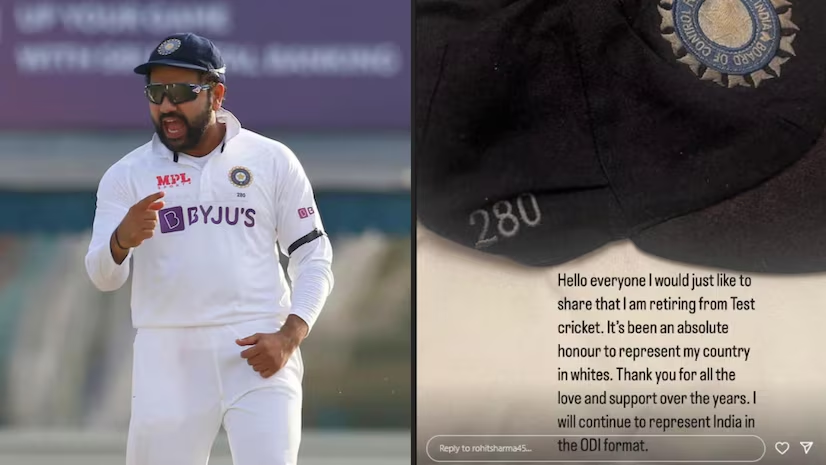
In a significant development in Indian cricket, Rohit Sharma has announced his retirement from Test cricket, just a day after the selectors decided to relieve him from the captaincy for the upcoming England tour. The decision follows growing concerns over his recent form in red-ball cricket. While Rohit will continue to play ODIs, his exit from Tests marks the end of a chapter for one of India’s most high-profile cricketers.
Selectors shift focus to future leadership
Rohit’s decision to step away from Tests was not entirely unexpected. The national selectors, during a recent meeting in Mumbai, decided to appoint a new leader for the England tour, citing Rohit’s inconsistency in Test cricket, especially overseas. Sources revealed that the selectors wanted to avoid the instability experienced during India’s last tour of Australia, where Rohit’s form and availability were both erratic. He struggled with the bat, averaging just 6.20 in five innings and later opted out of the final Test himself. His form against New Zealand at home was also below par, with an average of just 15.16 in three matches.
Although the BCCI initially wanted Rohit to continue leading in England due to his Champions Trophy success, selectors ultimately felt it was time to groom a younger captain for the next Test cycle. They believed retaining Rohit as captain, despite his red-ball struggles, could complicate team dynamics.
Inconsistent performances away from home
Rohit’s Test career ends with 3,965 runs at an average of 40.57 from 67 matches. However, his overseas record paints a different picture. He averaged 24.38 in Australia and 16.63 in South Africa. Although his numbers in England (average 44.66) were better, his recent outings had failed to meet expectations. On India’s previous tour of Australia, he skipped the first Test due to the birth of his second child and returned to bat in different positions before ruling himself out of the Sydney Test.
The selectors were wary of the possibility that, if retained as captain, Rohit could find himself in a situation where poor performances would force his exclusion from the playing XI, leading to complications. Hence, they opted for a decisive shift in leadership.
Rohit had previously stepped away from T20Is after leading India to the World Cup title. While he remains a key figure in the ODI setup, his future participation in the 2027 World Cup will depend on performance. Head coach Gautam Gambhir clarified that the timing of a player’s retirement is a personal decision, reiterating that selectors only decide who gets picked.