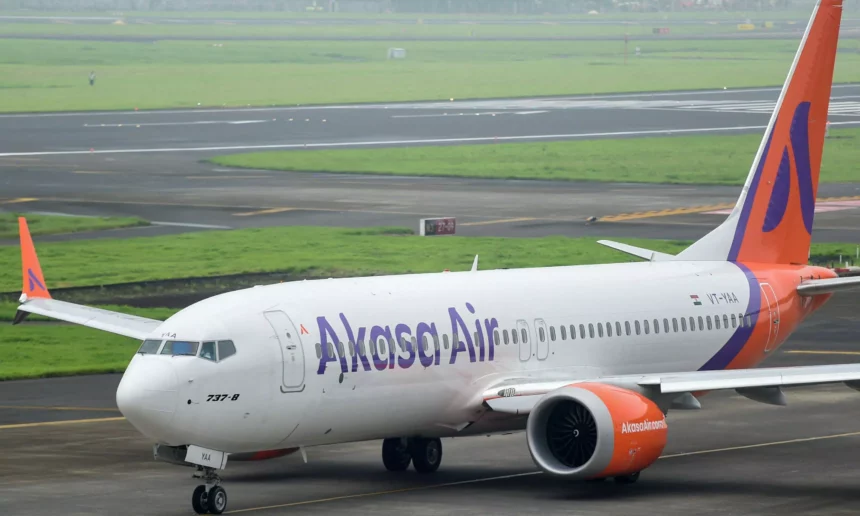
India’s aviation sector is witnessing another shift in ticket pricing as Akasa Air announced the introduction of a fuel surcharge on both domestic and international flight tickets beginning March 15. The airline stated that the decision has been taken in response to the significant rise in aviation turbine fuel prices, which have increased due to ongoing geopolitical tensions in West Asia. As fuel constitutes one of the largest operational expenses for airlines, fluctuations in fuel prices directly influence the overall cost structure of airline operations. With the implementation of this surcharge, Akasa Air joins other major Indian carriers that have already introduced similar measures to manage the financial pressure created by rising fuel costs.
The newly introduced surcharge will vary depending on the distance and duration of the flight, ranging from Rs 199 to Rs 1,300 per ticket. According to the airline’s official statement, the surcharge will apply to all bookings made from 00:01 hours on March 15, 2026. The move reflects the broader challenges facing the aviation industry as global energy markets continue to experience volatility due to geopolitical developments.
Airlines across the world often adjust ticket prices or introduce additional surcharges when fuel costs increase sharply. Since aviation turbine fuel accounts for a significant portion of airline operating expenses, even small increases in fuel prices can have a substantial impact on overall profitability. For airlines operating in competitive markets such as India, balancing operational sustainability while maintaining affordable ticket prices remains a constant challenge.
The announcement has drawn attention not only because of its immediate impact on passengers but also because it highlights the interconnected nature of global events and domestic industries. Developments in distant regions can have a direct influence on sectors such as aviation, affecting operational strategies, ticket pricing, and overall travel demand.
Impact of Rising Aviation Fuel Prices on Airlines
Fuel costs play a crucial role in determining the financial health of airlines. Aviation turbine fuel is among the largest operational expenditures for airlines worldwide, often accounting for a significant share of total operating costs. When global crude oil prices increase or supply disruptions occur, airlines are forced to reassess their pricing strategies to ensure financial sustainability.
The recent rise in aviation turbine fuel prices has been attributed largely to evolving geopolitical tensions in West Asia, a region that remains central to global energy supply chains. Conflicts or instability in this region can affect oil production, transportation routes, and global market sentiment, leading to fluctuations in fuel prices. For industries that rely heavily on petroleum-based fuels, such developments can quickly translate into higher operational costs.
Airlines typically respond to such increases in several ways. Some carriers adjust base ticket fares, while others introduce temporary surcharges that are specifically linked to fuel costs. Fuel surcharges allow airlines to separate the cost adjustment from the base fare, making it easier to revise the charges later if fuel prices stabilise or decline. This approach provides greater flexibility for airlines in responding to changing market conditions.
Akasa Air’s decision reflects this broader industry practice. By introducing a fuel surcharge rather than permanently increasing ticket fares, the airline retains the option to modify or remove the charge depending on future fuel price trends. In its statement, the airline emphasised that it would continue to monitor the operating environment closely and review the surcharge periodically.
The rising cost of aviation fuel has affected airlines globally, not just in India. In many countries, carriers have been forced to reconsider route planning, operational efficiency, and ticket pricing strategies in order to cope with increasing fuel expenses. Airlines often invest in fuel-efficient aircraft and operational practices to reduce long-term fuel consumption, but short-term price spikes still require immediate financial adjustments.
For passengers, fuel surcharges may result in slightly higher ticket prices, especially on longer routes where fuel consumption is greater. However, airlines often attempt to balance these increases with competitive pricing strategies to avoid discouraging travel demand.
Indian Aviation Industry Responds to Cost Pressures
Akasa Air is not the only airline responding to rising fuel costs. Several other major Indian carriers have already introduced similar surcharges on domestic and international flights. Airlines such as Air India, Air India Express, and IndiGo have implemented fuel surcharges as part of their efforts to manage the financial impact of higher fuel prices.
The Indian aviation sector has experienced significant growth over the past decade, with increasing passenger demand driven by expanding connectivity, rising incomes, and greater accessibility of air travel. However, the industry also operates within a complex economic environment where fuel prices, currency fluctuations, and global economic conditions can affect profitability.
Fuel costs are particularly significant for Indian airlines because aviation turbine fuel prices in the country are influenced by international crude oil markets as well as domestic taxation policies. As a result, airlines must continuously adapt their pricing strategies to remain financially viable while also maintaining competitive fares in a price-sensitive market.
The introduction of fuel surcharges by multiple airlines indicates that the industry as a whole is facing similar cost pressures. When several carriers adopt comparable measures, it often reflects broader economic conditions rather than individual company decisions. In such cases, airlines aim to share the burden of rising operational costs with passengers in a transparent manner.
Akasa Air, one of India’s newer airlines, has been expanding its network steadily since its launch. The airline has positioned itself as a low-cost carrier focused on efficient operations and competitive pricing. Introducing a fuel surcharge allows the airline to maintain its base fare structure while addressing the immediate impact of rising fuel expenses.
Industry observers note that the aviation sector must constantly balance financial sustainability with passenger affordability. Excessively high ticket prices can discourage travel demand, particularly in markets where passengers are sensitive to price changes. At the same time, airlines must ensure that their operations remain economically viable despite fluctuating costs.
The airline’s statement also emphasised that the surcharge would be reviewed periodically. This indicates that the charge is not necessarily permanent and may change depending on future developments in fuel prices and global energy markets. If aviation turbine fuel prices stabilise or decline, airlines may choose to reduce or remove such surcharges to keep travel costs competitive.
As global geopolitical developments continue to influence energy markets, the aviation industry will likely remain attentive to changes in fuel prices. Airlines must constantly adjust their operational and financial strategies to navigate these uncertainties while continuing to provide reliable services to passengers.