The Red Fort blast that shook Delhi this week has not only exposed a chilling terror plot but also revealed a disturbing new face of militancy in India — that of educated, seemingly respectable professionals living double lives. At the center of the unfolding investigation stands Dr. Umar un-Nabi, a 35-year-old medical practitioner from Jammu and Kashmir, now emerging as a key suspect behind the Hyundai i20 explosion near the Lal Quila metro station. What began as a mysterious blast has snowballed into a complex web of radical networks, secret ties, and desperate attempts to erase evidence before the law caught up.
A Doctor’s Descent: How Umar un-Nabi’s Life Turned Dark
By all outward appearances, Umar un-Nabi was the picture of quiet dedication. Described by his family as a “studious and disciplined” man, he had built a life around medicine and service. But behind that calm exterior lay a growing involvement with extremist networks. A doctor by profession and a resident of Pulwama in Jammu and Kashmir, Umar had been working in the National Capital Region when the terror network began to take shape.
The blast near Red Fort on Monday, which killed at least ten people and injured several others, brought him into the crosshairs of India’s top security agencies. Investigations revealed that Umar was likely the man driving the Hyundai i20 that exploded near the Lal Quila metro station. The subsequent probe linked him directly to a recent series of massive raids in Faridabad, where security agencies unearthed nearly 3,000 kilograms of ammonium nitrate — enough to cause large-scale devastation.
These raids, which led to the arrest of seven individuals including two doctors, revealed what officials have described as a “white-collar terror network.” Unlike typical militant cells, this network was built around educated professionals — doctors, engineers, and academics — using their legitimate careers as cover for the procurement and storage of explosives.
Umar’s ties to this network ran deep. He was closely associated with two other doctors — Adeel Ahmed Rather and Muzammil Shakeel Ganaie — both of whom were connected to the Faridabad site. Investigators discovered that Umar had worked with Adeel at the Government Medical College (GMC) in Anantnag, where they served as senior resident doctors. Adeel, meanwhile, had been maintaining covert links with Jaish-e-Mohammed (JeM) and Ansar Ghazwat-ul-Hind (AGuH), two organizations advocating radical Islamist rule in India.
Muzammil, on the other hand, was a native of Umar’s own village in Pulwama. The two later joined Al-Falah Medical College and Hospital in Faridabad, where their association strengthened. Together, the three doctors allegedly ran a sophisticated logistics chain, transporting explosives and funds between Kashmir and the National Capital Region. Their medical backgrounds and professional environments allowed them to operate undetected, concealing their true motives behind the veneer of legitimate employment.
A Delhi Police Special Cell officer confirmed, “In Anantnag, Umar worked as a senior resident at GMC, where he met Dr. Adeel. Later, in Faridabad, he and Dr. Muzammil worked at Al-Falah University. Together, they maintained a channel of communication with handlers linked to JeM.”
As the security agencies tightened their grip on the terror module, the network began to unravel — and so did Umar’s composure.
Panic, Desperation, and the Blast That Exposed the Network
The crackdown on the Faridabad module sent shockwaves through the underground network. When raids began on November 9, investigators seized 2,900 kilograms of ammonium nitrate, detonators, timers, and rifles — an arsenal that pointed to an elaborate terror plot in its final stages. For Umar, the raids were a tipping point. Realizing that his associates were being detained and his own name might surface, he reportedly panicked.
According to investigators, Umar immediately attempted to destroy or relocate evidence that could link him to the Faridabad site. Intelligence inputs suggest that he fled with a small portion of ammonium nitrate mixed with fuel oil and a detonator, possibly in an attempt to either divert attention or carry out an attack prematurely. “He was under immense pressure and knew the circle was closing in,” a senior officer stated. “His actions were driven by panic and desperation.”
The decision to drive into Delhi turned fatal. On Monday, his Hyundai i20, laden with explosives, detonated near the Lal Quila metro station. The blast killed at least ten people and injured several others, though authorities believe the explosion was significantly less powerful than it could have been. The bomb, investigators said, was “premature” and “not fully developed,” likely due to Umar’s rushed and erratic behaviour following the raids.
“The explosion was caused by panic and desperation due to the raids. The bomb was not fully developed, limiting the impact,” an investigating officer said.
The Delhi Police Special Cell, working in coordination with central intelligence agencies, soon confirmed that the explosive materials used in the Red Fort blast matched samples from the Faridabad consignment. This confirmed that both incidents were part of a single chain — the exposure of a major terror network extending from Pulwama to Delhi-NCR.
Further investigation revealed that Umar had been operating under multiple identities. He used at least five mobile numbers, all of which went inactive after October 30. His sudden disappearance from his medical duties raised suspicions among his colleagues. When the ammonium nitrate seizures were made public, Umar reportedly fled to Delhi, taking along the remaining explosive materials.
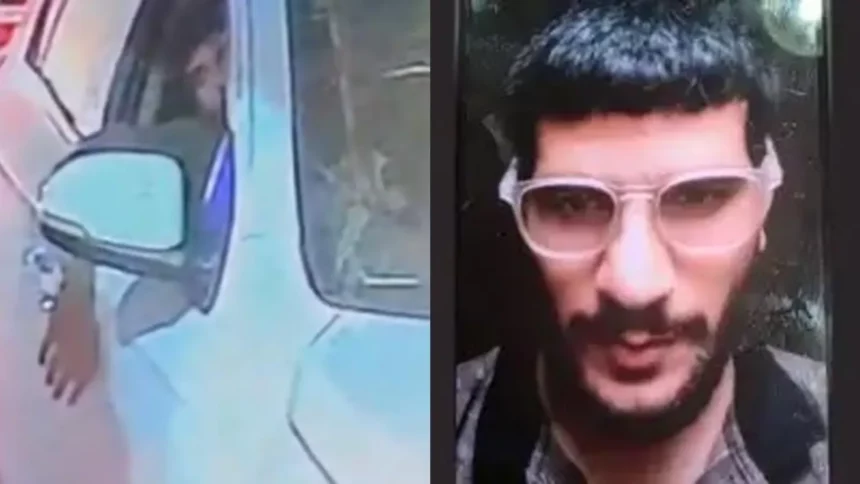
CCTV footage obtained by the police played a critical role in piecing together the timeline of events. A day after the blast, footage surfaced showing Umar driving the same Hyundai i20 minutes before the explosion. Another clip from October 29 showed him in the same car in Faridabad’s Sector 37, confirming his movements before the attack. These visuals linked him directly to both the blast site and the Faridabad storage facility.
Officers familiar with the case disclosed that Umar and Muzammil had been discussing the logistics of the operation during their time at Al-Falah University. They allegedly used academic meetings as a cover to exchange coded information and coordinate the movement of chemicals and detonators. Their activities went unnoticed for months, shielded by their professional credentials and an intricate network of sympathizers.
Even as Umar’s associates were rounded up in coordinated raids across Pulwama and the NCR, he managed to evade capture. Investigators now believe he was acting alone in the final stages, driven by fear and confusion after realizing the network had been compromised. His attempt to eliminate traces of the operation by detonating the explosives backfired, turning into a public tragedy that exposed the entire plot.
As one officer explained, “The suspect’s hurried actions show he was no longer following any structured command. The panic following the raids led him to act on impulse, leading to a premature blast.”
The ongoing investigation continues to trace the flow of money and materials that supported the cell. Authorities are also examining whether Umar’s group had any foreign links or received logistical assistance from international terror outfits. Intelligence inputs indicate that encrypted communication channels and dark web transactions may have been used to facilitate coordination among the operatives.
The Red Fort blast, while devastating, inadvertently helped security forces dismantle one of the most covert terror setups in recent years — a network that blurred the lines between intellect and extremism, education and ideology. The revelation that trained doctors could be the masterminds behind an attempted large-scale terror attack has sent shockwaves through both the medical community and the nation at large.
Security agencies are now focusing on tracing other possible members of this “white-collar jihadi” network and investigating how radicalization managed to infiltrate professional spaces like hospitals and universities. “This case challenges traditional assumptions about terrorism,” said an intelligence official. “It’s not just about guns and training camps anymore — it’s about educated individuals using their access, knowledge, and credibility to serve extremist agendas.”
Even as Delhi recovers from the shock of the explosion, the deeper investigation into Umar un-Nabi’s life paints a haunting picture — of a man torn between his oath to heal and his descent into destruction. What drove a doctor to embrace a path of terror remains a question that India’s security and intelligence establishments are still trying to answer, as they work to ensure that such networks never find fertile ground again.