The ruling Dravida Munnetra Kazhagam (DMK) and its allies in the Secular Progressive Alliance (SPA) launched a large-scale protest across Tamil Nadu on Tuesday against the Special Intensive Revision (SIR) of electoral rolls, accusing the Election Commission of India (ECI) of acting in favor of the Bharatiya Janata Party (BJP). The agitation, held simultaneously in several districts, marked a significant escalation of the political battle over the timing and intent of the SIR exercise, which the DMK claims could influence the electoral landscape ahead of the 2026 Tamil Nadu Assembly elections.
The protests, described as one of the biggest political mobilizations in recent months, came even as enumeration forms as part of the SIR process were distributed to approximately 39.3 million voters across the state. DMK president and Tamil Nadu Chief Minister M.K. Stalin termed the SIR process an “unwarranted and politically motivated exercise” and urged his party cadre to view its prevention as a crucial political and democratic responsibility. While the DMK has already approached the Supreme Court seeking to halt the revision process, the party has decided to combine its legal challenge with a massive ground-level campaign to “protect the democratic rights of Tamil Nadu’s voters.”
DMK’s Legal Battle and Political Mobilization
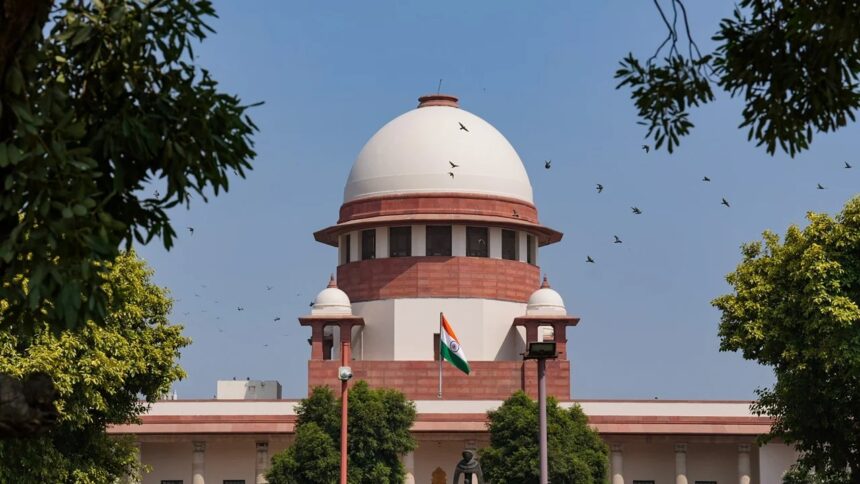
The DMK, which has been opposing the Special Intensive Revision since its announcement, argues that the timing of the exercise—just months before the 2026 Assembly elections—is inappropriate and could lead to large-scale irregularities in the voters’ list. The party, in its plea before the Supreme Court, claimed that the exercise lacks transparency and might be exploited to influence electoral outcomes. The case was heard by the apex court on Tuesday, the same day as the statewide protests, signaling the party’s intent to pursue both legal and political avenues simultaneously.
Speaking on social media platform X (formerly Twitter), Chief Minister M.K. Stalin said, “Today, cadres from the Secular Progressive Alliance hit the streets against SIR. Let us continue to act. Let us protect the voting rights of our people.” He reiterated that the DMK’s opposition is not merely political but stems from a commitment to safeguard the democratic process in the state.
The protests saw the participation of top leaders and cadres from the SPA, which includes the Indian National Congress, the Communist Party of India (CPI), the Communist Party of India (Marxist), and the Viduthalai Chiruthaigal Katchi (VCK). Demonstrations were organized across key cities such as Chennai, Coimbatore, Madurai, Thanjavur, and Tiruchirappalli, drawing thousands of supporters. Protesters carried placards and raised slogans questioning the neutrality of the Election Commission, chanting, “Is it the Election Commission of India or the Election Commission of Modi?” and “ECI acts like a wing of the BJP.”
The DMK and its allies alleged that the SIR was being conducted with an ulterior motive to manipulate the electoral rolls to the BJP’s advantage. Party leaders accused the ECI of introducing the revision in haste and without adequate consultation with political stakeholders. They demanded that the process be postponed until after the 2026 elections to ensure a fair and transparent voter list.
According to DMK leaders, the SIR’s execution just before a major election could allow for the removal or inclusion of names in a way that could skew the results. “The people of Tamil Nadu have a right to a transparent electoral process. We cannot allow manipulations in the name of revision,” said a senior DMK functionary who participated in the protest.
BJP Defends SIR, Calls DMK’s Protest ‘Cheap Politics’
Reacting sharply to the protests, BJP’s Tamil Nadu state vice president Narayanan Thirupathy dismissed the DMK’s allegations as “baseless” and “politically motivated.” He accused the ruling party of attempting to create unnecessary controversy for political mileage. “The DMK is indulging in cheap politics over SIR. We have seen the same process in Bihar during phase one, and there were no objections from the Congress or other opposition parties there. The SIR is a transparent and standard exercise, and it will lead to a fair voters’ list in Tamil Nadu as well,” Thirupathy said.
According to data released by the Chief Electoral Officer (CEO) of Tamil Nadu on November 10, enumeration forms as part of the SIR exercise had already reached 61.34 percent of the registered voters across the state. The ECI maintained that the revision process was a routine and periodic measure intended to update the rolls and eliminate duplicate or outdated entries. Officials argued that the SIR would ultimately strengthen the electoral process by ensuring accuracy and preventing fraudulent voting.
However, the DMK and its allies remain unconvinced. They claim that the timing of the revision—just months before the election—raises suspicions about its intent. Party members also pointed to logistical challenges, alleging that the enumeration process had begun without adequate preparation or public awareness. “This is not just a technical exercise. It has deep political implications, especially when done so close to the elections,” said a Congress leader from Chennai who participated in the demonstrations.
The protests on Tuesday were marked by strong participation from women, youth, and grassroots workers. Many local DMK units coordinated marches and sit-ins in front of district collector offices, while senior leaders addressed rallies emphasizing the need to “defend Tamil Nadu’s democratic integrity.” The atmosphere across protest sites was charged but peaceful, with heavy police presence ensuring order.
Political analysts observed that the DMK’s dual strategy—fighting in the Supreme Court and mobilizing its cadre on the ground—reflects the party’s broader plan to position itself as the defender of electoral fairness ahead of the 2026 polls. The issue has also provided the ruling alliance an opportunity to consolidate its base and reinforce its narrative against the BJP’s alleged centralization of power.
Meanwhile, the BJP continues to argue that the DMK’s opposition is misplaced and that the Special Intensive Revision is a non-political, administrative process mandated by the ECI to ensure voter list accuracy. The party has also accused the DMK of trying to divert public attention from governance issues and corruption allegations by creating controversies around neutral administrative measures.
Despite the BJP’s counterclaims, the protests appear to have struck a chord across Tamil Nadu, especially among voters concerned about political interference in democratic institutions. Opposition leaders have vowed to intensify their agitation if the ECI does not defer the SIR exercise until after the 2026 elections.
The legal proceedings in the Supreme Court are expected to play a key role in determining the immediate future of the SIR in Tamil Nadu. For now, the issue has evolved into a major political flashpoint between the DMK-led alliance and the BJP, with both sides framing it as a battle over democracy and transparency.
As the state prepares for the upcoming assembly elections, the SIR controversy has added another layer of political tension to Tamil Nadu’s already dynamic landscape. The coming weeks are likely to witness further developments in both the courtrooms and the streets, as the DMK, its allies, and the Election Commission brace for a prolonged confrontation over the revision of the voters’ list.