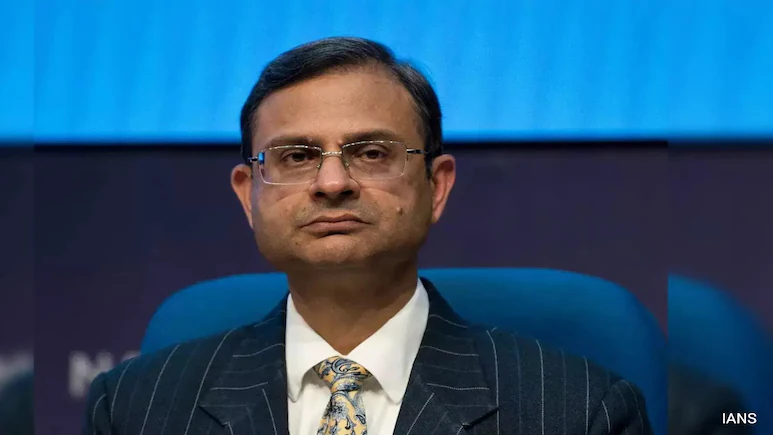
Reserve Bank of India governor Sanjay Malhotra delivered an inspiring message to students during his interaction at the Delhi School of Economics, encouraging them to focus on their “karma” and pursue their work with passion instead of being fixated on results. Referencing the famous philosophy articulated by Apple co-founder Steve Jobs, Malhotra told the students that the “dots will connect” when one looks back at their journey, but they cannot be predicted in advance. His advice, delivered during the VKRV Rao Memorial Lecture, reflected his broader philosophy on learning, leadership, and personal growth—one he has repeated at several academic institutions, including his alma mater, IIT Kanpur.
Malhotra’s Message on Karma, Hard Work, and the Unpredictability of Life’s Path
During the interactive session, a student asked Malhotra for advice on “what it takes” to become the governor of the Reserve Bank of India. Smiling at the question, Malhotra recalled that he had been asked the exact same thing when he visited IIT Kanpur earlier. His response, he said, remained unchanged: such achievements cannot be charted in a predictable, linear way.
He explained that looking forward, no one can know with certainty how their efforts will shape their future. What one can control, however, is how sincerely and passionately they perform the work placed before them. “Do your karma,” he said, emphasising that hard work, sincerity, and passion eventually determine one’s journey. Drawing once again from Steve Jobs’ famous Stanford University address, he said that the “dots connect only when you look backwards,” because the coherence of life’s path becomes clear only in retrospect.
Malhotra encouraged the students not to worry about titles or long-term outcomes. He advised them to avoid stressing about whether their efforts would lead to specific positions, promotions, or recognition, saying that focusing too heavily on results can distract them from the joy of the work itself. Commitment to excellence, discipline, and a deep engagement with learning, he insisted, matters far more than the pursuit of status.
It was not the first time Malhotra invoked the idea of karma in a conversation with students. On June 23, during an address at IIT Kanpur, he had urged students to question conventions, remain curious, and continue learning throughout their lives. At that event, too, he spoke about how outcomes are largely shaped by the karma—the effort, learning, and action—students invest in their journey.
Malhotra’s personal background gives weight to his words. An IAS officer of the 1990 Rajasthan cadre, he holds a degree in computer science and engineering from IIT Kanpur and a master’s in public policy from Princeton University in the United States. With decades of administrative experience, particularly in economic and financial governance, he eventually assumed the role of the 26th governor of the RBI on December 11, 2024.
Before becoming governor, he served as the revenue secretary in the Ministry of Finance, where he worked closely on matters concerning taxation, fiscal policy, and economic coordination. His administrative journey, spread across multiple departments, serves as an example of how professional life can take unexpected turns when one remains committed to learning and service.
Malhotra told students that while one can—and should—set goals, rigid expectations about future positions often lead to frustration. “If I had ever aimed to be the governor of the Reserve Bank when I was your age,” he told the students with a touch of humour, “I might have been too anxious to enjoy the journey that brought me here.” His point was that ambition should be balanced with humility, curiosity, and a willingness to embrace the unpredictability of life.
He also addressed the importance of deeply engaging with one’s field. Success, he suggested, comes not from chasing titles but from immersing oneself in work with dedication. Over time, opportunities appear—sometimes through unexpected doors—and achievements unfold naturally. He added that the most accomplished professionals are not those who set out with rigid plans to reach a particular endpoint, but those who remain open, adaptable, and driven by purpose.
The governor’s emphasis on passion struck a chord with many students. He described passion as a catalyst that elevates ordinary work into something meaningful. Passion, he said, keeps individuals pushing through challenges, helps them stay resilient in difficult phases, and fuels innovation and creativity.
Malhotra’s remarks reflected a broader philosophy familiar to many who study leadership and personal development: that success is not simply the product of planning but also of perseverance, learning, and being present in the moment. By urging students to focus on work rather than results, he was also warning them against the growing tendency in academic and professional spaces to equate self-worth with external achievements.
The governor also underscored the value of continuous learning. He told students that questioning established norms, pushing intellectual boundaries, and maintaining a spirit of curiosity are essential attributes in a rapidly changing world driven by technology, economics, and global shifts. He added that being open to learning helps individuals evolve, adapt, and remain relevant in a professional landscape that is becoming more dynamic than ever.
His message also hinted at a deeper understanding of mental well-being. He suggested that worrying excessively about the future creates unnecessary stress. By contrast, focusing on karma—on the work itself—allows individuals to remain grounded and purposeful. This focus, he said, not only leads to better outcomes but also improves one’s overall quality of life.
Malhotra’s emphasis on enjoying the journey rather than obsessing over the destination was also relevant to students in competitive academic environments. He noted that many young people feel pressured to conform to strict career expectations, and this pressure can overshadow the process of learning and personal growth. By encouraging them to trust their journey and believe that “the dots will connect,” he was offering reassurance that success is not a race but a natural progression of sincere effort.
Background of the RBI Governor and His Broader Message to Youth Across India
Sanjay Malhotra’s trajectory in public service demonstrates the very philosophy he shared in his address. As an IAS officer who has worked in various sectors—administrative governance, public policy, finance, and economic regulation—his ascent to the governorship of the Reserve Bank of India reflects a career shaped by dedication rather than predetermined ambition.
After graduating from IIT Kanpur, Malhotra pursued a master’s degree in public policy at Princeton University, a world-renowned institution known for producing influential policymakers. His academic journey, bridging technology and public policy, eventually merged with his administrative responsibilities when he joined the Indian Administrative Service in 1990.
Over the decades, Malhotra served in a variety of roles that shaped his understanding of governance and financial administration. Before being appointed as RBI governor, he served as secretary in the Department of Revenue, dealing with complex issues of tax administration, GST coordination, financial compliance, and economic reforms. His deep experience in fiscal management positioned him well to lead India’s central bank during a period of global uncertainty.
When he took charge as the 26th governor of the RBI on December 11, 2024, Malhotra entered a role central to India’s economic stability. His responsibilities now include steering monetary policy, maintaining financial stability, regulating banks and financial institutions, and ensuring inflation remains within a balanced framework. Given the central bank’s importance in shaping India’s economic future, his advice to students carries both professional depth and personal authenticity.
During his interaction at the Delhi School of Economics, Malhotra reflected on how each step in his journey contributed to his present role—even when he did not know where those steps would lead. This, he said, is why students should not become anxious about achieving specific titles early in life. Instead, they should embrace challenges, pursue meaningful work, and build strong foundations.
He also shared that questioning the status quo is essential for innovation and progress. Whether in public policy, economics, or technology, he said that real change comes when young minds dare to ask uncomfortable questions. Echoing his earlier message, he urged students to never stop learning, as the world continues to evolve at unprecedented speed.
Malhotra’s interaction with students in Delhi followed months of similar engagements across academic institutions, where he consistently emphasized the idea that life’s journey cannot be perfectly planned. With multiple transformative experiences behind him, he encouraged young people to see uncertainty not as a threat but as an opportunity to grow.
His message resonated particularly strongly in academic settings where students often feel pressure to craft flawless career trajectories. Malhotra reminded them that the most meaningful careers are rarely linear. He encouraged them to embrace change, remain curious, and prioritize growth over rigid expectations.
The governor’s message is especially relevant in an era of rapid technological shifts, global economic volatility, and changing norms of work and leadership. His emphasis on focusing on karma aligns with broader principles of mindfulness, discipline, and purposeful action—qualities that young professionals increasingly seek to cultivate.
Through his interaction, Malhotra offered a perspective that unified practicality with philosophy. While grounded in principles of hard work and responsibility, his message also carried a spiritual nuance, drawing from Indian wisdom as well as contemporary insights from global thinkers like Steve Jobs.
For students navigating the complexities of modern academic and professional life, Malhotra’s advice serves as a reminder that success is not merely an outcome but a journey shaped by intention, curiosity, and courage.