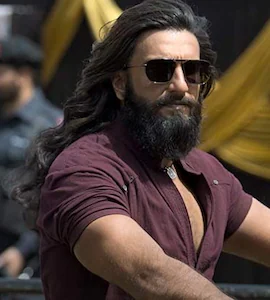
Ranveer Singh’s upcoming action drama Dhurandhar has come under intense scrutiny just days before its scheduled release, after the family of Ashoka Chakra awardee Major Mohit Sharma approached the Delhi High Court demanding a complete stay on the film. The family alleges that the makers have used their son’s life, his covert missions, and the circumstances of his martyrdom without consent, turning deeply sensitive events into commercial material. Online discussions intensified soon after the trailer launch, with many viewers pointing out striking similarities between the film’s protagonist and the real-life Special Forces officer.
Family alleges film mirrors Major Sharma’s life, undercover missions and identity despite filmmakers’ denial
The controversy surrounding Dhurandhar escalated immediately after the release of its trailer, which featured Ranveer Singh portraying an undercover Special Forces officer. Viewers on social media quickly noted that the character bore a striking resemblance to Major Mohit Sharma, the elite Para (Special Forces) commando who infiltrated the Hizbul Mujahideen under the alias “Iftikhar Bhatt” in the early 2000s. Although director Aditya Dhar publicly denied that the character was based on the martyr, the family has refused to accept this explanation.
Major Sharma’s parents, 77-year-old Sushila Sharma and 75-year-old Rajendra Prasad Sharma, have stated in their petition that the film is being marketed as “inspired by true events”, and that its storyline unmistakably overlaps with their son’s covert operations and his sacrifice in Kupwara in 2009. They say they were “deeply shaken” to discover that their son’s life had been altered, fictionalised and used for commercial gain without their permission or knowledge.
According to the family, several elements of the film unmistakably point towards the real officer: the military backdrop, depiction of Special Forces’ operational strategies, the protagonist’s undercover infiltration narrative, and even Ranveer Singh’s physical styling. Their petition argues that “even if the makers deny any connection, an ordinary viewer automatically associates the protagonist with our son.”
The family further submitted that the trailer, posters and dialogue tone all mimic the defining elements of Major Sharma’s service history, making the similarity too direct and too specific to be coincidental. They argue that the film appears to borrow both identifiable real-life events and specific operational details that are closely linked to Major Sharma’s legacy.
The parents contend that the portrayal is not only unauthorized but emotionally distressing, claiming that their son’s memory is being repurposed and reshaped without regard for the truth. Their plea emphasizes that the narrative, visual cues and themes used in the film are so close to actual incidents that viewers across the country have already begun to interpret Dhurandhar as a cinematic adaptation of Major Sharma’s life.
The family alleges that this is not a case of broad inspiration but a deliberate use of a national hero’s identity packaged as fictional storytelling. They assert that while the filmmakers may try to escape accountability by terming it “creative liberty”, the public perception clearly aligns the character with Major Sharma, turning the matter into a serious ethical and legal violation.
Sensitive military content, personality rights and Article 21 concerns raised; centre, army, CBFC and filmmakers named in petition
The family’s petition argues that the film violates the personality rights and posthumous dignity of Major Mohit Sharma, which fall under the broader protection of Article 21 of the Indian Constitution. They argue that every citizen, including a deceased national hero, is entitled to dignity and respect, and any misrepresentation or commercial exploitation of their life cannot be permitted without consent.
They contend that using the life of a decorated officer for cinematic profit, especially without informing or consulting the family, amounts to an infringement of fundamental rights. Their plea states that no filmmaker has the right to fictionalise or sensationalise classified missions or portray real-life military sacrifice for entertainment, especially in a way that may distort facts.
The family has highlighted that several operations shown in the trailer resemble actual missions undertaken by Major Sharma, some of which remain classified. They allege that recreating these sequences without authorization from the Indian Army poses ethical and national security concerns. According to their petition, the filmmakers should have sought mandatory clearances before depicting Special Forces insignia, formations, mission frameworks and counter-terror operations that appear nearly identical to the late officer’s real assignments.
The petition has named the Ministry of Information and Broadcasting, the Central Board of Film Certification, the Indian Army’s ADGPI, the film’s director Aditya Dhar and Jio Studios President Jyoti Deshpande as respondents. The family seeks an immediate halt on theatrical release, a complete stop to promotional materials, and the right to privately view the entire unedited film as well as the full script and raw footage.
In addition, the petition claims that the film includes characters evidently modeled on several other real figures such as Ajit Doval, Rehman Dakait, Ilyas Kashmiri and Karachi police officer Chaudhry Aslam Khan. They argue that this demonstrates a pattern in which the film borrows from identifiable real people without authorization, creating legal, ethical and reputational concerns.
The parents insist that until they are able to examine the film in detail and ensure that their son’s life has not been distorted or trivialized, its release must be paused. They also maintain that showcasing Major Sharma’s likeness or referencing his voice, appearance or military service through implied representation has already misled the public into believing that Dhurandhar is based on his life.
The petition argues that this kind of portrayal not only invades the family’s privacy but also exploits the emotional value associated with a martyr’s legacy. The family states that they must be given the right to protect how their son is remembered, especially when the film clearly influences public perception.
They further elaborate that releasing the film without review could cause irreversible harm because millions have already formed an association between the character and Major Sharma based on promotional material alone. They claim that this unauthorised mapping of real-life service records onto fictional storytelling amounts to misuse of national sentiment and emotional manipulation of audiences.
With the film scheduled to release on December 5, the controversy has put the project under a legal shadow. The petition has caused significant disruption to the film’s promotional campaign, and until the High Court issues a direction, the matter remains at the centre of nationwide debate.