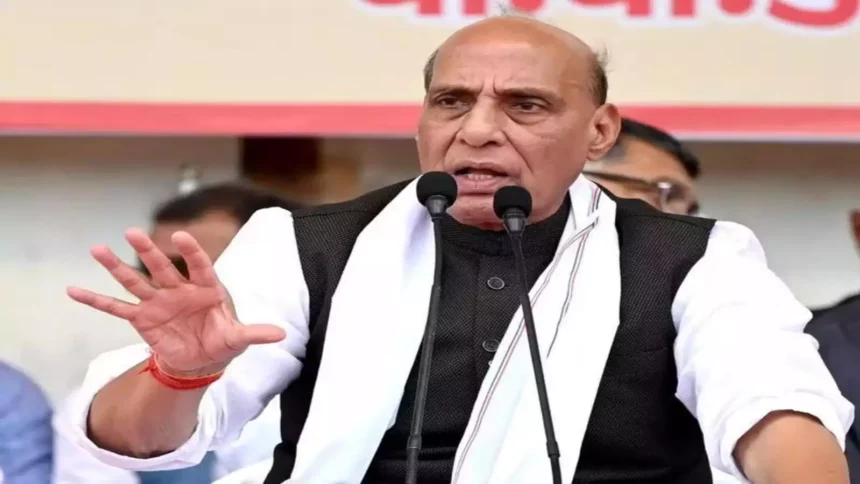
Finance Minister Nirmala Sitharaman is set to present her eighth consecutive Union Budget in the Lok Sabha today, marking a record-breaking milestone in India’s financial history. Ahead of the budget presentation, Defence Minister Rajnath Singh arrived at Parliament and addressed the media, stating that the budget will cater to every section of society, ensuring inclusivity and economic growth across all segments.
Earlier in the day, Sitharaman, accompanied by Minister of State for Finance Pankaj Chaudhary, visited President Droupadi Murmu at Rashtrapati Bhavan before presenting the budget. As part of a long-standing tradition, President Murmu offered ‘dahi-chini’ to the Finance Minister, a symbolic gesture for good luck. The meeting was reportedly focused on discussing key contours of the budget proposals before they were formally presented in Parliament.
The Economic Survey, tabled in Parliament a day before the budget, provided insights into India’s economic trajectory and projected a growth rate of 6.3 to 6.8 percent for the financial year 2025-26. The survey highlighted the strength of the country’s economic fundamentals, including a stable external account, fiscal consolidation, and steady private consumption. The government’s focus on strengthening industrial growth through research and development (R&D), support for micro, small, and medium enterprises (MSMEs), and capital goods investment is expected to enhance productivity, innovation, and global competitiveness.
One of the critical aspects addressed in the Economic Survey was inflation, particularly food inflation, which is anticipated to ease in the fourth quarter of FY25 due to a seasonal decline in vegetable prices and the arrival of the Kharif harvest. A strong Rabi harvest is also expected to contribute to stabilizing food prices in the first half of FY26. However, concerns over adverse weather conditions and rising global agricultural prices pose potential risks to inflation control measures.
India’s foreign exchange reserves remain a pillar of economic stability, covering 90 percent of external debt and offering an import cover of over ten months. The reserves saw fluctuations in 2024, increasing from USD 616.7 billion in January to USD 704.9 billion in September before moderating to USD 634.6 billion as of January 3, 2025. The stability in capital flows has played a vital role in maintaining India’s external strength.
Additionally, formal employment witnessed a significant surge, with Employees’ Provident Fund Organisation (EPFO) net subscriptions more than doubling from 61 lakh in FY19 to 131 lakh in FY24. The ongoing Budget session, which commenced with a joint address by President Droupadi Murmu on January 31, will continue in two phases. The first phase will run until February 13, while the second phase will begin on March 10 after a recess, concluding on April 4.