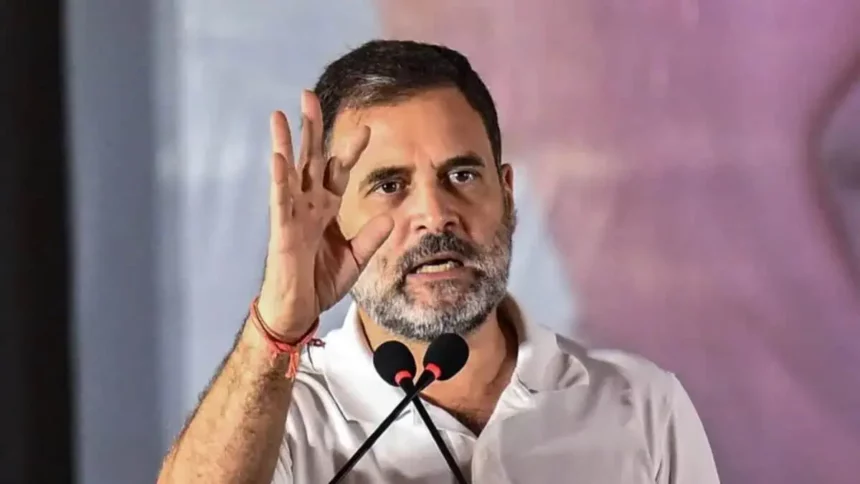
Congress leader and Leader of Opposition in the Lok Sabha Rahul Gandhi is set to visit Indore on Saturday to meet victims and families affected by a severe outbreak of vomiting and diarrhoea linked to contaminated drinking water. His visit comes amid mounting concern, conflicting official data on fatalities, and growing political confrontation between the ruling Bharatiya Janata Party and the opposition Congress over responsibility, governance, and the broader issue of drinking water safety. Gandhi’s engagement is expected to focus on expressing solidarity with affected families, interacting with patients undergoing treatment, and highlighting what the Congress describes as a systemic failure in ensuring safe potable water.
The water contamination incident in Indore’s Bhagirathpura locality has triggered widespread outrage and anxiety among residents, with allegations of underreporting of deaths and inadequate response from authorities. As Gandhi prepares to arrive in the city, the episode has evolved into both a humanitarian crisis and a political flashpoint, drawing in state leaders, medical institutions, and even the judiciary. The visit underscores the opposition’s attempt to amplify public health concerns while demanding accountability from the state government.
Rahul Gandhi’s visit to victims highlights humanitarian concern and opposition’s demand for accountability
According to the Congress, Rahul Gandhi will arrive in Indore on Saturday and first visit Bombay Hospital, a private healthcare facility, where several affected patients are currently undergoing treatment. He is expected to interact with patients and their families, inquire about their condition, and hear firsthand accounts of the circumstances that led to the outbreak. Party leaders have said the visit is intended to convey empathy and solidarity with those impacted by what they describe as a preventable tragedy.
Gandhi will also visit Bhagirathpura, the locality at the centre of the outbreak, to meet families who have lost loved ones and express condolences. Congress leaders have said the situation in the area remains grim, with residents still fearful about the safety of their drinking water. The outbreak, which reportedly began last month, has been linked to contamination in the local water supply, triggering widespread cases of vomiting and diarrhoea.
State Congress president Jitu Patwari has made serious allegations regarding the scale of the tragedy. He has claimed that as many as 24 people have died after consuming contaminated water in Bhagirathpura, and that eight to ten patients remain in critical condition. These figures, however, have been contested by the state government, which has officially put the death toll at seven, including a five-month-old infant. The stark difference between the two sets of numbers has fuelled mistrust and intensified demands for transparency.
Adding to the complexity, a death audit report prepared by a committee at the government-run Mahatma Gandhi Memorial Medical College indicated that the deaths of 15 people in Bhagirathpura could be linked in some manner to the outbreak. While not conclusively attributing all deaths directly to contaminated water, the report has raised further questions about the true impact of the incident and the adequacy of official assessments.
Patwari has said that the Congress intended to organise a conference in Rahul Gandhi’s presence to discuss solutions to the contaminated drinking water problem. The proposed conference was to involve intellectuals, environmentalists, and municipal councillors from across Madhya Pradesh, with the aim of generating long-term policy solutions. According to Patwari, the administration denied permission for the event, forcing the party to postpone it to a later date. This refusal has been cited by the Congress as evidence of the government’s reluctance to engage in open dialogue on the issue.
The state Congress leadership has also used the occasion to make broader claims about water quality in Madhya Pradesh. Patwari alleged that around 70 percent of the water supplied across the state is contaminated and unfit for drinking, describing polluted water as a “slow poison” that damages kidneys and other vital organs over time. These statements have further escalated the political rhetoric surrounding the incident, turning a local health crisis into a statewide issue.
Political responses, judicial scrutiny, and calls for cooperation shape unfolding controversy
The outbreak and Rahul Gandhi’s impending visit have prompted responses from leaders across the political spectrum. Former Lok Sabha speaker and senior BJP leader Sumitra Mahajan commented on the visit by saying that the opposition has a legitimate role to play in a democracy and should perform it with full force. She stated that Gandhi was welcome to visit Indore and added that if he offers constructive suggestions, the concerned authorities should consider them seriously.
Mahajan also recalled that the BJP itself had spent years in opposition in the past, earning public trust by taking up people’s causes with determination. Her remarks were seen as an attempt to strike a measured tone amid the heated political environment, even as sharp exchanges continue between the ruling party and the opposition at the state level.
Interestingly, a day ahead of Gandhi’s arrival, Mahajan met Jitu Patwari at her residence to discuss the diarrhoea outbreak in Bhagirathpura. She said Patwari had emphasised the need for collective effort to find a solution to the contaminated drinking water problem in Indore. Mahajan agreed that the issue should be addressed beyond party politics and that technical experts’ suggestions should be sought to ensure long-term solutions. The meeting was viewed as a rare moment of cross-party dialogue amid an otherwise polarised debate.
At the institutional level, the matter has also drawn judicial attention. The Madhya Pradesh government submitted a status report before the Indore bench of the Madhya Pradesh High Court, stating that seven people had died in the outbreak. This report forms part of the official record and stands in contrast to higher figures cited by residents and opposition leaders. The involvement of the High Court has added a layer of legal scrutiny, increasing pressure on authorities to present accurate data and demonstrate that corrective measures are being taken.
Residents of Bhagirathpura have continued to assert that the death toll is significantly higher than official figures, maintaining that at least 24 people have died since the outbreak began. Their claims, combined with the findings of the medical college’s death audit report, have kept the controversy alive and raised concerns about systemic gaps in public health monitoring and water quality management.
Beyond the immediate issue of water contamination, the episode has also intersected with other political debates. Mahajan, while speaking to the media, criticised the Congress’ opposition to the Viksit Bharat–G RAM G Act, calling it meaningless. She defended the legislation by suggesting that rural employment schemes and development initiatives should be viewed positively rather than politicised. She also responded cautiously to allegations regarding damage to statues of former Indore ruler Devi Ahilyabai during redevelopment work at Varanasi’s Manikarnika Ghat, stressing the need to balance development with preservation of heritage.
As Rahul Gandhi prepares to visit Indore, the focus remains firmly on the affected families and the urgent need to ensure safe drinking water. At the same time, the incident has become emblematic of broader challenges facing urban governance, public health infrastructure, and crisis management. The coming days are likely to see intensified political engagement, further scrutiny of official data, and renewed calls for accountability and reform.
Gandhi’s visit is expected to keep national attention on the Indore crisis, potentially prompting stronger administrative action and policy discussion. Whether the political spotlight translates into lasting solutions for residents of Bhagirathpura and other affected areas remains a critical question, as the tragedy continues to resonate beyond the boundaries of one locality.