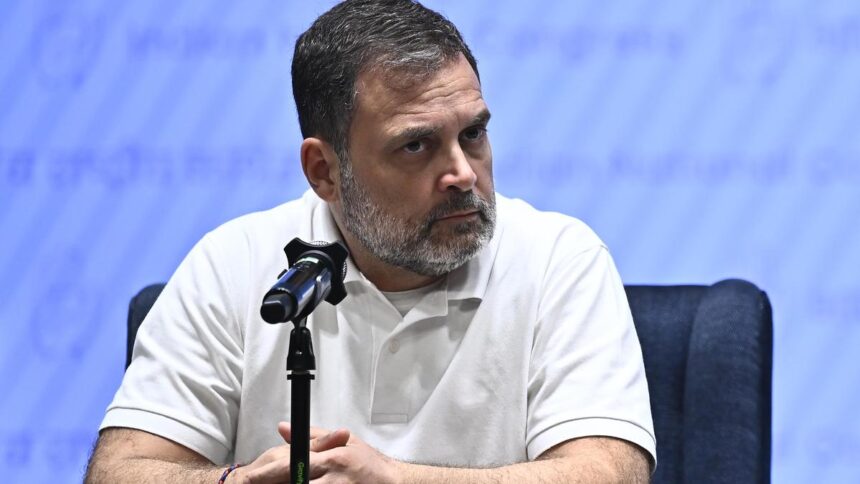
Senior Congress leader and Leader of the Opposition in the Lok Sabha Rahul Gandhi is set to inaugurate a major political mobilisation programme, the maha panchayat, in Kochi, marking a significant moment in the party’s efforts to consolidate its grassroots base and project organisational strength in Kerala.
Congress Mobilisation and the Significance of the Maha Panchayat
The maha panchayat in Kochi is being projected as one of the largest organisational events held by the Congress in Kerala in recent times. Conceived as a gathering of elected representatives, party functionaries, and grassroots workers, the programme aims to bring together thousands of Congress leaders from across the state under a single platform. The event reflects the party’s intention to reconnect with its cadre at the local level and to publicly recognise the role played by panchayat and municipal representatives in strengthening the organisation.
For the Congress, local body representatives form the backbone of the party’s political machinery. These leaders serve as the first point of contact between the party and the public, addressing everyday civic issues and representing local aspirations. By convening a maha panchayat that focuses on these representatives, the party leadership is signalling that grassroots governance and local leadership remain central to its political strategy. The presence of Rahul Gandhi at the event adds weight to this message, reinforcing the idea that the party’s national leadership is directly invested in the concerns and contributions of its local representatives.
The choice of Kochi as the venue carries its own significance. As a major urban centre with symbolic and strategic importance in Kerala’s political landscape, Kochi offers visibility and accessibility. Hosting the maha panchayat in the city allows the Congress to draw attention not only from party workers but also from the wider public and media. The event is expected to be attended by representatives from panchayats, municipalities, and district-level bodies, alongside senior leaders of the Kerala Pradesh Congress Committee and the United Democratic Front.
The maha panchayat is also intended to function as a morale-boosting exercise. In a political environment marked by intense competition and shifting voter expectations, the Congress leadership sees the need to energise its cadre and reaffirm organisational unity. Public gatherings of this scale provide an opportunity to showcase solidarity, address internal challenges, and align local leaders with the party’s broader political narrative. Rahul Gandhi’s address is expected to focus on themes of democratic participation, social justice, and the importance of strong local governance in shaping inclusive development.
Beyond celebration and mobilisation, the maha panchayat serves a practical organisational purpose. It allows the leadership to assess the strength of its grassroots network, identify emerging leaders, and reinforce communication between the state leadership and local representatives. Such interactions are seen as crucial in translating political vision into effective action on the ground, particularly in a state like Kerala where political awareness among voters is high and governance performance is closely scrutinised.
Political Context, Rahul Gandhi’s Role, and the Road Ahead
Rahul Gandhi’s participation in the Kochi maha panchayat comes at a time when the Congress is seeking to sharpen its political strategy in Kerala. The state has long been a key battleground where electoral contests are closely fought, and shifts in public sentiment can significantly influence outcomes. By engaging directly with grassroots representatives, Rahul Gandhi is reinforcing the party’s emphasis on participatory politics and bottom-up leadership.
As Leader of the Opposition in the Lok Sabha, Rahul Gandhi has increasingly positioned himself as a voice for democratic accountability, social inclusion, and institutional integrity. His interactions with party workers and local leaders are often framed around listening to ground-level concerns and incorporating them into the party’s policy and campaign narratives. The maha panchayat provides a platform for such engagement on a large scale, allowing him to address collective challenges while also acknowledging the diversity of local experiences across Kerala.
The event is also seen as part of a broader effort to strengthen the United Democratic Front’s cohesion. Bringing together representatives from different regions and local bodies under a unified programme helps reinforce coordination within the alliance. It offers an opportunity to articulate shared goals, address organisational issues, and present a united front to the electorate. In a state where coalition politics plays a decisive role, such demonstrations of unity are considered strategically important.
Political observers view the maha panchayat as a preparatory step towards future electoral challenges. While the immediate focus is on honouring and motivating local representatives, the underlying objective is to lay the groundwork for sustained political engagement in the months ahead. By highlighting the achievements and responsibilities of local leaders, the Congress aims to position itself as a party rooted in everyday governance and responsive to public needs.
Rahul Gandhi’s address is expected to underline the importance of ethical politics and transparent administration. His speeches at similar gatherings have often emphasised the role of local institutions in safeguarding democratic values and ensuring that development reaches all sections of society. In Kerala, where decentralised governance has historically played a significant role, such messages resonate strongly with both party workers and the broader public.
The maha panchayat also reflects the Congress leadership’s recognition of the changing dynamics of political mobilisation. Large-scale rallies and centralised campaigns are increasingly complemented by targeted engagement with local leaders who have direct influence within their communities. By investing time and attention in these representatives, the party seeks to strengthen its organisational depth and enhance its ability to respond to local issues swiftly and effectively.
As the event unfolds in Kochi, it is expected to draw considerable attention within Kerala’s political circles. The scale of participation, the themes articulated by the leadership, and the response from party workers will all be closely watched as indicators of the Congress’s organisational health and future prospects in the state. For Rahul Gandhi, the maha panchayat offers another opportunity to reinforce his leadership style, which emphasises dialogue, inclusivity, and grassroots empowerment.
Through this gathering, the Congress aims to project confidence and readiness, presenting itself as a party that values its local leaders and recognises their central role in shaping political outcomes. The Kochi maha panchayat thus stands as both a symbolic and strategic exercise, blending celebration with mobilisation as the party looks to strengthen its position in Kerala’s evolving political landscape.