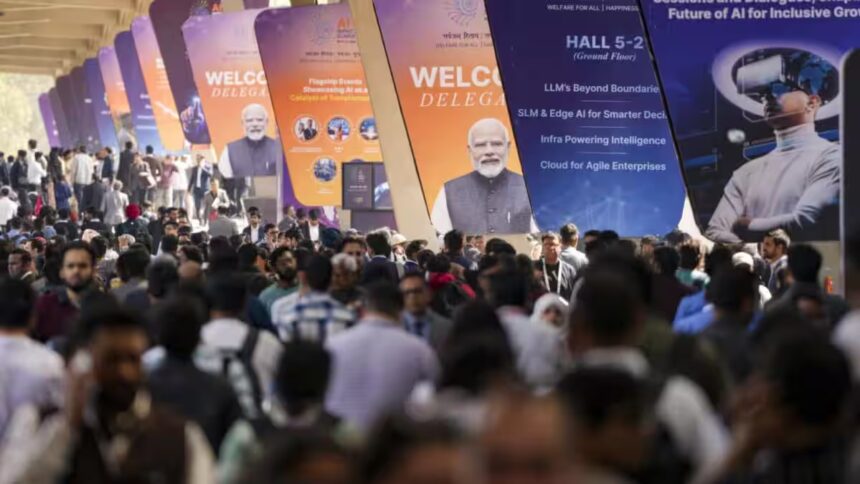
The highly anticipated India AI Impact Summit 2026 witnessed significant organisational challenges on its opening day at Bharat Mandapam in New Delhi, where attendees faced extensive delays, overcrowding, unstable connectivity and allegations of stolen exhibits, casting a shadow over what was meant to be a landmark gathering on artificial intelligence. The event, billed as one of the world’s largest AI summits with participation from thousands of delegates, innovators, startups and policymakers, instead saw hours-long queues, logistical confusion and technological setbacks that fueled widespread criticism across the tech community and on social media. In response, Union IT and Electronics Minister Ashwini Vaishnaw issued a public apology, acknowledged the issues and pledged corrective measures to ensure smoother operations for the remaining days of the summit, while organisers worked to address the myriad concerns raised by participants and observers alike.
Opening Day Disruptions and Visitor Frustrations
The summit’s opening day unraveled amid unexpected challenges that quickly became the subject of extensive complaints from attendees. Many participants, including tech professionals, startup founders and students, reported waiting for several hours in long queues just to enter the venue, with registration counters overwhelmed and basic crowd management seemingly inadequate. Videos and images shared on social media showed serpentine lines outside entry gates, compounded by delays stemming from unclear entry procedures involving QR codes and physical passes. These disruptions were exacerbated by heavy security sweeps ahead of VIP movements, including the visit by the Prime Minister, which temporarily halted access to exhibition halls and sessions, leaving many exhibitors locked out of their own booths for prolonged periods.
In addition to logistical frustrations, technical failures added to the chaos. Attendees reported unstable Wi‑Fi connectivity and intermittent mobile network coverage inside the venue, undermining the event’s central theme of digital innovation and artificial intelligence. Panel discussions, live demonstrations and startup showcases were disrupted as a result, prompting public expressions of disappointment from founders and delegates who had travelled long distances to attend. Some participants also pointed out unusual glitches in digital systems such as the registration platform, which repeatedly crashed, intensifying confusion and delays at critical entry points.
Perhaps most troubling were the reports of missing belongings from exhibition spaces. A startup founder claimed that valuable AI prototype wearables brought for demonstration disappeared during temporary evacuations demanded by security personnel, highlighting gaps in coordination and protection of participants’ equipment. These theft allegations added a serious dimension to the organisational critique, raising questions about the adequacy of security arrangements amid heightened expectations for a technologically sophisticated event. Notably, these incidents sparked broad discussion within the tech community about the preparedness required to host flagship gatherings intended to showcase India’s capabilities on the global AI stage.
Security and event logistics also came under scrutiny from social media users, with multiple firsthand accounts describing confusion over basic infrastructure such as parking arrangements, lack of clear signage for session locations and insufficient staff to manage large crowds. Attendees noted that simple issues like navigating between session halls, accessing food and beverage areas, and finding seats became unexpectedly challenging, detracting from the overall summit experience. This juxtaposition between the summit’s ambitious vision and the on‑ground realities fuelled fresh debates about India’s readiness to host high‑profile technology events of this scale.
Ministerial Response, Apology and Efforts to Improve Summit Experience
Faced with mounting criticism, Union Electronics and IT Minister Ashwini Vaishnaw publicly acknowledged the disruption and inconvenience experienced by attendees on the first day of the summit. In statements delivered during a press briefing, he described the turnout — reportedly exceeding 70,000 visitors — as “phenomenal” but conceded that organisational challenges needed urgent attention. Vaishnaw issued a direct apology to those who faced problems and emphasised that the government and summit organisers were open to feedback and committed to making the remainder of the event more enjoyable and smoothly managed.
To address the array of complaints, the summit’s management team set up a dedicated operational “war room” tasked with real‑time monitoring of issues and rapid turnaround of solutions. Attendees were encouraged to report concerns directly to this team so that logistical, technical and security gaps could be promptly resolved. Vaishnaw stressed that both organisers and government teams were working “day and night” to respond to feedback, streamline processes and ensure that future days of the summit would better reflect the event’s high expectations and international stature.
While the apology was broadly welcomed by some participants, critics — including political voices — used the opportunity to highlight deeper concerns. Opposition leaders characterised the disruptions as evidence of mismanagement and called for greater accountability in planning and executing large‑scale events positioned to spotlight India’s digital and technological prowess. These political critiques noted specific issues such as shortages of basic amenities, restrictions on personal electronic devices, and infrastructure that remained ill‑equipped to handle the summit’s massive turnout.
Despite the rough start, summit organisers maintained that sessions would continue as scheduled and that necessary adjustments were being implemented to mitigate overcrowding and improve visitor experience. Efforts to enhance coordination, crowd flow and technical support were being prioritised, with organisers expressing confidence that as the event progressed, attendees would find improved access and organisation. The summit, which runs over several days and features industry leaders, policymakers, startup founders and international delegates, remains a key platform for shaping global AI discourse and demonstrating India’s role in the evolving landscape of digital innovation.