On India’s Independence Day, Prime Minister Narendra Modi announced the launch of the ₹1 lakh crore PM Viksit Bharat Rozgar Yojana, aiming to provide employment opportunities and financial incentives to young Indians entering the workforce. The announcement, made from the historic ramparts of the Red Fort, was presented as a landmark initiative intended to address unemployment and empower youth with skill development, self-employment options, and internships across multiple sectors. The government stated that under this scheme, each newly employed youth would receive ₹15,000, while companies generating additional employment opportunities would also be incentivized. However, this announcement was met with immediate criticism from Congress leader Rahul Gandhi, who accused the government of indulging in repetitive rhetoric without delivering meaningful outcomes. Gandhi highlighted that similar promises, such as the PM Internship Scheme, had failed to generate the intended impact, leaving thousands of youth without substantive opportunities, and he questioned the feasibility of the proposed ₹1 lakh crore scheme.
Criticism From Rahul Gandhi Over Repetitive Announcements
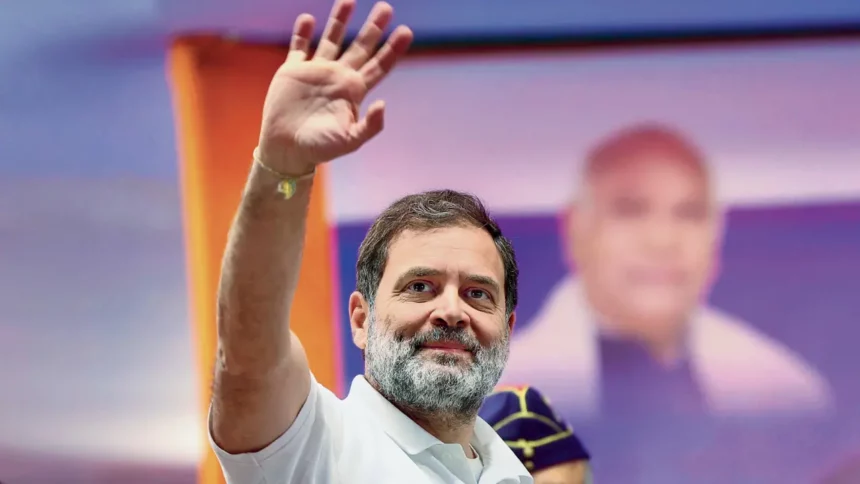
Rahul Gandhi, responding on social media platform X, called the PM Viksit Bharat Rozgar Yojana “₹1 lakh crore rhetoric – Season 2,” pointing to the continuity of what he described as the government’s reliance on rehearsed figures and recurring announcements without effective implementation. Gandhi referenced the previous year’s promise of one crore internships under a similar ₹1 lakh crore allocation, noting that parliamentary responses revealed fewer than 10,000 internships were actually provided. He emphasized that the stipend offered to interns was so low that a majority of applicants, nearly 90%, had refused the opportunities, reflecting the disconnect between the scheme’s intentions and on-ground reality. According to Gandhi, these recurring announcements are an exercise in political optics rather than practical solutions for unemployment, and he stressed that youth are unlikely to gain meaningful jobs from such initiatives. In his statement, Gandhi argued that the government has exhausted new ideas for addressing unemployment, and without innovative approaches, these schemes risk becoming symbolic gestures that fail to create substantive employment opportunities or skill development pathways.
Gandhi’s critique also underscored the perception that high-value announcements have been used as a tool to project proactive governance while ignoring ground-level realities. He suggested that repeated promises of ₹1 lakh crore schemes do not equate to tangible outcomes and that the youth, who form a significant portion of the nation’s population, require structured, effective programs with measurable results. By citing parliamentary data, Gandhi highlighted the discrepancy between projected and actual benefits, framing the government’s repeated reliance on large-sum announcements as more about optics than delivery. His commentary has sparked debate on whether large-scale financial allocations automatically translate into meaningful impact, especially in schemes targeting employment for young Indians.
Government’s Perspective on PM Viksit Bharat Rozgar Yojana
From the government’s perspective, the PM Viksit Bharat Rozgar Yojana is positioned as a comprehensive effort to address youth unemployment, facilitate skill development, and incentivize companies to create new jobs. Prime Minister Modi described the initiative as part of a broader campaign encompassing self-employment programs, internships in major corporations, and specialized training to prepare youth for emerging sectors of the economy. According to official statements, the scheme is designed to create approximately 3.5 crore new employment opportunities, ensuring that young Indians are supported as they transition into private-sector roles. Each qualifying youth will receive a financial support package of ₹15,000, and additional incentives will be extended to organizations that actively contribute to expanding employment avenues. The government framed the initiative as a transformative measure aimed at modernizing the workforce, promoting skill development, and strengthening the country’s economic productivity by integrating youth into diverse sectors.
Prime Minister Modi’s address emphasized that the scheme is not merely a financial measure but a holistic program encouraging entrepreneurship, skill acquisition, and career growth. By linking employment creation with incentives for companies, the initiative aims to foster public-private collaboration in generating sustainable jobs. The announcement underscored the government’s commitment to expanding opportunities in new and high-demand sectors, ensuring that India’s youth can compete effectively in an evolving economic landscape. Additionally, the initiative was described as complementing ongoing skill development programs and internship opportunities, offering an integrated approach to preparing young Indians for both immediate employment and long-term career advancement. The government maintains that such measures will not only reduce unemployment rates but also strengthen the nation’s human capital and economic competitiveness.
The PM Viksit Bharat Rozgar Yojana also highlights the government’s attempt to link direct financial assistance to employment creation, positioning the scheme as both a social and economic intervention. By providing monetary support to youth securing private-sector employment, the government aims to alleviate the initial financial barriers that may prevent individuals from pursuing job opportunities. Similarly, companies benefiting from the program will be encouraged to expand hiring initiatives, thereby creating a multiplier effect in employment generation. The initiative’s ambitious goal of impacting millions of youth reflects the government’s emphasis on using large-scale fiscal measures to stimulate economic activity while addressing societal challenges related to unemployment. Through this dual approach, the government aims to create an ecosystem where youth empowerment, financial support, and corporate engagement intersect to maximize employment outcomes.
In contrast to Rahul Gandhi’s critique, the government insists that the scale and scope of the program demonstrate a serious commitment to solving unemployment, moving beyond token gestures to actionable, well-structured schemes. By integrating financial incentives with skill development, internships, and private-sector employment, the initiative is intended to provide tangible opportunities that encourage both youth participation and corporate collaboration. Officials maintain that the emphasis on measurable outcomes, coupled with targeted financial support, differentiates this scheme from previous announcements that were criticized for lack of follow-through. The government also highlighted that mechanisms for monitoring implementation and reporting outcomes are being put in place to ensure transparency and accountability in delivering the promised benefits to eligible youth.
The scheme has drawn attention to the broader political discourse surrounding employment in India, as leaders across parties analyze and critique its potential impact. While Rahul Gandhi’s criticisms focus on historical performance and perceived gaps between promises and results, the government emphasizes forward-looking strategies aimed at addressing structural challenges in the labor market. The program is positioned as an attempt to modernize employment policies, incentivize private-sector participation, and deliver direct benefits to young job seekers. By combining fiscal support with skill-building initiatives, the government asserts that the PM Viksit Bharat Rozgar Yojana represents a multidimensional approach to tackling unemployment while fostering economic growth and youth empowerment.