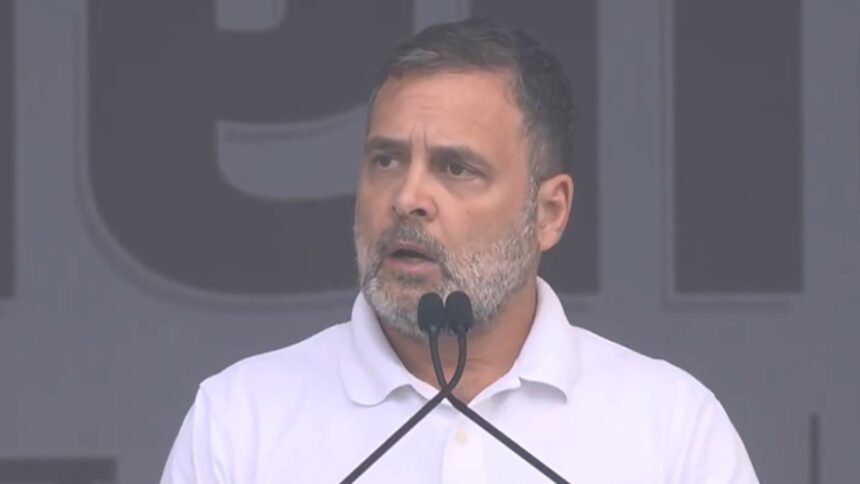
Senior Congress leader and Leader of Opposition in Lok Sabha Rahul Gandhi has sparked a fresh political controversy by alleging that proposed amendments to the Foreign Contribution (Regulation) Act (FCRA) could disproportionately benefit the Rashtriya Swayamsevak Sangh while tightening government control over non-governmental organisations and civil society institutions.
His remarks come at a time when the debate over foreign funding regulations is intensifying, with both the government and opposition presenting sharply contrasting views on the intent and impact of the proposed changes. The FCRA law, which governs how organisations in India receive and utilise foreign contributions, has long been a subject of political and policy discussions, especially concerning transparency, accountability, and national security.
Rahul Gandhi claimed that the proposed amendments would create an uneven playing field, giving certain organisations an advantage in accessing foreign funds while placing others under stricter scrutiny. According to him, charitable organisations and community-based institutions could face greater restrictions, potentially affecting their ability to function effectively.
The Congress leader argued that the amendments could centralise decision-making power within the government, making civil society organisations increasingly dependent on official approvals. He warned that such a shift could weaken democratic institutions by limiting the role of independent organisations in areas such as social welfare, advocacy, and public accountability.
Debate Over FCRA Amendments Intensifies
The Foreign Contribution (Regulation) Act has undergone several revisions over the years, with the government maintaining that stricter provisions are necessary to ensure transparency and prevent misuse of foreign funds. Authorities have consistently emphasised that the law is designed to safeguard national interests and prevent external influence on domestic affairs.
However, opposition parties, including the Congress, have raised concerns that the amendments could be used to exert greater control over non-governmental organisations. Rahul Gandhi’s latest remarks add to a growing chorus of criticism from political leaders and civil society groups who fear that the changes may restrict the functioning of independent organisations.
The debate is not limited to political circles but has also drawn attention from activists, policy experts, and international observers. Many argue that while regulation is necessary, excessive restrictions could undermine the role of civil society in a democratic framework.
Supporters of the amendments, on the other hand, believe that stricter rules are essential to ensure accountability and prevent misuse of foreign contributions. They argue that transparency in funding is crucial for maintaining public trust and national security.
Political Context and Electoral Implications
Rahul Gandhi’s remarks also carry significant political implications, particularly in the context of upcoming elections. Drawing a contrast with the Congress-led United Democratic Front (UDF) in Kerala, he stated that the UDF follows a people-centric approach, while accusing both the BJP and the Left Democratic Front (LDF) of prioritising organisational interests.
This statement reflects the broader political strategy of the Congress to position itself as a defender of democratic institutions and civil liberties. By raising concerns about the FCRA amendments, the party aims to highlight issues related to governance, transparency, and institutional autonomy.
The BJP, however, has consistently defended its policies, arguing that regulatory measures are necessary to ensure that foreign funding does not compromise national interests. The party maintains that the amendments are aimed at strengthening oversight and preventing misuse.
The issue is likely to feature prominently in election campaigns, with parties using it to appeal to different sections of voters. For the Congress, the focus is on protecting civil society and democratic values, while the BJP emphasises security and accountability.
Impact on Civil Society Organisations
Civil society organisations play a crucial role in India’s socio-economic landscape, working in areas such as education, healthcare, environment, and human rights. Many of these organisations rely on foreign funding to support their activities.
Changes to the FCRA framework could therefore have significant implications for their operations. Stricter regulations may lead to delays in approvals, increased compliance requirements, and reduced access to funds.
Critics argue that this could particularly affect smaller organisations that lack the resources to navigate complex regulatory processes. Larger organisations, on the other hand, may be better equipped to adapt to the changes, potentially leading to disparities within the sector.
Rahul Gandhi’s allegation that certain organisations could gain an advantage has further fuelled concerns about fairness and transparency in the implementation of the law.
Government’s Stand on Transparency and Security
The central government has defended the proposed amendments, stating that they are necessary to ensure that foreign contributions are used for legitimate purposes. Officials have emphasised that the changes are aimed at improving transparency, preventing misuse, and strengthening regulatory mechanisms.
According to the government, the FCRA framework is essential for maintaining national security and preventing foreign interference in domestic affairs. The authorities argue that without proper regulation, foreign funding could be used to influence political processes or disrupt social harmony.
The government has also highlighted the need for accountability, stating that organisations receiving foreign funds must adhere to strict guidelines and reporting requirements. This, it argues, ensures that funds are used for intended purposes and benefit the public.
Concerns Over Centralisation of Power
One of the key concerns raised by Rahul Gandhi and other critics is the potential centralisation of power under the amended FCRA framework. They argue that increased control by the central government could limit the autonomy of civil society organisations.
This concern is linked to broader debates about the balance between regulation and freedom. While regulation is necessary to prevent misuse, excessive control could hinder the functioning of independent organisations and reduce their ability to operate effectively.
Experts suggest that a balanced approach is needed, where transparency and accountability are ensured without compromising the independence of civil society.
Broader Implications for Democracy
The controversy surrounding the FCRA amendments highlights larger questions about the role of civil society in a लोकतांत्रिक system. Civil society organisations often act as a bridge between the government and citizens, addressing gaps in service delivery and advocating for policy changes.
Restrictions on their functioning could have implications for public participation and accountability. Critics argue that a vibrant civil society is essential for a healthy democracy, providing checks and balances and ensuring that diverse voices are heard.
Supporters of stricter regulations, however, contend that accountability and national security must take precedence. They argue that regulations are necessary to ensure that organisations operate within legal and ethical frameworks.
International Perspective and Reactions
The debate over foreign funding regulations is not unique to India. Many countries have laws governing foreign contributions, reflecting concerns about external influence and national security.
However, the extent and nature of these regulations vary widely. In some cases, overly restrictive laws have drawn criticism from international organisations and human rights groups.
In India’s case, the FCRA amendments have attracted attention from global observers, who are closely watching how the changes impact civil society.
Rahul Gandhi’s allegations regarding the FCRA amendments have added a new dimension to an already intense political debate. The issue touches upon key aspects of governance, including transparency, accountability, and the role of civil society in a democracy.
While the government maintains that the amendments are necessary for ensuring national security and preventing misuse of funds, critics argue that they could restrict the functioning of independent organisations and centralise power.
As the debate continues, the focus will remain on finding a balance between regulation and freedom. The outcome of this discussion will have significant implications for civil society, governance, and democratic institutions in India.