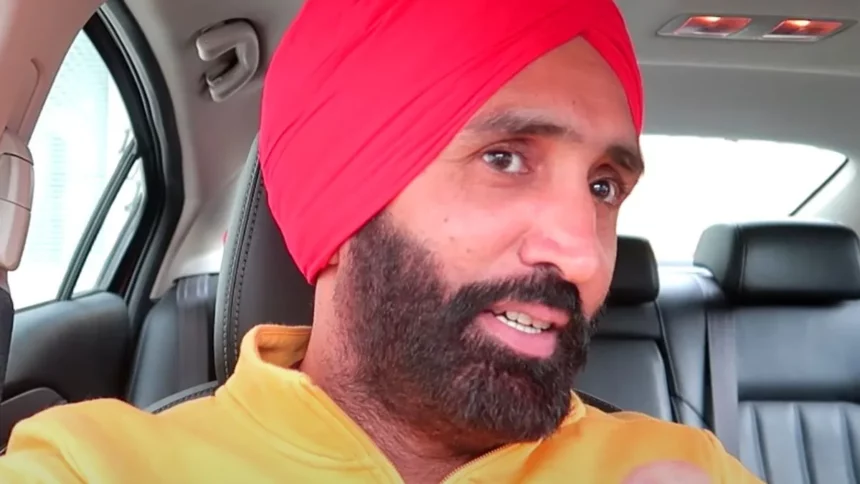
Punjab police have uncovered critical details in their investigation of Jasbir Singh, a YouTuber allegedly connected to a Pakistani-backed espionage network. After the arrest of Haryana-based influencer Jyoti Malhotra for similar charges, Singh attempted to erase all digital evidence of his communication with foreign handlers. Authorities reveal Singh maintained extensive contact with Pakistani intelligence operatives and attended events that facilitated his connections with hostile elements.
Close Links with Espionage Operatives
Jasbir Singh, who runs the YouTube channel ‘Jaan Mahal’ from Village Mahlan in Rupnagar district, is now implicated in espionage activities tied to Pakistan’s intelligence apparatus. Punjab DGP Gaurav Yadav disclosed that Singh was linked to Pakistani Intelligence Operative Shakir, also known as Jutt Randhawa, who is part of a terror-backed espionage network. Singh also stayed in touch with Ehsan-ur-Rahim alias Danish, a Pakistani national and former Pakistan High Commission official who was expelled from India in May for alleged espionage activities.
Investigations reveal that Singh attended the Pakistan National Day event in Delhi at Danish’s invitation, where he reportedly met with Pakistani Army officials and vloggers. Singh’s travels to Pakistan—documented in 2020, 2021, and 2024—have come under scrutiny as his electronic devices contained multiple contacts based in Pakistan, currently undergoing forensic examination.
Following Jyoti Malhotra’s Arrest
Jyoti Malhotra, a 33-year-old influencer from Hisar running the YouTube channel ‘Travel with JO’, was arrested last month for her alleged role in the same espionage network. Singh’s actions to erase communication traces emerged after Malhotra’s arrest, suggesting an attempt to cover their tracks.
The State Special Operation Cell in Mohali has registered an FIR, and investigations continue to dismantle the larger espionage-terror network. Authorities aim to identify all collaborators involved in undermining India’s security, especially following heightened tensions after the Pahalgam terror attack that claimed 26 lives and the subsequent military conflict with Pakistan.
This unfolding case underscores ongoing concerns over cross-border espionage leveraging social media influencers and digital platforms to penetrate national security frameworks.