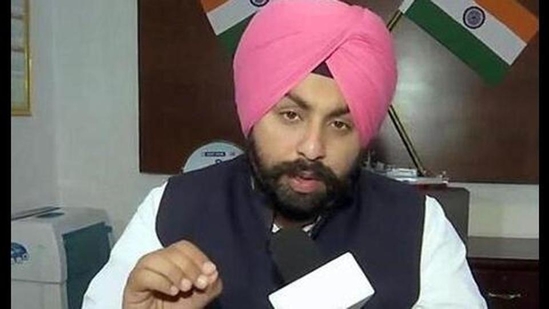
The Punjab government has strongly objected to the alleged removal of Punjabi from the list of regional language subjects for Class 10 by the Central Board of Secondary Education (CBSE). On Wednesday, Punjab Education Minister Harjot Singh Bains accused the BJP-led central government and CBSE of conspiring against Punjab and its language, claiming that the new draft norms for the board exams had sidelined Punjabi. The minister called the move a “well-planned conspiracy” to diminish the prominence of Punjabi in the education system and announced that the Punjab government had issued a fresh notification mandating Punjabi as a main subject in all schools across the state. He further warned that if Punjabi is not a main subject in any school, the certificate issued by such institutions will be considered “null and void.” This directive, according to him, will be applicable to all education boards operating in the state.
Harjot Singh Bains emphasized that in the newly proposed CBSE draft norms, subjects such as Science, Mathematics, Social Science, Hindi, and English are designated as the primary subjects for Class 10, whereas regional and foreign languages have been categorized into a separate group. He asserted that Punjabi was deliberately removed from the list of regional languages, effectively diminishing its status as a primary subject. Addressing a press conference, the minister strongly criticized the move and stated that Punjabi is widely spoken in several states, including Haryana, Jammu and Kashmir, Delhi, Uttar Pradesh, Himachal Pradesh, Maharashtra, and West Bengal. He described Punjabi as more than just a language, calling it a “symbol of rich cultural heritage” that is deeply cherished by millions across India. He alleged that the current situation was part of an attempt to erase Punjabi from the educational landscape and warned that the Punjab government would not tolerate such actions.
Following these allegations, the CBSE issued a detailed clarification refuting the claims made by the Punjab government. CBSE Examination Controller Sanyam Bhardwaj stated that the list of languages mentioned in the draft date sheet was only indicative and not exhaustive. He confirmed that all subjects and languages that are currently being offered by CBSE will continue to be available for students in the 2025-2026 academic session as well. According to CBSE, Punjabi (004), along with other languages such as Russian, Nepali, Limboo, Lepcha, Sindhi, Malayalam, Odia, Assamese, Kannada, Kokborok, Telugu, Arabic, and Persian, will continue to be included in the regional and foreign languages group. The board reaffirmed that there had been no decision to exclude Punjabi and that all existing language options would remain available.
Meanwhile, CBSE has also introduced a significant reform in the board examination system by approving draft norms for conducting the Class 10 board exams twice a year. Under the proposed system, students will have the flexibility to take their board exams either in February or in May, with the option to appear in both sessions if they wish to improve their scores. This change, which is expected to be implemented from 2026 onwards, aims to reduce the high-pressure nature of board exams by giving students two opportunities in an academic year. The first phase of exams will be held between February 17 and March 6, while the second phase will take place from May 5 to May 20. Students will have the choice to skip specific subjects in the second attempt if they are satisfied with their performance in the first phase.
The introduction of this system is in line with the recommendations of the National Education Policy (NEP), which suggests allowing students multiple opportunities to take board exams to alleviate stress and reduce the “high stakes” nature of these tests. CBSE has also clarified that no separate supplementary examination will be conducted under this system. Instead, the second phase of exams will serve as a supplementary opportunity for those who want to improve their scores.
The draft norms have now been released for public feedback, and stakeholders have been invited to submit their responses by March 9. Once the consultation process is completed, CBSE will finalize the policy, paving the way for the new examination format. As the controversy over Punjabi’s status in CBSE schools continues, the Punjab government remains firm on its stance, insisting on the protection and promotion of the language, while CBSE maintains that no changes have been made to its subject offerings.