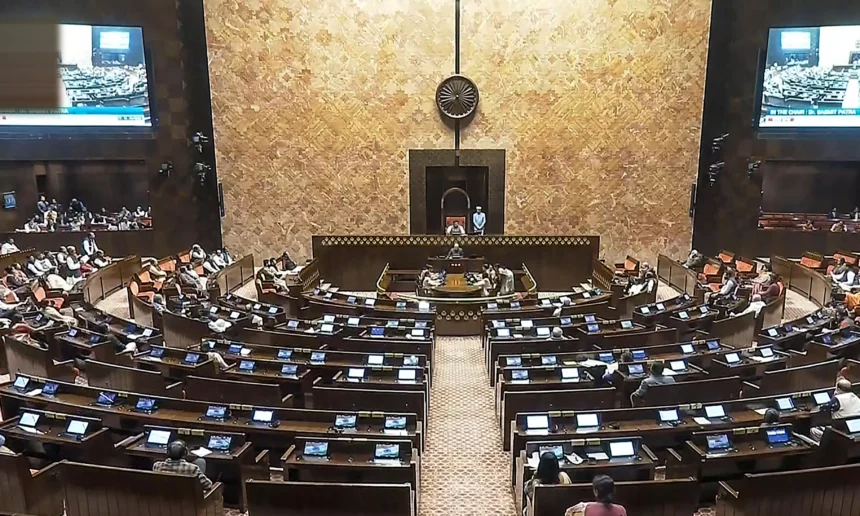
The Union Cabinet has approved 14 amendments to the controversial Waqf (Amendment) Bill, following recommendations from a joint parliamentary committee. The bill, which has been the center of political controversy, had been referred to the committee in August for further review. After intense deliberations and multiple committee hearings, the government decided to accept 14 of the 23 proposed changes, leading to a renewed political clash between the ruling BJP and opposition parties. The amended bill is now set to be tabled in Parliament when it reconvenes on March 10.
The parliamentary committee had submitted its report on February 13, but the process was marred by disputes as opposition MPs accused the ruling party of suppressing dissenting opinions. Some opposition leaders claimed that portions of their dissent notes were omitted from the final report. The government, however, rejected these allegations, arguing that the committee’s chairman, BJP MP Jagadambika Pal, had the authority to exclude sections that cast aspersions on the committee. Following a meeting between Lok Sabha Speaker Om Birla, Parliamentary Affairs Minister Kiren Rijiju, and opposition MPs, a resolution was reached to include the dissent notes in their entirety.
The opposition has repeatedly alleged that the bill is being pushed through without adequate consultation, accusing the BJP of bias in its handling of the committee’s proceedings. The controversy deepened as opposition members wrote to Speaker Om Birla, claiming that the bill was being rushed to gain political mileage ahead of the Delhi elections. The ruling party dismissed these claims, with panel member and BJP MP Aparajita Sarangi asserting that the committee had conducted extensive deliberations and given ample time for all members to voice their concerns. Over the past six months, the committee held nearly three dozen hearings, many of which ended in heated exchanges and, at one point, even physical confrontation. In one notable incident, Trinamool Congress MP Kalyan Banerjee smashed a glass bottle on a table, claiming provocation from BJP MP Abhijit Gangopadhyay. The final recommendations included 66 proposed changes, but all 44 amendments suggested by opposition members were rejected. The 23 proposals put forth by BJP and allied parties were accepted, and after a vote, 14 amendments were cleared for inclusion in the revised bill. The composition of the committee itself became a point of contention, with 16 MPs from the BJP and its allies outnumbering the 10 opposition members.
Among the key amendments approved, one significant change pertains to the composition of waqf councils at the state and national levels. The bill now mandates the inclusion of at least two non-Muslim members while allowing for additional non-Muslim members through ex-officio nominations. This amendment ensures that waqf councils will no longer be composed solely of members from the Muslim community. Another major change shifts the authority to determine whether a property qualifies as waqf land from the District Collector to an officer nominated by the respective state government. This shift in authority has drawn criticism from opposition leaders who argue that the move could lead to political interference in the management of waqf properties. Additionally, the bill clarifies that the new provisions will not apply retrospectively to waqf properties that have already been registered. Congress leader and JPC member Imran Masood has raised concerns about this clause, pointing out that nearly 90 percent of waqf properties remain unregistered, potentially leaving them vulnerable to legal disputes.
The original bill had proposed 44 changes to the existing framework governing central and state waqf boards, which are responsible for managing Muslim charitable properties across the country. Among the most contentious proposals was the inclusion of non-Muslims and a minimum of two women in every waqf board. The bill also sought to appoint a Union Minister, three MPs, and four individuals of “national repute” to the Central Waqf Council. These provisions triggered strong protests from opposition parties, who argued that they undermined the autonomy of waqf institutions. Another controversial amendment proposed restricting donations to waqf properties exclusively to Muslims who have been practicing for at least five years. Critics labeled this provision discriminatory, questioning the definition of a “practicing Muslim.” Further changes included limiting the Waqf Council’s authority to claim land, a move that has been met with strong resistance from opposition leaders and waqf board representatives.
The government has defended the amendments by arguing that the changes are intended to empower Muslim women and children who, according to the ruling party, have been marginalized under the existing waqf laws. However, opposition leaders, including Congress MP KC Venugopal, have characterized the bill as a direct attack on religious freedoms. AIMIM chief Asaduddin Owaisi and DMK MP Kanimozhi have also voiced strong opposition, contending that the bill violates constitutional provisions such as Article 15, which guarantees religious freedom, and Article 30, which protects the rights of minority communities to manage their educational institutions. These concerns have fueled intense debates in Parliament, with opposition members vowing to resist any attempt to dilute waqf institutions’ autonomy.
Despite the backlash, the ruling BJP remains firm in its stance that the amendments are necessary to introduce transparency and accountability in the management of waqf properties. The party argues that previous governments have failed to address irregularities within waqf boards and that these changes will modernize the regulatory framework. As the amended bill prepares to be reintroduced in Parliament, the political battle over its provisions is expected to intensify. With the opposition gearing up to challenge the bill on legal and political grounds, the stage is set for a contentious legislative showdown in the coming weeks.