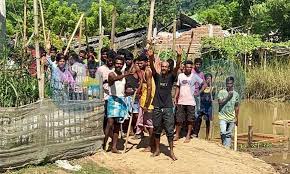
Assam Chief Minister Himanta Biswa Sarma visited Sonapur on Wednesday amid growing tensions between the state government and tribal communities over the proposed relocation of Assam Police’s 10th Battalion. The site in question, where a violent eviction drive last September left two people dead and several injured, is now at the center of a political and social storm. The government’s decision to use the land for a police battalion has sparked protests from tribal organizations who argue the land should be used for the welfare of indigenous communities, not security infrastructure.
Controversial Eviction and Tribal Backlash
On September 9, 2023, the Assam government conducted an eviction drive in Kachutali village in the Sonapur revenue circle, home primarily to Bengali Muslim residents. The eviction was justified on the grounds that the land belonged to the notified tribal belt of South Kamrup, where land rights are reserved for ‘Protected Classes’ including Scheduled Tribes, Scheduled Castes, Santhals, tea tribes, and Gorkhas. The drive cleared over 1,050 bighas and displaced around 650 families. While tribal groups initially supported the move to remove encroachments, they are now strongly opposing the state’s plan to set up a police battalion on the same land.
Tribal leaders argue that security establishments like the Air Force Station, SSB, CRPF, and ITBP already exist in the area, including Sonapur, and have brought no tangible benefits to local tribal populations. Manik Ronghang, president of the Tribal People’s Confederation Dimoria, said the land should be used for projects beneficial to the tribal population such as a university or a medical college. Jiten Mahilary from the Bodo Kachari Youth Students’ Union accused the government of “replacing one form of encroachment with another.”
Government’s Position and Ongoing Displacement
During his visit, Himanta Biswa Sarma emphasized the need to secure the land from future encroachments and clarified that only 100 of the 1,050 bighas would be used for the battalion. He also suggested that the government might explore development projects on the remaining land. The plan was initially announced in March this year during the state budget presentation by Finance Minister Ajanta Neog, who highlighted the project’s aim to protect tribal lands and promote modern infrastructure.
However, many displaced families still remain on the site, living in makeshift shelters or local mosques. “We are landless. The Chief Minister asked us to leave, but we have nowhere to go,” said Harun Rashed, one of the evicted residents.
The issue remains sensitive as stakeholders await clarity on how the remaining land will be utilized and whether the displaced families will be rehabilitated meaningfully.