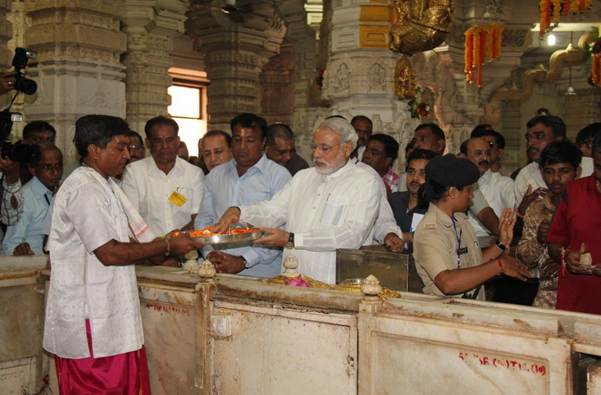
Prime minister Narendra Modi will visit Somnath in Gujarat on January 10 and 11, 2026, to participate in the Somnath Swabhiman Parv, a major cultural and spiritual programme commemorating one thousand years of resilience and civilisational continuity since the first invasion of the Somnath Temple. The two-day visit underscores the symbolic and historical importance of Somnath as a living testament to India’s enduring faith, cultural pride, and collective resolve. Through his participation in religious rituals, ceremonial processions, and public events, the prime minister’s visit highlights the continuing relevance of Somnath as a national symbol of spiritual strength and historical perseverance.
The Somnath Swabhiman Parv, being organised from January 8 to January 11, 2026, is designed to honour the countless warriors, saints, and citizens who protected and restored the Somnath Temple across centuries. The programme brings together history, devotion, and national consciousness, reflecting how the temple has remained a source of inspiration despite repeated attempts at destruction. The prime minister’s presence during key moments of the celebrations is intended to reaffirm the importance of preserving and celebrating India’s cultural and spiritual heritage for future generations.
Spiritual observances and ceremonial events during the prime minister’s somnath visit
The prime minister’s engagement with the Somnath Swabhiman Parv will begin on the evening of January 10. At around 8 pm, he will participate in Omkar mantra chanting at the Somnath Temple, joining saints and devotees in a deeply symbolic spiritual observance. The chanting of the sacred ‘Om’ is intended to resonate as a reminder of spiritual continuity, inner strength, and the timeless nature of India’s civilisational values. Following the chanting, the prime minister will witness a specially curated drone show at the temple complex, blending modern technology with ancient heritage to narrate the story of Somnath’s resilience and revival.
On January 11, the prime minister will take part in the Shaurya Yatra, a ceremonial procession organised to honour the innumerable warriors who sacrificed their lives defending the Somnath Temple. Scheduled to begin around 9:45 am, the Shaurya Yatra will feature a symbolic procession of 108 horses, representing valour, sacrifice, and unwavering courage. The imagery of the horses is meant to evoke memories of historical resistance and the spirit of protection that has surrounded the temple for centuries.
Following the Shaurya Yatra, the prime minister will perform darshan and pooja at the Somnath Temple at around 10:15 am. This act of worship carries profound symbolic significance, reflecting continuity between devotion, history, and national identity. Shortly thereafter, at around 11 am, the prime minister will address a public gathering in Somnath, where he is expected to speak on the cultural, historical, and spiritual importance of the temple and the broader message of the Somnath Swabhiman Parv.
Throughout the celebrations, hundreds of saints from across the country are expected to participate, adding to the spiritual depth of the programme. One of the most distinctive features of the event is the continuous chanting of ‘Om’ for 72 hours within the temple premises, creating an atmosphere of sustained devotion and collective spiritual energy.
Somnath swabhiman parv and the legacy of resilience across a thousand years
The Somnath Swabhiman Parv marks one thousand years since the invasion of the Somnath Temple by Mahmud of Ghazni in 1026. That event is remembered not only for the destruction it caused, but also for the extraordinary resilience that followed. Despite multiple invasions and repeated attempts to erase it over centuries, the Somnath Temple has been rebuilt time and again, standing today as a powerful symbol of faith, national pride, and cultural continuity.
The celebrations are intended to remember the countless citizens of India whose sacrifices in defending and restoring the temple continue to inspire the cultural consciousness of the nation. Somnath’s story is not merely one of survival, but of renewal, reflecting a collective determination to preserve civilisational identity even in the face of adversity. The temple’s enduring presence is seen as a testament to the unbroken spirit of India’s civilisation.
After India gained independence, the restoration of the Somnath Temple became a matter of national importance. The initiative to rebuild the temple was led by Sardar Vallabhbhai Patel, who viewed the restoration as both a cultural and moral imperative. One of the most significant milestones in this journey was achieved in 1951, when the restored Somnath Temple was formally opened to devotees. The inauguration took place in the presence of the then President of India, Dr Rajendra Prasad, symbolising the temple’s revival as a matter of national pride rather than political or sectarian identity.
The year 2026 marks the completion of 75 years since this historic restoration, adding another layer of significance to the Somnath Swabhiman Parv. The convergence of one thousand years since the first invasion and seventy-five years since the temple’s modern restoration has given the celebrations a unique historical depth. The programme seeks to connect these milestones, emphasising how remembrance, restoration, and reverence together shape India’s cultural narrative.
The prime minister’s participation in the Somnath Swabhiman Parv reflects a broader emphasis on recognising and celebrating India’s civilisational heritage. By engaging directly in rituals, commemorations, and public dialogue at Somnath, his visit reinforces the message that cultural memory and spiritual identity remain central to the nation’s collective consciousness. The events at Somnath over these days are designed to serve not only as a tribute to the past, but also as a reminder of the values of resilience, faith, and unity that continue to define India’s civilisation.