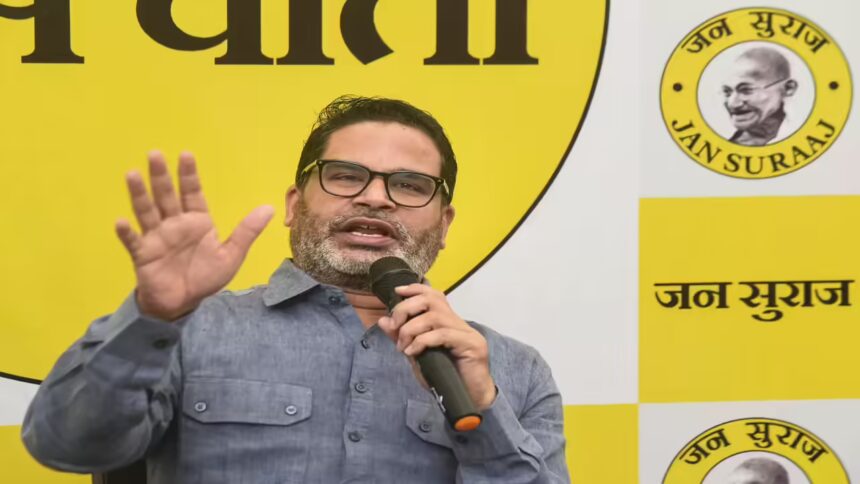
In a significant clarification ahead of the upcoming Bihar Assembly elections, poll strategist and Jan Suraaj Party founder Prashant Kishor has firmly ruled out any alliance with the Chirag Paswan-led Lok Janshakti Party (Ram Vilas). The political buzz over a potential tie-up between Jan Suraaj and LJP (Ram Vilas) had intensified in recent weeks, fueled by speculations surrounding seat-sharing negotiations with the BJP and Paswan’s assertive stance on claiming a larger share of constituencies. Addressing these rumors, Kishor emphasized that Jan Suraaj will contest the elections independently, asserting that the party’s “alliance is with the people” rather than any other political entity. His remarks underline a strategic positioning aimed at projecting Jan Suraaj as a people-centric alternative amidst Bihar’s complex political landscape.
Jan Suraaj’s Independent Approach and People-Centric Strategy
Prashant Kishor’s statement comes at a time when the political atmosphere in Bihar is charged with uncertainty and competitive maneuvering. Kishor explicitly dismissed any suggestions of a tie-up with Chirag Paswan’s Lok Janshakti Party (Ram Vilas), stating, “There is a fight going on to loot Bihar. This is not a fight for seats… Every party wants to get more seats so that they can loot Bihar more in the future. We do not have any alliance. Our alliance is with the people.” The remark reflects Kishor’s attempt to frame the upcoming elections not merely as a contest for political power but as a battle for governance, accountability, and people-centric policies. By positioning Jan Suraaj as an independent entity committed to public welfare, Kishor aims to differentiate his party from the traditional power struggles that have historically dominated Bihar politics.
The emphasis on “alliance with the people” is not merely rhetorical; it signals a larger narrative Kishor seeks to project. Bihar has witnessed frequent coalition governments and pre-poll alliances, often marked by tactical seat-sharing agreements that prioritize political expediency over substantive governance. By contrasting Jan Suraaj’s approach with what he terms as the “loot and grab” strategies of other parties, Kishor seeks to appeal directly to voters, positioning his party as a new political force that promises accountability and development rather than opportunistic power accumulation. Analysts note that this strategy is also designed to capitalize on voter fatigue with traditional political alliances and the perception that established parties often prioritize their internal negotiations over public interest.
Chirag Paswan’s Seat Demands and NDA Negotiations
While Jan Suraaj moves ahead with an independent campaign, speculation about alliances has been fueled by Chirag Paswan’s assertive positioning within the NDA framework. The LJP (Ram Vilas) leader, currently serving as the Union Minister for Food Processing Industries, reportedly seeks 40 out of Bihar’s 243 Assembly constituencies for his party in the forthcoming elections. This demand comes on the heels of the LJP’s impressive performance in the last Lok Sabha elections, where it secured victories in all five contested seats. However, the BJP has reportedly proposed only 25 seats for the LJP, a figure that Paswan considers unacceptable.
In response, Paswan has issued veiled warnings about his potential influence on election outcomes, stating, “I am like salt on vegetables… I can affect 20,000 to 25,000 votes in every constituency.” Such statements highlight the bargaining leverage he perceives himself to hold, especially given the LJP’s electoral performance and the potential to swing votes in tightly contested constituencies. Despite the strong rhetoric, sources within the BJP emphasize that Paswan remains a loyal supporter of Prime Minister Narendra Modi, and his statements are primarily aimed at addressing internal party dynamics and appeasing hardline factions. Political observers interpret this as a tactical maneuver that balances the assertion of influence while maintaining long-term allegiance to the NDA leadership.
The seat-sharing dispute also underscores the broader complexity of Bihar’s political landscape, where regional and caste-based considerations significantly impact electoral strategies. The LJP (Ram Vilas) under Paswan has historically leveraged community support to negotiate political concessions, and its current demands reflect an expectation of proportional representation in the upcoming Assembly elections. Analysts note that such negotiations often shape pre-poll alliances, electoral strategies, and campaign messaging, affecting not only party positioning but also voter perception and engagement.
Strategic Implications for Jan Suraaj and Bihar Politics
Prashant Kishor’s decision to rule out an alliance with the LJP has strategic significance for both his party and the broader electoral context in Bihar. By contesting independently, Jan Suraaj positions itself as a credible alternative to the existing political duopoly and seeks to consolidate support among voters who are disillusioned with traditional political negotiations. Kishor’s emphasis on an alliance with the people, rather than parties or political elites, is designed to resonate with a broad spectrum of voters seeking accountability, transparency, and development-focused governance.
Political analysts suggest that Kishor’s move could have ripple effects on the NDA’s internal negotiations and the broader electoral arithmetic in Bihar. With the LJP demanding a higher number of seats than the BJP is willing to allocate, Jan Suraaj’s independent campaign may influence vote distribution and potentially disrupt established political calculations. This development underscores the fluidity and unpredictability of Bihar’s electoral politics, where new entrants and independent campaigns can significantly impact the balance of power. Furthermore, Kishor’s clear messaging about contesting alone reinforces the perception of Jan Suraaj as a disciplined, purpose-driven party that prioritizes voter interests over opportunistic alliances, which could be a key differentiator in a politically fragmented state.
Additionally, Kishor’s approach highlights the increasing role of professional strategists and technocrats in Indian electoral politics. As a poll strategist with national recognition, Kishor brings a data-driven, methodical approach to campaign planning, voter outreach, and messaging. His emphasis on people-centric narratives, transparency, and accountability aligns with broader trends in Indian politics, where voter awareness, digital engagement, and issue-based campaigns are gaining prominence. By foregrounding public interest and rejecting opportunistic alliances, Kishor not only strengthens Jan Suraaj’s electoral positioning but also signals a shift toward governance-oriented political discourse in Bihar.
In conclusion, Prashant Kishor’s decisive announcement regarding the independent contesting of Jan Suraaj in Bihar reflects both a strategic electoral decision and a broader political philosophy centered on accountability and people’s welfare. By rejecting an alliance with Chirag Paswan’s LJP and emphasizing an alliance with the populace, Kishor aims to carve out a distinct identity for his party in a crowded and competitive political landscape. The ongoing negotiations and seat-sharing debates within the NDA add layers of complexity to Bihar’s electoral scenario, but Jan Suraaj’s independent stance underscores a commitment to voter-centric politics, development-focused campaigns, and the emergence of a new political narrative in the state.
This development is expected to influence not only the party strategies but also voter sentiment, political alliances, and the overall electoral dynamics in Bihar, setting the stage for a highly contested and closely watched election cycle. Kishor’s articulation of a people-first philosophy, combined with strategic campaign planning and independent positioning, positions Jan Suraaj as a noteworthy contender in Bihar’s evolving political landscape.