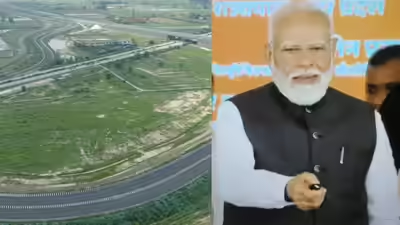
Prime Minister Narendra Modi inaugurated the Ganga Expressway in Hardoi, marking a major milestone in infrastructure development and emphasizing faster growth, improved connectivity, and long-term economic transformation across Uttar Pradesh.
Prime Minister Narendra Modi on Wednesday formally inaugurated Uttar Pradesh’s longest expressway, the Ganga Expressway, describing it as a transformative infrastructure project that will reshape mobility, trade, and regional development. The expressway is expected to significantly reduce travel time, enhance logistical efficiency, and unlock new economic opportunities across multiple districts of the state.
The Prime Minister launched the project from Hardoi, where he also planted a sapling and walked along the expressway with Chief Minister Yogi Adityanath. The symbolic gesture reflected both environmental commitment and direct engagement with the project’s execution. The inauguration ceremony witnessed a large turnout of people, including government officials, party workers, and local residents, highlighting the importance of the project in the region.
The Ganga Expressway represents one of the most ambitious infrastructure initiatives undertaken in Uttar Pradesh. Stretching across several districts, the high-speed corridor is designed to connect key regions and facilitate faster and more efficient transportation. By reducing travel time between western and eastern parts of the state, the expressway is expected to bring significant benefits to both commuters and businesses.
The expressway passes through 12 districts, integrating regions that were previously less connected. This improved connectivity is likely to stimulate economic growth by enabling smoother movement of goods and people. It will also help reduce transportation costs, making businesses more competitive and encouraging investment in the region.
Modern amenities have been incorporated into the expressway to ensure a comfortable and safe travel experience. Public convenience centres, rest areas, trauma care facilities, and food courts have been strategically placed along the route. These facilities are designed to support long-distance travelers and ensure that essential services are readily available.
Safety has been a key focus in the design of the expressway. Rumble strips have been installed at various points to alert drivers through vibrations, helping prevent accidents caused by lane deviations or fatigue. Such features reflect a broader emphasis on road safety and user experience.
Fuel stations have been established at intervals of 75 kilometers, ensuring that vehicles can travel long distances without inconvenience. These stations are expected to support both private and commercial vehicles, further enhancing the usability of the expressway.
One of the most notable features of the Ganga Expressway is the construction of a 3.5-kilometer airstrip near Shahjahanpur. This airstrip has been developed to accommodate Indian Air Force fighter jets, making it a strategic asset. It is also designed for night landings, making it the first such facility in the country.
The inclusion of this airstrip highlights the dual-use nature of modern infrastructure projects, combining civilian and defence requirements. In times of emergency or conflict, such facilities can play a crucial role in enhancing operational readiness and response capabilities.
Prime Minister Modi highlighted the speed at which the project was completed, noting that the foundation stone was laid in December 2021. Completing a project of this scale in less than five years demonstrates a strong focus on timely execution and efficient project management.
He also announced plans to extend the expressway further, connecting it to Haridwar. This extension will enhance connectivity to major religious and tourism destinations, boosting economic activity and increasing footfall in these areas.
Additionally, plans are underway to develop link expressways that will connect the Ganga Expressway with other major road networks. This integrated approach aims to create a seamless transportation grid, facilitating easier movement across the state and beyond.
The economic impact of the Ganga Expressway is expected to be significant. Improved connectivity will reduce transportation time and costs, making it easier for businesses to operate and expand. This is likely to attract investment and promote industrial development along the corridor.
Industrial clusters are expected to emerge along the expressway, creating employment opportunities and contributing to economic growth. These clusters will provide a platform for manufacturing, logistics, and other industries to thrive, further strengthening the state’s economy.
Farmers are also expected to benefit from the expressway. Improved road connectivity will allow them to transport their produce to markets more efficiently, reducing spoilage and increasing profitability. This will contribute to higher incomes and improved livelihoods in rural areas.
The project has involved significant participation from local communities, particularly farmers who contributed land for its construction. The government has emphasized that the long-term benefits of the expressway will outweigh the challenges faced during its development.
Earlier in the day, Prime Minister Modi visited the Kashi Vishwanath Temple in Varanasi and offered prayers. The visit was marked by a large gathering of people who came out to welcome him. The roadshow leading to the temple passed through several key areas, creating a festive atmosphere.
The visit underscored the cultural and spiritual importance of the region, linking the development of modern infrastructure with the preservation of heritage. The Prime Minister emphasized that development and tradition can coexist, contributing to a balanced approach to growth.
During his address, PM Modi also spoke about the broader political and governance context. He highlighted the importance of public participation in the democratic process and referred to ongoing elections in different parts of the country.
He criticized the opposition for blocking key legislative reforms, including the Women’s Reservation Bill. According to him, such actions delay progress and hinder efforts to empower citizens and promote inclusive development.
The Prime Minister expressed confidence that upcoming election results would reinforce the government’s development agenda and provide new momentum for growth. He emphasized that infrastructure development plays a crucial role in achieving the vision of a developed India.
The Ganga Expressway is part of a larger national effort to build world-class infrastructure. Over the past few years, there has been a strong focus on expanding highways, expressways, rail networks, and airports to improve connectivity and support economic growth.
By connecting major cities and regions, such projects aim to reduce travel time, enhance efficiency, and promote regional integration. The Ganga Expressway is expected to play a key role in this vision, serving as a major transportation artery in Uttar Pradesh.
The Prime Minister described the expressway as a new lifeline for the state, drawing a comparison with the Ganga River, which has historically been central to the region’s identity and prosperity. He emphasized that just as the river has supported life and growth for centuries, the expressway will drive development in the modern era.
The project is also expected to boost tourism by improving access to major religious and cultural destinations. Faster travel times will make it easier for people to visit places like Varanasi and Prayagraj, contributing to the growth of the tourism sector.
The successful completion of the Ganga Expressway highlights the importance of infrastructure in driving economic and social progress. It demonstrates how large-scale projects can transform regions, create opportunities, and improve quality of life.
As Uttar Pradesh continues to expand its network of expressways, the focus remains on building efficient, safe, and modern transportation systems. These efforts are expected to play a crucial role in shaping the future of the state and contributing to national development.
The inauguration of the Ganga Expressway marks a significant step in this journey. With its advanced features, strategic importance, and economic potential, the project is set to become a key driver of growth and connectivity in the years to come.