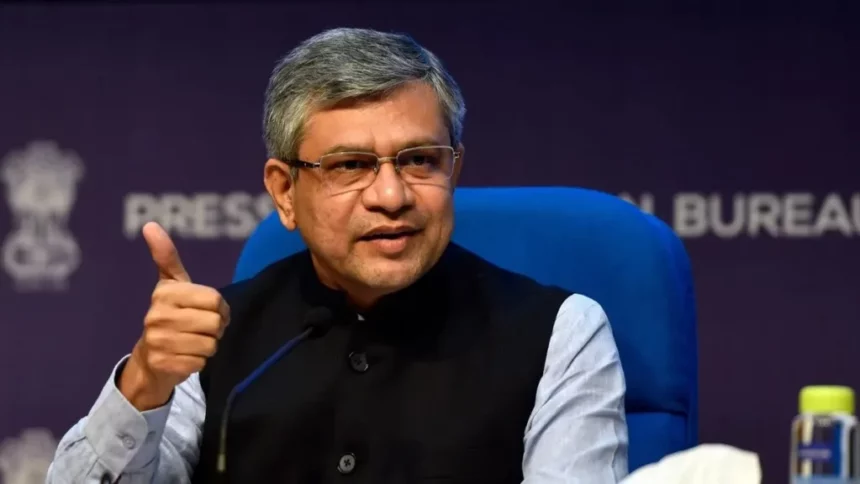
A decade into the Narendra Modi-led NDA government, the BJP has presented a broad picture of what it calls a transformative journey for the country and its people. At an event in Delhi, Union Minister Ashwini Vaishnaw said that Prime Minister Modi’s leadership had steered India onto a path of long-term growth and structural reform, fundamentally reshaping governance, development priorities, and the country’s position on the global stage.
Highlighting progress through numbers and reform
Speaking at Bharat Mandapam, Ashwini Vaishnaw made a detailed presentation to journalists and senior editors, describing 11 years of “seva, sushashan, and gareeb kalyan” under Modi’s leadership. He outlined 12 key achievements, ranging from affordable healthcare and women’s empowerment to infrastructure development, the rise in per capita income, and upliftment of farmers and the poor. He claimed that India’s per capita income has grown from just over ₹86,000 to ₹2 lakh, reflecting the deeper economic transformation taking place.
The event was attended by top BJP leaders including Amit Shah, Rajnath Singh, J.P. Nadda, Nirmala Sitharaman, and Nitin Gadkari. The leadership emphasized how the Modi government’s welfare policies have changed the lives of ordinary Indians and shifted India’s economic direction, making it more inclusive and sustainable.
Rewriting the idea of governance and national pride
Ashwini Vaishnaw underlined that PM Modi has changed the entire vision of governance, placing national interest and citizen welfare at the center. He highlighted how districts once eager to be labelled “backward” are now considered “aspirational,” and how the government has shed the colonial mindset that once shaped policies. He contrasted Modi’s decisive approach with past administrations, referring to the abolition of Article 370 and the firm response to Naxalism, which he said earlier governments failed to address seriously.
He also pointed to symbolic and practical reforms such as the provision of sanitary pads for just ₹1, announced from the Red Fort, and the global leadership India has shown through innovations like the Unified Payments Interface (UPI), which has enabled digital transactions worth ₹214 lakh crore till January 2025. These changes, Ashwini Vaishnaw argued, represent a shift from incremental progress to structural transformation.