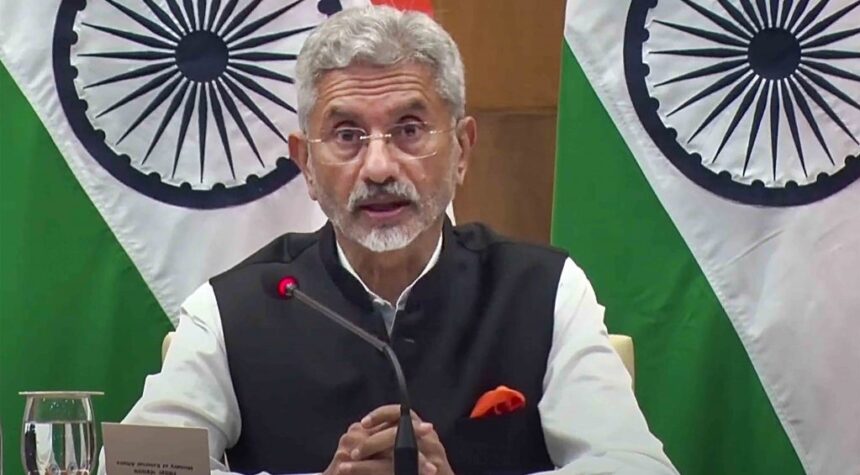
The international community is closely observing a growing security challenge in Europe as recent developments in Polish airspace have sparked concerns over regional stability and the broader implications of the ongoing Ukraine conflict. External Affairs Minister of India, S. Jaishankar, took the initiative to directly address these concerns by speaking with Poland’s Foreign Minister Radoslaw Sikorski, highlighting India’s consistent stance on resolving conflicts through diplomacy and seeking an early and durable solution to the Ukraine crisis. In his post on X, S. Jaishankar emphasized India’s apprehensions regarding developments affecting Poland’s security and reaffirmed New Delhi’s commitment to international peace and regional stability. This comes at a critical juncture when tensions on NATO’s eastern flank are intensifying, with incidents of airspace violations drawing global attention and prompting strategic responses from multiple stakeholders.
Polish Airspace Violations and International Response
On Wednesday, Poland reported multiple incursions into its airspace by Russian forces, including the deployment of drones that triggered immediate military responses. According to Warsaw, at least 19 violations were recorded, prompting the scrambling of Polish and NATO jets, and the interception of at least three drones. These incidents have not only heightened security concerns within Poland but also raised questions about NATO’s preparedness and deterrence capabilities along its eastern borders. The incursions represent a significant escalation, reflecting the increasingly complex security environment shaped by the Ukraine conflict and Russia’s ongoing military operations in the region.
In response to these violations, France announced the deployment of three Rafale fighter jets to Poland, a strategic move aimed at strengthening NATO’s eastern defenses and safeguarding European security. French President Emmanuel Macron described the deployment as a direct contribution to the protection of Polish airspace and a demonstration of solidarity with NATO allies. This initiative underscores the broader Western effort to reassure member states and deter further incursions, particularly in light of Russia’s assertive military posture near NATO borders. The deployment also reflects the growing urgency among European nations to bolster regional security infrastructure and ensure rapid operational readiness in the face of evolving threats.
The United States and NATO have publicly expressed their support for Warsaw, condemning the violations as breaches of international norms and NATO territory. While Russia denied targeting Poland, the incidents have intensified diplomatic discourse, with global powers seeking to balance deterrence with dialogue. The airspace violations highlight the fragile security dynamics in Eastern Europe, where the Ukraine conflict’s spillover effects increasingly threaten neighboring states, prompting coordinated international responses. These developments underscore the importance of strategic partnerships, military preparedness, and diplomatic engagement to prevent escalation while ensuring the protection of sovereign territories within the alliance framework.
India’s Stance and Diplomatic Engagement
Amid these developments, External Affairs Minister S. Jaishankar reiterated India’s consistent position regarding the Ukraine conflict, emphasizing the need for a durable and early resolution. Speaking with Poland’s Foreign Minister Radoslaw Sikorski, S. Jaishankar highlighted India’s concern over actions that impact Poland’s security and stressed the importance of dialogue in resolving regional disputes. India has consistently advocated for peaceful settlement of conflicts, calling for cessation of hostilities and constructive negotiations to achieve long-term stability. In his post on X, S. Jaishankar confirmed the conversation, stating that the discussion centered on Poland’s security concerns and reaffirmed India’s support for efforts aimed at mitigating the humanitarian and geopolitical fallout of ongoing conflicts.
India’s engagement in this context reflects its evolving diplomatic role on global security issues and its emphasis on multilateral cooperation. While New Delhi maintains strategic partnerships across regions, it has consistently sought to position itself as a mediator that advocates for dialogue and compromise. By engaging with Poland, India signals its willingness to contribute to international efforts to reduce tensions and promote a rules-based global order. This approach is consistent with India’s broader foreign policy objectives, which prioritize stability, adherence to international law, and support for multilateral institutions tasked with conflict resolution.
The broader implications of India’s stance are also tied to its interest in maintaining balanced relations with major global powers. While expressing concern over violations affecting NATO allies, India simultaneously advocates for de-escalation and constructive engagement between Russia and Ukraine. By positioning itself as a responsible stakeholder, India underscores the importance of global cooperation and the avoidance of unilateral escalation that could exacerbate regional instability. This diplomatic posture reflects India’s commitment to safeguarding the interests of the international community while promoting a pragmatic and principled approach to complex geopolitical challenges.
The Ukraine Conflict and Regional Stability
The ongoing Ukraine conflict continues to shape the security architecture of Eastern Europe, influencing the defense postures and strategic decisions of NATO members and neighboring states. Incidents like the airspace violations in Poland serve as stark reminders of the conflict’s broader ramifications, extending beyond the immediate battleground and affecting regional security and international diplomatic alignments. The escalation in Polish airspace highlights the interconnectedness of European security, the challenges posed by unregulated military activities, and the need for comprehensive mechanisms to prevent inadvertent confrontations.
In this context, India’s advocacy for an “early end to hostilities and a durable solution” aligns with broader international calls for de-escalation and constructive negotiation. By emphasizing a negotiated settlement, India supports measures that address the root causes of conflict, including territorial disputes, political grievances, and security concerns. Moreover, the Indian position reinforces the importance of multilateral engagement, where dialogue among key stakeholders—including the United States, European allies, Russia, and regional partners—can create conditions for lasting peace and prevent further destabilization of the European continent.
The strategic deployment of assets, such as French Rafale jets to Poland, underscores the evolving nature of defense preparedness and deterrence in response to security threats. It also highlights the need for coordinated intelligence sharing, operational readiness, and rapid response capabilities among NATO members. The integration of diplomatic, military, and strategic initiatives is critical to mitigating risks associated with unanticipated incursions, as demonstrated by Poland’s proactive measures and NATO’s support. These developments provide a blueprint for addressing future security challenges that may arise from ongoing conflicts and regional tensions.
India’s role in this milieu, while primarily diplomatic, is significant for shaping international perspectives on conflict resolution. By engaging with affected nations and advocating for a durable solution to the Ukraine conflict, India contributes to global efforts aimed at reducing hostilities and maintaining a balance between strategic interests and humanitarian concerns. This proactive approach underscores India’s credibility as a global actor capable of constructive engagement, emphasizing dialogue, negotiation, and adherence to international norms.
The incident also brings to the forefront the interconnected nature of global security, where events in one region can have ripple effects far beyond their immediate location. Poland’s airspace violations, while a regional security concern, resonate with broader geopolitical implications involving NATO, European security architecture, and global stability. India’s engagement highlights the need for comprehensive, multilateral strategies that combine diplomacy, defense cooperation, and strategic foresight to address such complex challenges.