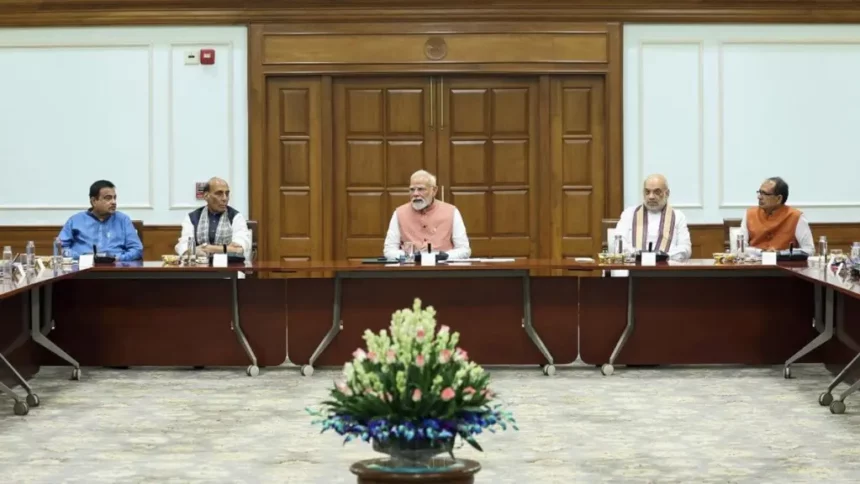
Prime Minister Narendra Modi has set the tone for India’s next phase of governance and economic transformation by convening a high-level meeting with senior ministers, secretaries, and leading economists to chalk out the roadmap for next-generation reforms. The discussions, which focused on building a future-ready, efficient, and citizen-centric ecosystem, reflected the government’s resolve to accelerate structural reforms that will not only ease the burden of compliance but also unlock growth opportunities across all sectors of the economy. PM Modi emphasized that his administration remains committed to reforms that will boost the Ease of Living, promote the Ease of Doing Business, and enhance prosperity for every Indian citizen.
A Bold Meeting on Reforms with Top Leadership
The high-level meeting, chaired by Prime Minister Modi, included the participation of key Union ministers such as Amit Shah, Rajnath Singh, Nitin Gadkari, Shivraj Singh Chouhan, Nirmala Sitharaman, and Piyush Goyal, alongside several secretaries and prominent economists. This gathering underscored the seriousness of the government’s commitment to launching next-generation reforms that aim to reimagine India’s governance and economic landscape.
In a message posted on X after the meeting, the Prime Minister reiterated his vision: “Chaired a meeting to discuss the roadmap for Next-Generation Reforms. We are committed to speedy reforms across all sectors, which will boost Ease of Living, Ease of Doing Business and prosperity.” His statement reflects a broader agenda that goes beyond immediate administrative changes, aiming to create a systemic shift in how governance and economic policies are structured in India.
The focus of the meeting was not limited to economic reforms alone but extended to the overall transformation of regulatory and administrative frameworks that have historically burdened citizens and businesses. Over the past decade, the PM Modi government has pursued a steady agenda of deregulation and simplification. Notably, the abolition of more than 40,000 unnecessary compliances and the scrapping of over 1,500 outdated laws stand as testimony to this reformist drive. In the most recent parliamentary session, over 280 provisions were removed to further streamline the legal and regulatory system.
By calling this meeting, PM Modi has signaled that the reforms agenda is not just about tweaking existing systems but about creating a comprehensive blueprint for India’s future — one that envisions a Viksit Bharat, or developed India, where governance is modern, efficient, and citizen-friendly.
Next-Generation Reforms: Task Force and Vision for a Viksit Bharat
In his Independence Day address earlier this year, Prime Minister Modi had announced the creation of a Task Force dedicated to next-generation economic reforms. The primary mandate of this Task Force is to identify and overhaul outdated laws, cumbersome rules, and inefficient procedures that hinder economic activity. This is not merely an administrative exercise but an ambitious project aimed at reshaping the very foundations of India’s regulatory architecture.
The government’s track record already points to a radical shift in approach. By systematically removing archaic laws and redundant compliances, it has cleared the ground for a more transparent and responsive governance system. The Task Force will now build on this momentum with a specific set of objectives: reducing compliance costs for startups, MSMEs, and entrepreneurs; providing freedom from arbitrary legal actions; and ensuring that laws are simplified to promote the Ease of Doing Business.
Startups and small enterprises, in particular, have often been constrained by excessive paperwork and regulatory hurdles. By addressing these concerns, the government aims to create a nurturing environment where innovation and entrepreneurship can thrive without the constant fear of bureaucratic red tape or unpredictable enforcement actions. This is especially important at a time when India is positioning itself as a global hub for innovation, technology, and manufacturing.
The Prime Minister’s emphasis on reducing compliance burdens also reflects a deeper understanding of the challenges faced by ordinary citizens and small businesses. By streamlining processes, digitizing regulatory frameworks, and ensuring greater transparency, the government hopes to free up valuable time and resources that can instead be directed toward productivity and growth.
Another key dimension of the reforms is the modernization of taxation. PM Modi has already indicated that next-generation GST reforms will be introduced by Diwali. These reforms will focus on reducing taxes on daily essentials, directly benefiting MSMEs, local vendors, and consumers. The move is expected to lower costs for households, improve purchasing power, and stimulate consumer demand, thereby creating a ripple effect that boosts economic growth.
This reformist agenda aligns with the broader vision of building a Viksit Bharat — a developed India where governance is not only efficient but also empathetic to the needs of its citizens. The focus on simplification, transparency, and citizen empowerment seeks to transform the relationship between the state and society. Instead of being a source of fear or burden, the government aspires to become a partner in progress, encouraging entrepreneurship, innovation, and inclusive growth.
Building a Future-Ready India with Citizen-Centric Governance
The next-generation reforms that the government is pursuing are not just economic in nature but are deeply tied to the vision of governance that places citizens at the center of all policy decisions. The emphasis on the Ease of Living highlights that reforms must not only serve businesses and investors but also improve the daily lives of ordinary Indians.
By removing outdated laws and reducing compliance requirements, the government aims to reduce friction in daily transactions between citizens and the state. Whether it is accessing basic services, starting a new business, or resolving disputes, the objective is to ensure that interactions are seamless, predictable, and transparent.
The modernization of governance through digital platforms, simplification of tax systems, and reduction in compliance burdens also has a direct impact on India’s global competitiveness. As the country aspires to become a $5 trillion economy and a major global manufacturing hub, it cannot afford to be bogged down by regulatory bottlenecks. The reforms therefore seek to position India as a preferred destination for global investors while simultaneously strengthening the domestic economy.
At the same time, these reforms are rooted in inclusivity. By focusing on startups, MSMEs, and local vendors, the government is ensuring that the benefits of reform are not restricted to large corporations but are shared widely across society. This is critical for creating broad-based growth and ensuring that economic prosperity reaches every corner of the nation.
Prime Minister Modi’s reformist agenda also resonates with the broader aspirations of a young and dynamic population. With over 65% of India’s population under the age of 35, there is a pressing demand for opportunities, innovation, and empowerment. The government’s focus on reducing compliance costs, encouraging entrepreneurship, and simplifying governance structures speaks directly to this demographic, offering them a conducive environment to realize their ambitions.
Furthermore, the reforms are being pursued with a clear timeline and accountability framework. The establishment of a Task Force with defined responsibilities and deadlines ensures that these are not vague promises but actionable initiatives. This results-oriented approach distinguishes the current reform drive from earlier efforts, which often faltered due to lack of clarity or bureaucratic inertia.
Another significant aspect of these reforms is their potential to transform India’s federal landscape. By working closely with states and ensuring that reforms are implemented across multiple layers of governance, the central government is aiming for systemic impact rather than isolated changes. This cooperative approach could foster greater uniformity in regulations, reduce duplication of efforts, and create a more predictable environment for citizens and businesses alike.
In essence, the meeting chaired by Prime Minister Modi and the broader reform agenda it represents mark a decisive step toward building a future-ready India. By combining the goals of Ease of Living, Ease of Doing Business, and inclusive prosperity, the government is laying the foundation for a new era of governance — one that is efficient, transparent, and deeply connected to the aspirations of its people.