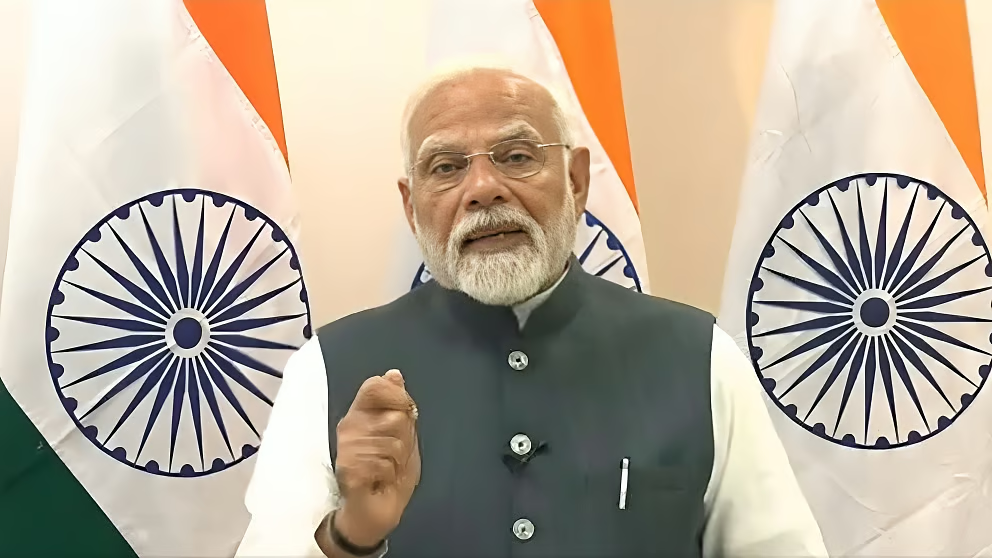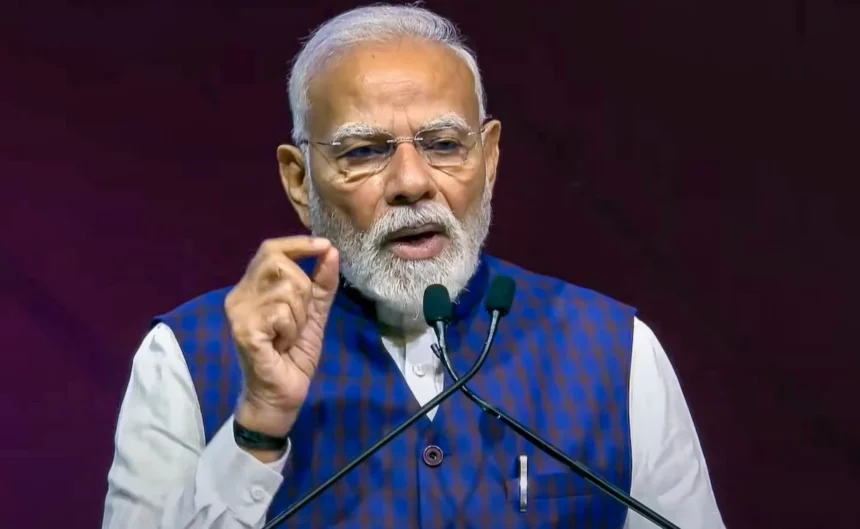
As Prime Minister Narendra Modi celebrates his 75th birthday on September 17, the occasion is not merely a personal milestone but also a moment to reflect on India’s evolving economic journey under his leadership. The birthday celebrations coincide with significant economic developments, particularly the rollout of the new goods and services tax (GST) regime, which promises to reduce prices across essential goods, vehicles, and farm equipment, benefiting the aam aadmi directly. While GST reforms have captured headlines, they are part of a much broader tapestry of economic and structural reforms initiated by the government over the last decade, aimed at strengthening India’s financial resilience, fostering self-reliance, and promoting indigenous industries. These reforms have been widely recognized by international agencies and economists, positioning India as a rising economic powerhouse in the global arena.
GST Reforms and the Push for Affordable Essentials
One of the most visible markers of PM Modi’s economic strategy has been the reconfiguration of the GST structure, designed to simplify taxation, reduce costs for consumers, and enhance compliance among businesses. In his Independence Day speech on August 15, the Prime Minister promised a recalibrated GST system that would lower rates on numerous items, ranging from everyday essentials like food grains, household products, and daily-use commodities to high-value goods such as automobiles and farm machinery. The intent behind this move is to provide tangible relief to ordinary citizens while simultaneously stimulating demand across sectors critical to India’s economic growth.
The process of implementing these reforms has been meticulous. Finance Minister Nirmala Sitharaman, under the direct guidance of the Prime Minister, undertook extensive consultations with various stakeholders, including industry representatives, trade associations, and state governments. For over a year, proposals were studied, rates were debated, and models were tested before the GST Council approved the final structure. PM Modi’s personal involvement in overseeing this process underlines his focus on results-driven governance. Upon finalization, he reportedly told the Finance Minister, “Good… kaam ho gaya, the work is done,” reflecting both satisfaction and the importance attributed to these reforms at the highest level of decision-making.
The immediate outcome of the new GST regime is expected to be lower prices for the average consumer, improved market liquidity, and a boost to small and medium enterprises (SMEs), which form the backbone of India’s economy. Analysts suggest that as consumers gain purchasing power, domestic industries will see a revival in demand, further strengthening the Make in India initiative and contributing to the broader vision of Atmanirbhar Bharat.
Swadeshi and Atmanirbhar Bharat: Strengthening Local Industries
Beyond fiscal reforms, PM Modi’s economic agenda has consistently emphasized the twin pillars of Atmanirbhar Bharat and Swadeshi. These principles are central to his third term and reflect a long-term strategy aimed at reducing dependence on imports while encouraging domestic manufacturing and innovation. The government’s push for local production is not merely symbolic; it is intended to ensure that Indian brands can compete globally and claim a greater share of both domestic and international markets.
Recent incidents, such as international brands copying traditional Indian designs—like Kolhapuri chappals—and marketing them at exorbitant prices abroad, have highlighted the need for stronger intellectual property protections and global recognition of Indian products. The Prime Minister’s vision seeks to address these imbalances by creating an ecosystem where Indian enterprises, particularly MSMEs, are empowered to scale up production, enhance quality standards, and assert India’s presence in global value chains.
This focus on self-reliance extends to financial technology and digital infrastructure as well. India’s UPI system, which has witnessed unprecedented growth not just domestically but internationally, exemplifies the success of indigenous innovation. Countries across Asia and Africa are increasingly looking at UPI as a model for seamless digital payments, further cementing India’s reputation as a technological leader. PM Modi’s administration has capitalized on such innovations, using them to strengthen economic sovereignty while promoting transparency and efficiency in financial transactions.
The government’s broader economic strategy also aligns with India’s foreign policy imperatives. By reducing reliance on imports, particularly from vulnerable or geopolitically sensitive regions, India can insulate itself from global disruptions, whether in energy, technology, or essential commodities. Tariff rationalizations, GST reforms, and incentives for local manufacturing are all interlinked measures designed to create a robust, self-sustaining economy capable of withstanding external shocks. International rating agencies like Fitch, Moody’s, and S&P have recognized these measures, projecting GDP growth of over 6.5% to 7.5%, signaling confidence in India’s long-term economic trajectory.
Moreover, the government’s efforts to integrate domestic policies with global realities are evident in its approach to trade, finance, and technology. By encouraging exports while simultaneously building local capacity, India is positioning itself as a reliable partner on the global stage, capable of negotiating from strength rather than dependency. The synergy between fiscal reforms, Swadeshi initiatives, and digital innovation forms the backbone of PM Modi’s vision for a self-reliant India.
Looking Ahead: Golden Days for India
As PM Modi celebrates his 75th birthday, the significance of these reforms becomes clearer. Beyond symbolic gestures, the economic milestones achieved under his tenure—from GST rationalization to Swadeshi promotion, from digital payments to export growth—signal a trajectory of sustained development. The Prime Minister’s focus on affordability, local manufacturing, and technological self-reliance is designed not just to deliver immediate benefits but also to secure long-term prosperity.
The upcoming GST implementation, along with continued support for MSMEs, is expected to create a ripple effect across industries, boosting consumption, improving employment opportunities, and reinforcing India’s position as a global economic contender. With inflationary pressures likely to ease due to lower commodity prices, households are expected to experience improved purchasing power, contributing to a cycle of growth that benefits both urban and rural populations.
India’s economic resilience, as demonstrated through careful fiscal management, strategic self-reliance, and a commitment to Swadeshi, underscores the government’s ability to navigate complex global challenges. The trajectory from GST reforms to digital innovation and export promotion reveals a coherent strategy aimed at securing a brighter future for all citizens.
In essence, PM Modi’s 75th birthday is more than a celebration of personal longevity—it is a marker of India’s ongoing economic transformation. Through reforms that prioritize affordability, self-reliance, and indigenous growth, the nation is poised for a new era of prosperity, technological advancement, and global recognition. The journey from policy formulation to tangible outcomes reflects a government attuned to the aspirations of its people, committed to ensuring that the benefits of development reach every household.
The narrative of GST reforms, Swadeshi promotion, and Atmanirbhar Bharat collectively demonstrates India’s readiness to embrace a future where economic strength, national pride, and innovation converge. With domestic industries empowered, exports on the rise, and digital solutions shaping financial inclusion, the nation is on a path that promises both growth and resilience. The coming months, coinciding with PM Modi’s birthday and pre-Diwali celebrations, signal not just festive cheer but also the anticipation of a stronger, self-reliant, and prosperous India.