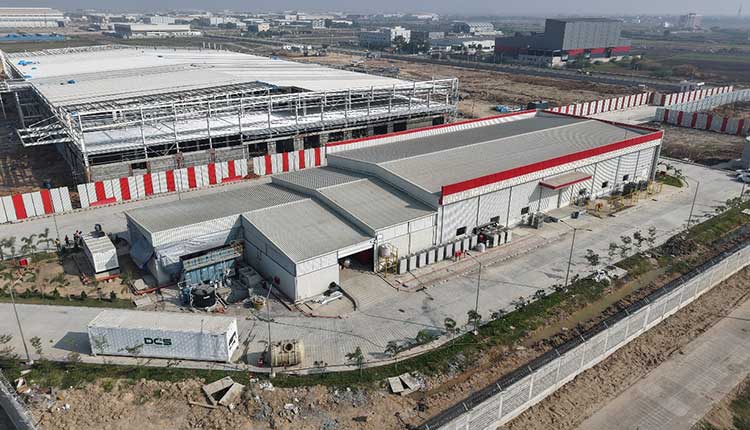
Prime Minister Narendra Modi will inaugurate a ₹3,300 crore semiconductor facility in Gujarat, marking a major step toward boosting domestic chip production and reducing import dependence.
India is set to take a significant leap in its technological and manufacturing capabilities as Prime Minister Narendra Modi prepares to inaugurate a state-of-the-art semiconductor facility in Gujarat on March 31. The project, valued at ₹3,300 crore, represents a crucial milestone in India’s long-term strategy to build a strong and self-reliant semiconductor ecosystem.
The facility, developed by Kaynes Technology through its semiconductor arm, is located in Sanand, a rapidly emerging industrial hub in Gujarat. Traditionally known for automobile manufacturing, Sanand is now transforming into a key centre for semiconductor and electronics production, reflecting a broader shift in India’s industrial priorities.
This new plant is an Outsourced Semiconductor Assembly and Test (OSAT) facility, which plays a critical role in the semiconductor value chain. While chip fabrication is often seen as the most advanced stage, assembly and testing are equally important processes that ensure chips are packaged correctly and meet stringent quality standards before reaching end-users.
The establishment of this facility comes at a time when the global semiconductor industry is undergoing significant changes. Supply chain disruptions, geopolitical tensions, and increasing demand for electronic devices have highlighted the importance of building domestic capabilities in chip manufacturing. India’s push into this sector is therefore both strategic and economic.
The Sanand facility is expected to have the capacity to produce millions of semiconductor units daily, contributing significantly to domestic demand. This will not only reduce reliance on imports but also position India as a competitive player in the global semiconductor supply chain.
One of the key objectives behind this project is to support India’s growing electronics manufacturing sector. From smartphones and laptops to automobiles and industrial equipment, semiconductors are essential components that power modern technology. By strengthening domestic production, India aims to ensure a stable supply of these critical components.
The project is part of the broader India Semiconductor Mission, an ambitious initiative launched by the government to promote semiconductor manufacturing and attract investments in the sector. The mission includes financial incentives, infrastructure support, and policy frameworks designed to encourage both domestic and international companies to set up operations in India.
Over the past few years, the government has taken several steps to create a favourable environment for semiconductor investments. These include production-linked incentive (PLI) schemes, tax benefits, and partnerships with global technology firms. The inauguration of the Sanand facility is a tangible outcome of these efforts.
Another important aspect of the project is its potential to generate employment. Large-scale manufacturing facilities typically create thousands of direct and indirect jobs, ranging from skilled engineering roles to support services. This is expected to have a positive impact on the local economy and contribute to regional development.
In addition to job creation, the facility is likely to boost the development of ancillary industries. Suppliers of raw materials, logistics providers, and service companies are expected to benefit from the presence of a major semiconductor unit, creating a ripple effect across the industrial ecosystem.
The choice of Gujarat as the location for this facility is also significant. The state has been actively promoting itself as a destination for high-tech manufacturing, offering robust infrastructure, investor-friendly policies, and a strategic location. With multiple semiconductor and electronics projects already underway, Gujarat is emerging as a key hub in India’s semiconductor landscape.
The inauguration of this facility also aligns with the government’s broader vision of “Make in India” and “Atmanirbhar Bharat.” These initiatives aim to reduce dependence on imports, enhance domestic production capabilities, and position India as a global manufacturing powerhouse.
However, building a semiconductor ecosystem is not without challenges. The industry requires substantial capital investment, advanced technology, and a highly skilled workforce. It also depends on a complex supply chain involving raw materials, equipment, and specialised components.
To address these challenges, the government has been focusing on skill development and research initiatives. Collaborations with academic institutions and industry partners are being encouraged to create a talent pool capable of supporting the semiconductor sector.
Another critical factor is the need for sustained policy support. Semiconductor projects typically have long gestation periods, and consistent government backing is essential to ensure their success. Experts emphasise that maintaining momentum in policy implementation and investment will be crucial for India to achieve its goals.
The Sanand facility represents an important step in this journey, but it is only one part of a larger strategy. India is also working on attracting investments in chip fabrication plants, design centres, and research facilities, which together will form a comprehensive semiconductor ecosystem.
Globally, the semiconductor industry is dominated by a few countries, including the United States, Taiwan, South Korea, and China. India’s entry into this space is expected to diversify the global supply chain and reduce concentration risks.
The timing of this initiative is particularly significant given the increasing demand for semiconductors across industries. The rise of technologies such as artificial intelligence, electric vehicles, 5G networks, and the Internet of Things (IoT) has led to a surge in demand for chips. By investing in this sector, India is positioning itself to capitalise on these trends.
The inauguration event is also expected to highlight India’s commitment to technological advancement and innovation. It sends a strong signal to global investors that the country is serious about building a competitive semiconductor industry.
In addition to the semiconductor facility, Prime Minister Narendra Modi’s visit to Gujarat includes the inauguration and foundation-laying of several other development projects across sectors such as infrastructure, transportation, and urban development. This reflects a comprehensive approach to economic growth and development.
Industry experts believe that projects like the Sanand facility will play a key role in shaping India’s future as a technology-driven economy. By reducing import dependence and increasing domestic production, the country can enhance its economic resilience and global competitiveness.
The success of this initiative will depend on multiple factors, including the ability to attract further investments, develop a skilled workforce, and integrate into global supply chains. Collaboration between the government, industry, and academia will be essential in achieving these objectives.
For businesses, the availability of domestically produced semiconductors could lead to reduced costs and improved supply chain stability. This, in turn, could boost the growth of industries such as electronics manufacturing, automotive, and telecommunications.
For consumers, the long-term benefits may include more affordable and accessible technology products, as well as increased innovation in the market.
As India continues to advance its semiconductor ambitions, the focus will remain on building a sustainable and competitive ecosystem. The Sanand facility is a significant milestone in this journey, demonstrating the country’s commitment to technological progress and self-reliance.
The coming years will be crucial in determining how effectively India can scale its semiconductor capabilities and establish itself as a global player. With strong policy support, strategic investments, and a clear vision, the country has the potential to transform its semiconductor landscape.
The inauguration of the ₹3,300 crore facility is not just about a single project but about laying the foundation for a new era in India’s industrial and technological development. It represents a step toward a future where India is not only a consumer of advanced technology but also a leading producer.