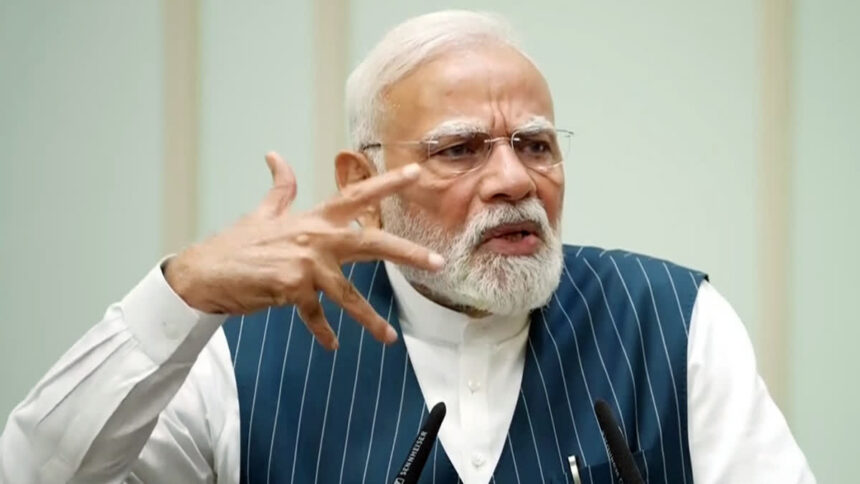
Prime Minister Narendra Modi will not address the General Debate at the 80th session of the United Nations General Assembly later this month, marking a notable change in India’s traditional representation at the high-level diplomatic gathering. According to a revised provisional list of speakers released ahead of the session, India will now be represented by External Affairs Minister S Jaishankar, who is scheduled to deliver the country’s statement on September 27. Originally, PM Modi was expected to address the debate on September 26, but changes in the provisional schedule reflect evolving diplomatic priorities and considerations amid a complex global landscape. The 80th session of the UNGA opens on September 9, with the General Debate scheduled from September 23-29, traditionally beginning with Brazil as the first speaker, followed by the United States.
The decision comes at a time when international attention is focused on multiple crises, including the ongoing Israel-Hamas conflict, the Ukraine war, and broader discussions on climate action, global economic resilience, and human rights. India’s representation by the External Affairs Minister underlines continuity in engagement, while also reflecting a nuanced approach to prioritizing high-level bilateral and multilateral engagements in other forums. The UN General Assembly is widely regarded as the busiest diplomatic season of the year, drawing world leaders to the United Nations Headquarters in New York to present national perspectives on global challenges. PM Modi’s absence from the General Debate does not reduce India’s voice on critical issues, as S Jaishankar’s participation ensures the country’s strategic priorities and global positions are articulated before world leaders.
External Affairs Minister S Jaishankar To Represent India On Global Stage
According to the updated provisional speaker list, S Jaishankar will address the high-level General Debate on September 27, offering India an opportunity to outline its positions on pressing international issues. This change follows a previous provisional schedule, released in July, which had indicated that PM Modi would deliver India’s statement on September 26. In addition to S Jaishankar, other prominent global leaders scheduled to address the UNGA during the high-level week include the heads of state or government of Israel, China, Pakistan, and Bangladesh on September 26. The list, while provisional, reflects ongoing diplomatic adjustments and ensures India’s consistent presence in the international discourse on security, development, climate, and human rights.
The shift in representation comes after PM Modi’s earlier visit to the United States in February this year, where he met with former US President Donald Trump at the White House. During that visit, trade tensions were highlighted, with Trump imposing tariffs of up to 50 percent on Indian imports, including 25 percent on India’s purchases of Russian oil. These economic and diplomatic considerations continue to shape India’s engagement strategies at multilateral forums like the United Nations. By delegating the General Debate address to the External Affairs Minister, India maintains its commitment to global engagement while allowing the Prime Minister to focus on domestic priorities and other strategic international interactions.
The General Debate provides countries with a platform to present their perspectives on global peace, development, and human rights. This year, the session’s theme is “Better together: 80 years and more for peace, development and human rights,” emphasizing multilateral cooperation amid growing global challenges. The session also commemorates the 80th anniversary of the United Nations, with a special meeting scheduled for September 22. Additionally, marking the 30th anniversary of the Fourth World Conference on Women, the UNGA will convene a high-level meeting focusing on the implementation of the Beijing Declaration and Platform for Action, aiming to advance gender equality and the empowerment of women and girls worldwide. This initiative highlights the Assembly’s continued focus on inclusive development and equitable participation, reflecting global commitments made over decades.
Key Global Meetings During UNGA High-Level Week
In addition to the General Debate, a series of critical high-level meetings are scheduled to address a range of global issues. UN Secretary-General Antonio Guterres will convene a Climate Summit on September 24, providing world leaders with a platform to present national climate action plans and discuss opportunities in the clean energy transition. The summit is expected to highlight the urgency of climate mitigation, adaptation strategies, and the financing mechanisms necessary to achieve global climate goals. Such discussions are particularly relevant to India, given the country’s growing energy demands, renewable energy targets, and strategic commitments to sustainable development.
Other high-level meetings include sessions on creating a sustainable, inclusive, and resilient global economy, addressing non-communicable diseases and mental health and well-being, and commemorating the 30th anniversary of the World Programme of Action for Youth. The UNGA will also host the launch of the Global Dialogue on AI Governance, an initiative aimed at establishing international norms and cooperative frameworks for responsible artificial intelligence development and deployment. Additionally, key meetings will focus on the total elimination of nuclear weapons, reflecting the global community’s continuing commitment to nuclear disarmament and non-proliferation. The humanitarian situation of Rohingya Muslims and other minorities in Myanmar will also be discussed, highlighting the Assembly’s focus on protecting human rights and addressing displacement and persecution crises worldwide.
India’s participation in these high-level discussions, represented by S Jaishankar, ensures that the country’s perspectives on regional security, climate action, economic resilience, and multilateral cooperation are articulated at the highest levels. The UNGA serves as a platform for India to reaffirm its support for rules-based international order, advocate for equitable development, and highlight its growing contributions to peacekeeping, climate initiatives, and global governance reforms. While the Prime Minister will not deliver the General Debate speech, the External Affairs Minister’s presence underscores India’s consistent engagement with international partners and commitment to addressing both regional and global challenges collaboratively.
The revised schedule also allows for strategic timing, as the high-level UNGA week coincides with ongoing geopolitical tensions, including developments in the Middle East and the Ukraine-Russia conflict. These issues are likely to dominate global discussions, with member states presenting national positions, negotiating multilateral agreements, and highlighting areas for collaboration. India, balancing its regional interests and global aspirations, is expected to emphasize dialogue, cooperation, and peacebuilding initiatives while advocating for sustainable development and inclusive growth strategies.
Additionally, the UNGA provides India with a platform to reinforce its stance on critical issues such as counter-terrorism, energy security, and global health challenges. The Assembly’s deliberations are essential for shaping international policies, mobilizing resources for sustainable development, and fostering cooperative frameworks across various domains. By delegating representation to S Jaishankar, India demonstrates flexibility in its diplomatic approach, ensuring effective engagement while allowing senior leadership to address multiple simultaneous global commitments.
The UNGA’s high-level week remains the busiest diplomatic period of the year, drawing leaders, ministers, and senior officials from across the globe. Each speaker’s address reflects both national priorities and the country’s contribution to global discourse on peace, development, and human rights. For India, this year’s participation by S Jaishankar offers an opportunity to reiterate the country’s commitment to multilateralism, highlight India’s global initiatives, and engage in substantive discussions with international peers on trade, climate, security, and development.
With the provisional nature of the speaker list, adjustments can still occur in response to emerging global developments or diplomatic requirements. However, the key focus remains on ensuring India’s voice is heard on critical issues while maintaining consistency in representation. The UNGA provides a unique forum for countries to address pressing global challenges, establish strategic partnerships, and reinforce multilateral cooperation—objectives that India continues to prioritize through structured and coordinated diplomatic engagement.
India’s decision to have S Jaishankar address the General Debate is reflective of the country’s broader diplomatic strategy, which balances leadership presence with pragmatic delegation. This approach ensures that India’s participation is both meaningful and effective, leveraging the expertise and experience of senior diplomats to convey national positions. By participating in high-level sessions, India reinforces its role as a responsible global actor, committed to dialogue, sustainable development, peace, and inclusive growth.
In the context of the current global landscape, where multiple crises intersect—from armed conflicts to climate emergencies, economic uncertainties, and human rights challenges—India’s continued engagement at the UNGA remains a critical component of its foreign policy. S Jaishankar’s address will allow India to articulate its perspectives on cooperation, development priorities, and multilateral solutions, while aligning with the country’s broader objectives of strengthening global partnerships and advocating for equitable, rules-based international order.
As the 80th UNGA session unfolds, India’s representation by its External Affairs Minister signals both continuity and adaptability in its approach to diplomacy. The high-level week offers a comprehensive platform to engage with world leaders, advance India’s strategic interests, and contribute constructively to global discussions. Through careful planning, timely representation, and focused participation, India continues to assert its influence on international platforms, ensuring that critical global issues are addressed collaboratively while national interests are safeguarded.