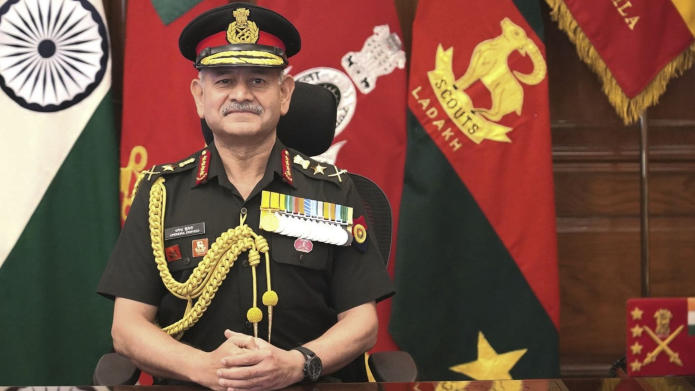
Army Chief General Upendra Dwivedi released a revealing account of Operation Sindoor on Friday, highlighting the extended nature of India’s retaliatory operations against terror infrastructures in Pakistan and Pakistan-occupied Kashmir. The event was held at the Manekshaw Centre in Delhi, where the Army Chief emphasized that the operation, launched on May 7 following the brutal Pahalgam terror attack, did not conclude in the three days as widely perceived. He underlined the sustained efforts, strategic planning, and critical decisions that continued well beyond the initial phase, underscoring the complex realities of modern military operations and India’s commitment to decisively neutralize threats along its borders. The book, authored by retired Lieutenant General KJS Dhillon and titled Operation Sindoor: The Untold Story of India’s Deep Strikes Inside Pakistan, provides unique insights into political clarity, operational freedom granted to the armed forces, and the often-unspoken aspects of modern warfare.
Extended Insights on Operation Sindoor and Its Strategic Implications
During the book launch, General Dwivedi clarified misconceptions surrounding the timeline of Operation Sindoor, stating that the operation did not end on May 10, as is commonly believed. The operation, initiated in direct response to the heinous Pahalgam attack, was designed to dismantle terror infrastructures across Pakistan and PoK, showcasing India’s resolve to act decisively against cross-border terrorism. General Dwivedi emphasized that the operation required meticulous planning and numerous high-stakes decisions, which extended the engagement well beyond the initial days. These steps, according to the Army Chief, included coordination among multiple services, integration of intelligence inputs, and precise execution to ensure minimal collateral damage while targeting terrorist networks effectively.
General Dwivedi noted that the Indian armed forces successfully decimated several terror setups during the operation, demonstrating operational readiness and strategic agility. The Army Chief highlighted the importance of political clarity in enabling armed forces to act decisively, with the book shedding light on the freedom provided to commanders to make critical decisions in real time. He remarked that much of what occurred during the operation often remains unheard or untold due to the sensitivities involved and the constraints imposed on uniformed personnel. The book, therefore, offers an unprecedented glimpse into operational challenges, strategic decisions, and the dynamic interplay of military, political, and intelligence considerations during a high-stakes cross-border operation.
General Dwivedi further elaborated on the psychological and operational complexities faced by troops deployed along the Line of Control. He observed that repeated engagements along the LoC have, over time, normalized the experience for soldiers, sometimes overshadowing the emotional toll, losses, gains, and strategic significance of such operations. Operation Sindoor, he said, reflected both the tactical expertise of the Indian Army and the larger strategic vision guiding India’s response to persistent threats. By recounting the operational depth and the aftermath of strikes, the book provides readers with a nuanced understanding of the challenges inherent in maintaining security along contested borders.
Operational Realities and Ongoing Security Challenges
While Operation Sindoor achieved its immediate objectives, General Dwivedi pointed out that the broader security challenges persist. Infiltration attempts along the India-Pakistan border continue, emphasizing the ongoing nature of counter-terrorism operations. The Army Chief cautioned that assessing the full impact of Operation Sindoor is premature, as the strategic environment remains fluid and dynamic. “Has state-sponsored terrorism ended? I don’t think so, because infiltration attempts are still happening on the LoC. And we all know how many terrorists have been killed and how many of them have escaped,” he remarked. This acknowledgment underscores the reality that military operations are part of an extended struggle against persistent threats and cannot be measured solely by short-term outcomes.
The book, as General Dwivedi explained, also focuses on operational coordination between the Army and other arms of national security. The integration of intelligence, surveillance, and precision strike capabilities was a crucial factor in the operation’s success. In addition to conventional military tactics, modern warfare required adaptive strategies encompassing cyber intelligence, aerial reconnaissance, and rapid mobilization of forces. By documenting these elements, the book offers readers an understanding of how India’s armed forces continuously evolve to meet contemporary threats while maintaining operational effectiveness.
General Dwivedi also highlighted the role of political guidance and the trust placed in the military hierarchy. The freedom to execute decisions on the ground, paired with accountability and clarity of intent, allowed commanders to undertake decisive actions during Operation Sindoor. The book, according to the Army Chief, captures the delicate balance between operational autonomy and strategic oversight, a dimension often overlooked in public narratives about military actions. Lt Gen KJS Dhillon, through his writing, has attempted to present a comprehensive narrative of the operation, detailing the planning, execution, and post-operation assessments while also maintaining the confidentiality and security of sensitive details.
The discussion during the launch also touched upon the broader implications of sustained military readiness and deterrence. General Dwivedi emphasized that cross-border operations like Sindoor are not isolated events but part of a continuum in India’s counter-terrorism strategy. The Army Chief’s reflections shed light on the persistent vigilance required along the LoC, the complexities of responding to asymmetric threats, and the operational pressures of maintaining preparedness while minimizing civilian risk. Such insights offer policymakers, military analysts, and the general public a clearer perspective on the multifaceted nature of modern military engagements.
Furthermore, the Army Chief addressed the emotional and psychological dimensions of warfare. Repeated engagements along the LoC have forged resilience among troops, yet the human cost, including casualties and operational fatigue, remains significant. General Dwivedi highlighted the importance of recognizing these elements while analyzing the effectiveness of military operations. By detailing the human element alongside strategic and tactical considerations, the book provides a balanced view of both the operational and personal challenges faced by armed forces personnel during high-intensity missions.
The launch event at the Manekshaw Centre was attended by senior officers, defense analysts, and policymakers, highlighting the importance of documenting and sharing military experiences with a wider audience. General Dwivedi’s address emphasized transparency and the need for informed public understanding of complex military operations. He stressed that the narrative of Operation Sindoor is not merely a recounting of tactical success but also a case study in command decision-making, political-military interface, and the adaptive strategies required to neutralize evolving threats.
Through the book, the Army Chief conveyed that Operation Sindoor exemplifies the modern challenges of counter-terrorism and cross-border military operations. It illustrates how India’s armed forces integrate strategic guidance, technological capabilities, and human expertise to achieve precise objectives while maintaining operational discipline. The narrative bridges the gap between public perception and operational realities, offering a holistic account of planning, execution, and lessons learned from a significant military campaign.
General Dwivedi’s insights during the launch underscore that military operations are continuous processes that extend beyond headline dates or immediate outcomes. The ongoing nature of security threats along the LoC, the complexities of political decision-making, and the need for strategic adaptability all contribute to a comprehensive understanding of Operation Sindoor. By documenting these experiences, the book serves as both an informative resource and a testament to the professionalism, dedication, and operational excellence of the Indian armed forces.
In addition to operational details, the book sheds light on the role of joint coordination among the Army, Air Force, and intelligence agencies. Operation Sindoor demonstrated how integrated planning and execution across multiple agencies enhance the efficacy of counter-terrorism operations. The Army Chief stressed that modern warfare is increasingly multidimensional, requiring synchronized action across land, air, and intelligence platforms. Such an approach, he noted, is essential for India to maintain strategic advantages and operational readiness against persistent and evolving threats.
Finally, General Dwivedi highlighted the importance of historical context and institutional memory. Lessons learned from past operations inform contemporary strategies, enabling commanders to anticipate challenges, optimize resource deployment, and respond decisively to threats. Operation Sindoor, therefore, is positioned not only as a tactical success but also as an important milestone in India’s evolving counter-terrorism doctrine. The book captures these lessons, offering insights into decision-making processes, operational nuances, and the strategic considerations underpinning one of India’s most significant military operations in recent times.