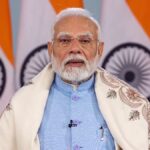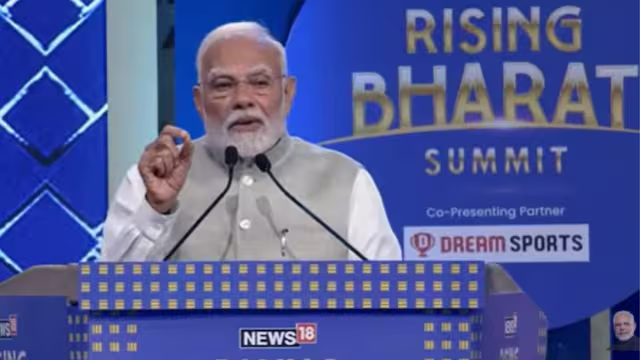
At the Rising Bharat Summit 2025, Prime Minister Narendra Modi launched a fierce attack on what he termed as “politics of appeasement.” He claimed that this mindset had caused long-term harm to the nation, drawing a direct link between this approach and India’s partition. Narendra Modi said the demand for partition did not come from ordinary Muslim families but from a few fundamentalist voices, allegedly encouraged by Congress leaders at the time. “It was not the common Muslim who wanted separation, but those swayed by political opportunism,” he said.
Partition compared to present-day politics
The Prime Minister pointed out that the tactics used during the independence struggle—particularly divisive ones—are still visible in current debates. He claimed that historical appeasement was a political tool, and similar manipulations are being seen today around the Waqf Amendment issue. Narendra Modi emphasized that this ongoing trend undermines unity and social justice. His remarks have ignited a nationwide conversation on how history continues to echo in present-day politics.
The Prime Minister also addressed the Waqf Amendment Act 2025, which has triggered protests from various Muslim groups and opposition parties. Defending the law, he said it is aimed at ensuring transparency in managing waqf properties and curbing the misuse of these religious endowments. Narendra Modi stressed that the law is meant to protect marginalized communities, especially poor Pasmanda Muslims, women, and children.
Narendra Modi accused some fundamentalist groups and land mafias of exploiting waqf lands for personal gain. The amendment, he said, is designed to break their control and ensure these properties are used for genuine public welfare. “This is not just a legal reform, but a step toward justice for those left out for decades,” he said, urging the nation to see the law as a way to promote equality and correct historical wrongs.