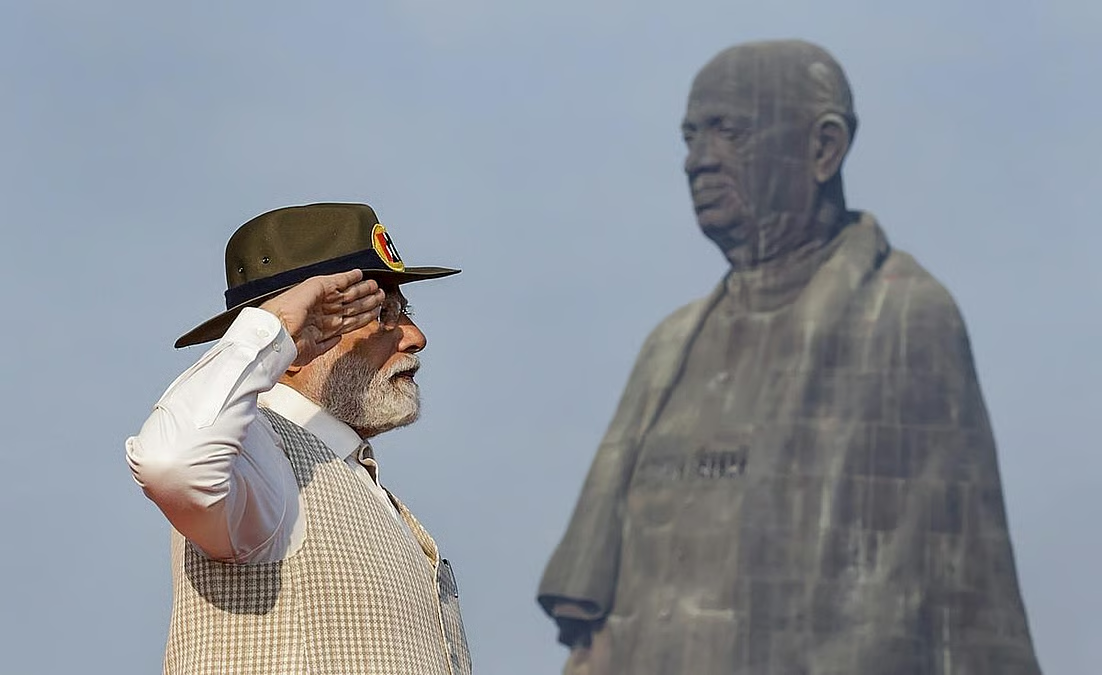
Prime Minister Narendra Modi led the nation in celebrating the 150th birth anniversary of Sardar Vallabhbhai Patel, widely remembered as the “Iron Man of India,” at the Statue of Unity in Ekta Nagar, Gujarat. The day, marked as Rashtriya Ekta Diwas or National Unity Day, was observed with grandeur, patriotism, and reflection on Sardar Patel’s vision of a united India. The prime minister administered the oath of unity, paid floral tributes, and presided over a spectacular parade showcasing India’s strength, discipline, and resolve to preserve its unity and integrity.
PM Modi Pays Tribute at Statue of Unity and Administers Oath of National Unity
As the sun rose over the Narmada river, Prime Minister Modi paid homage to Sardar Vallabhbhai Patel at the 182-meter-tall Statue of Unity—the world’s tallest statue and a lasting symbol of national pride. He offered floral tributes before addressing the gathering and administering the Rashtriya Ekta Diwas Pledge to reaffirm the nation’s commitment to unity and integrity.
Reading from the oath, the prime minister said, “I solemnly swear that I will dedicate myself to the preservation of the unity, integrity, and security of the nation. I will also make every effort to spread this message among my countrymen.” He further invoked Sardar Patel’s legacy by acknowledging his extraordinary foresight and leadership that made India’s unity possible in the formative years after Independence. “I take this oath in the spirit of my country’s unity, which was made possible by the foresight and hard work of Sardar Vallabhbhai Patel,” he said.
After the ceremony, the prime minister shared a post on X (formerly Twitter), saying, “Paid homage to Sardar Vallabhbhai Patel at the ‘Statue of Unity’ in Kevadia. SoU is a monumental tribute to Sardar Patel and his vision towards India’s unity and strength. Standing tall as the world’s tallest statue, it is a symbol of national pride and collective resolve to fulfil Sardar Patel’s dreams.”
The prime minister’s message struck a chord across the country, resonating with Patel’s historical role in uniting more than 560 princely states into the Indian Union. His leadership and pragmatic diplomacy had prevented the fragmentation of post-Independence India, shaping the nation’s federal structure and political map as it exists today.
Gallantry Awardees and Armed Forces Display India’s Strength and Unity
Following the oath, Prime Minister Modi witnessed the Rashtriya Ekta Diwas Parade, an impressive ceremonial display of discipline, courage, and national spirit. The Guard of Honour was led by Gujarat cadre IPS officer Simran Bhardwaj. The parade featured contingents from the Central Armed Police Forces including the BSF, CRPF, CISF, ITBP, and SSB, as well as state police units from Assam, Tripura, Odisha, Chhattisgarh, Madhya Pradesh, Maharashtra, Punjab, Jammu and Kashmir, Kerala, and Andhra Pradesh. Cadets from the National Cadet Corps (NCC) also participated, symbolizing India’s unity in diversity.
A highlight of the event was the recognition of gallantry awardees who had shown extraordinary courage in safeguarding the nation. Among them were five Shaurya Chakra awardees from the CRPF and sixteen gallantry medal winners from the BSF. The CRPF personnel were honoured for their exceptional bravery in anti-Naxal operations in Jharkhand and counter-terrorism missions in Jammu and Kashmir. The BSF soldiers were recognized for their valour during Operation Sindoor along India’s western border.
The parade, marked by precise coordination and ceremonial splendour, served as a vivid reminder of India’s resilience and determination in the face of adversity. Prime Minister Modi lauded the contribution of security forces and civil servants alike, emphasizing that internal security and national integration form the foundation of a strong nation.
The parade also reflected the synergy between central and state forces, displaying the operational readiness of India’s security establishment. For many participants, the event was not just a commemoration of Patel’s legacy but also a reaffirmation of their duty to uphold his ideals of unity and service.
A Spectacular Air Show by Surya Kiran Team and Tribute to Sardar Patel’s Legacy
Adding a visual spectacle to the occasion, the Indian Air Force’s Surya Kiran Aerobatic Team (SKAT) performed a dazzling air show above Ekta Nagar. The aerobatic manoeuvres, executed with precision and grace, captivated the crowd as the jets painted the sky in vibrant tricolour hues of saffron, white, and green. The air show symbolized the soaring spirit of a united India and served as a reminder of the armed forces’ discipline, courage, and commitment to national pride.
The ceremony also featured cultural performances and patriotic renditions inspired by Sardar Patel’s life and contributions. Students and NCC cadets presented tableaux depicting the integration of princely states, the building of modern India, and Patel’s dedication to unity. The cultural segment echoed his belief that a nation’s strength lies in its people’s collective will and shared purpose.
Sardar Vallabhbhai Patel, born on October 31, 1875, in Nadiad, Gujarat, played a defining role in India’s freedom struggle and post-Independence consolidation. As India’s first Deputy Prime Minister and Home Minister, Patel spearheaded the integration of over 560 princely states, ensuring that the newly independent nation did not disintegrate into fragmented regions. His pragmatic diplomacy, administrative acumen, and unwavering nationalism earned him the title “Iron Man of India.”
His decisive leadership during the tumultuous years following Independence ensured that India remained united despite regional, linguistic, and cultural diversities. Patel’s steadfast commitment to the idea of a strong and cohesive India continues to inspire generations of policymakers, administrators, and citizens.
During his address, Prime Minister Modi underscored that Sardar Patel’s vision remains as relevant today as it was 75 years ago. “It was because of Sardar Patel’s resolve and foresight that India emerged as one nation from the chaos of Partition. His dream was not just to unite the princely states but to unite hearts,” he said. Modi urged citizens to carry forward Patel’s ideals through national integrity, social harmony, and civic responsibility.
The event at Ekta Nagar drew thousands of visitors, including dignitaries, officials, students, and members of the armed forces. The venue was adorned with national flags, floral decorations, and banners displaying Patel’s timeless quotes on unity and courage. The 182-meter Statue of Unity towered over the celebrations, serving as a symbolic reminder of Patel’s towering influence in shaping India’s destiny.
Since its inauguration in 2018, the Statue of Unity has emerged as a global symbol of India’s national pride and unity. Built on the banks of the Narmada river, it has become a major tourist destination, attracting millions of visitors annually. Beyond its architectural grandeur, it stands as a living tribute to Patel’s vision of a united and self-reliant India.
The Rashtriya Ekta Diwas celebrations also included nationwide activities such as Run for Unity events, essay competitions, cultural programmes, and pledges at schools, colleges, and government institutions. These events aimed to remind citizens, especially the youth, of Patel’s message of unity and his dream of a strong, inclusive India.
Across the country, states organized special ceremonies to mark the occasion. In Delhi, senior government officials and students participated in the Unity Run, while various ministries conducted programmes highlighting Patel’s contribution to national integration. Social media was flooded with tributes and messages honouring his enduring legacy.
The day’s celebrations in Gujarat stood out for their scale and symbolism, blending ceremonial grandeur with patriotic fervour. The synergy between the central and state administrations ensured that the event reflected not only Sardar Patel’s historical contribution but also India’s continued journey toward unity, progress, and strength.
As the tricolour shimmered in the sky above Ekta Nagar, the essence of Patel’s message echoed through the gathering — that India’s unity is its greatest strength. Through his leadership and legacy, Sardar Vallabhbhai Patel continues to remind the nation that unity is not merely a political ideal but a moral and cultural foundation upon which India’s democracy stands.
The 150th birth anniversary celebrations thus became a moment not only to honour a national hero but also to reaffirm India’s collective resolve to preserve the spirit of oneness that Patel envisioned. Prime Minister Modi’s presence at the Statue of Unity, the inspiring parade, and the vibrant air show together reflected a message of national pride, discipline, and unwavering unity — a tribute truly befitting the architect of modern India.