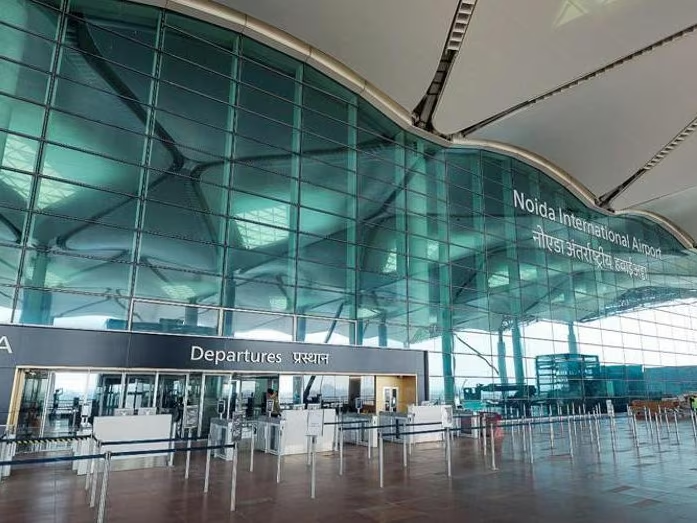
Narendra Modi is set to inaugurate the much-awaited Noida International Airport at Jewar, marking a major milestone in India’s infrastructure and aviation expansion. Built at a cost of over ₹11,200 crore in its first phase, the greenfield airport is expected to significantly enhance connectivity in the Delhi-NCR region while easing congestion at Indira Gandhi International Airport.
The inauguration event is being closely watched as one of the most significant infrastructure developments in recent years, with long-term implications for economic growth, logistics, and regional connectivity.
Major Infrastructure Boost for Delhi-NCR and Beyond
The Noida International Airport project represents a transformative step in India’s aviation sector. Strategically located in Jewar, Uttar Pradesh, the airport is designed to serve as a second major aviation hub for the National Capital Region.
With increasing passenger traffic and capacity constraints at Indira Gandhi International Airport, the new facility is expected to distribute air traffic more efficiently. This dual-airport system will allow airlines to expand operations, improve scheduling flexibility, and accommodate growing demand.
The first phase of the airport is designed to handle approximately 1.2 crore passengers annually, with plans to expand capacity to 7 crore passengers in subsequent phases. This makes it one of the most ambitious airport projects in the country.
Yogi Adityanath highlighted that the airport will bring new momentum to the state’s development journey, opening doors for economic progress, investment, and job creation.
The project is also expected to position Uttar Pradesh as the only state in India with five international airports once fully operational, strengthening its role in national and global connectivity.
Economic Impact, Jobs and Farmer Benefits
Beyond passenger travel, the airport is envisioned as a major economic engine for the region. Its large-scale cargo handling capabilities will facilitate faster and more efficient movement of goods, benefiting industries and businesses.
One of the key beneficiaries is expected to be the agricultural sector. Farmers in Uttar Pradesh will gain direct access to global markets, enabling them to export perishable goods such as fruits, vegetables, dairy products, and flowers more efficiently.
Improved logistics infrastructure, including cold storage and warehousing facilities, will help reduce wastage and ensure better pricing for farmers. Experts estimate that farmers’ incomes could increase by 20–30% due to improved market access and reduced intermediaries.
The airport will also generate employment opportunities across multiple sectors, including aviation, logistics, hospitality, and retail. The development of surrounding infrastructure is expected to create a ripple effect, boosting local economies and encouraging investment.
Additionally, the project will support India’s broader vision of becoming a global logistics and aviation hub, enhancing trade competitiveness and economic resilience.
Advanced Infrastructure, Security and Connectivity
The Noida International Airport has been designed as a modern, future-ready aviation facility with advanced infrastructure and technology. It features a 3,900-metre runway capable of supporting large aircraft and enabling 24×7 operations under all weather conditions.
The airport is also equipped with a multi-modal connectivity framework, integrating road, rail, and metro networks. Connectivity through the Yamuna Expressway and planned metro links will ensure seamless travel for passengers.
Experts have suggested the need for direct metro connectivity between the Noida International Airport and Indira Gandhi International Airport to further enhance passenger convenience, especially for international travellers.
Security arrangements for the inauguration event have been extensive, with a five-layer security system in place. Thousands of security personnel, advanced surveillance systems, anti-drone measures, and emergency response teams have been deployed to ensure safety.
The airport also incorporates sustainability features, including a net-zero emission design, reflecting India’s commitment to environmentally responsible infrastructure development.
Large-Scale Event and Public Participation
The inauguration ceremony has drawn significant public interest, with large crowds gathering at the venue. The event is expected to witness participation from senior government officials, including ministers and local leaders.
The Prime Minister is scheduled to visit key facilities, including the terminal building and cargo area, before formally inaugurating the airport. A public address is also planned, highlighting the importance of the project.
Traffic arrangements and diversions have been implemented across the region to manage the large influx of visitors. Designated routes, parking zones, and entry points have been organised to ensure smooth movement.
The scale of the event reflects the significance of the project, not only as an infrastructure milestone but also as a symbol of India’s development trajectory.
Long-Term Vision: Asia’s Largest Aviation Hub
The Noida International Airport is envisioned as more than just a regional airport. Once fully developed, it aims to become one of the largest aviation hubs in Asia, with multiple runways and extensive passenger and cargo capacity.
The project’s long-term vision includes the development of a comprehensive aviation ecosystem, including maintenance, repair, and overhaul (MRO) facilities, logistics hubs, and commercial zones.
This integrated approach is expected to attract global airlines, investors, and businesses, further strengthening India’s position in the global aviation landscape.
The airport’s strategic location and advanced infrastructure make it a key component of India’s efforts to enhance connectivity, boost trade, and support economic growth.
The inauguration of the Noida International Airport at Jewar marks a significant milestone in India’s infrastructure journey. With its focus on connectivity, economic growth, and sustainability, the project is set to transform the aviation landscape of the Delhi-NCR region and beyond.
As operations begin and future phases are developed, the airport is expected to play a crucial role in shaping India’s position as a global aviation and logistics hub, driving growth and opportunities for years to come.