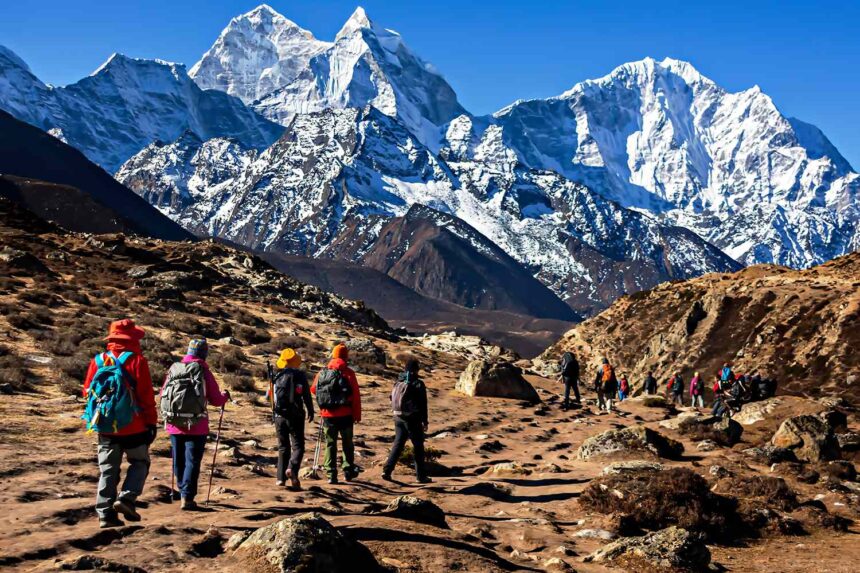
A shocking insurance fraud linked to Mount Everest trekking has rocked Nepal, exposing a sophisticated scheme in which tourists were deliberately made sick to claim massive payouts from international insurance companies. According to reports, 32 individuals—including Sherpas, trekking company owners, helicopter operators, and hospital staff—have been accused of orchestrating the scam that spanned multiple years, reportedly defrauding insurers of millions of dollars. The revelations have highlighted systemic flaws in the trekking and rescue ecosystem, raising questions about oversight, ethics, and safety protocols for foreign visitors navigating Nepal’s high-altitude peaks.
tourists allegedly poisoned and pressured into expensive rescues
Investigations reveal that tourists were deliberately administered substances such as baking soda mixed with their food, causing symptoms that mimicked altitude sickness. In other cases, excessive water intake and Diamox—an altitude sickness medication—were administered to exaggerate medical symptoms, making tourists appear gravely ill. This enabled rescue companies to justify helicopter evacuations, which are notoriously costly in Nepal’s mountainous terrain, ranging from ₹2.5 lakh to ₹6 lakh per flight.
Once tourists displayed symptoms, they were coerced into boarding helicopters under the pretext of life-threatening illness. The scam operated on inflated insurance claims, where each rescue was billed individually to insurers, even when multiple tourists shared a single flight. A helicopter journey that cost $4,000 in reality was often recorded as $12,000 through fabricated flight records. To strengthen their fraudulent claims, perpetrators generated fake medical documents using digital signatures of senior doctors, frequently without their knowledge. In some cases, tourists were falsely reported as hospitalized while actually remaining in canteens, highlighting the extent of manipulation and the calculated approach to maximizing insurance payouts.
arrests, financial impact, and ongoing investigations
The scam came under serious scrutiny after a 2025 investigation by Nepal Police’s Central Investigation Bureau (CIB), following earlier reforms introduced in 2018. Initial investigations led to the arrest of six officials from three major rescue companies. The overall financial impact of the fraud is staggering, with estimated losses of $19.69 million (around ₹188 crore). One company allegedly submitted 171 fake rescues out of 1,248, claiming over $10 million, while a second company earned approximately $8 million from 75 fraudulent rescues out of 471. The third company reportedly submitted 71 fabricated rescues, claiming over $1 million. The prosecution has demanded fines totaling $11.3 million (around ₹107 crore), emphasizing the seriousness and scale of the fraud.
This scam traces back to 2018, when initial investigations uncovered irregularities and led to policy reforms that removed intermediaries and assigned responsibility to tour operators. Despite these measures, the 2025 investigation revealed that the fraud had not only persisted but expanded, exploiting loopholes and lax enforcement. Nepal Police officer Manoj Kumar KC remarked, “When no action is taken on crime, it keeps growing, which is why this insurance scam continued to spread.” The case has been prioritized by the courts, reflecting both the magnitude of the financial loss and the ethical implications for Nepal’s trekking industry, which relies heavily on the trust and safety of international tourists.