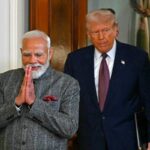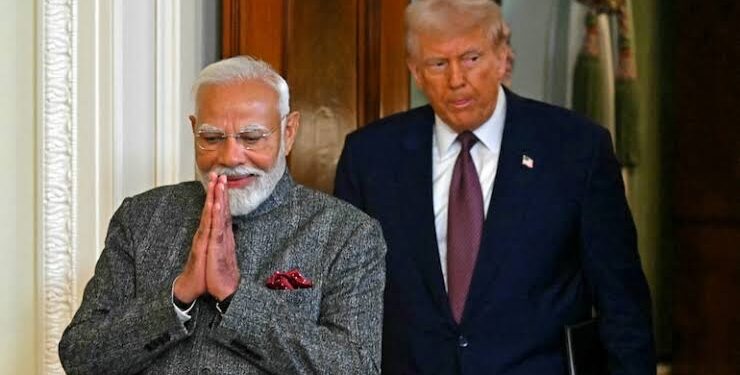
Prime Minister Narendra Modi responded publicly to US President Donald Trump’s recent statement about their personal rapport, emphasizing that he “fully reciprocates” the sentiments expressed by the American leader. The remarks come amid heightened India-US tensions over trade, particularly regarding India’s purchase of Russian oil, which prompted the United States to impose punitive tariffs exceeding 50 percent on certain Indian imports. PM Modi described the bilateral relationship as a “very positive and forward-looking comprehensive and global strategic partnership,” highlighting the enduring strength of India-US ties despite recent disagreements. The exchange of statements underscores the complex dynamics of modern diplomacy, where personal relationships between leaders intersect with contentious economic and strategic matters, reflecting a careful balancing act in international relations.
Modi’s Response to Donald Trump’s Personal Remarks
Donald Trump, while acknowledging PM Modi as a “great prime minister,” had earlier expressed concerns over India’s policy choices, particularly the continued purchase of Russian oil. He said, “I’ll always be friends with PM Modi. He’s a great Prime Minister. I’ll always be friends, but I just don’t like what he is doing at this particular moment. But India and the United States have a very special relationship. There is nothing to worry about. We just have moments on occasion.” Donald Trump’s statement highlighted the nuanced interplay between personal diplomacy and policy disagreement, suggesting that while the leaders maintain a strong personal rapport, differences in national policy can occasionally create friction. He also emphasized that trade talks with India were proceeding positively, signaling that despite high tariffs and recent disputes, both nations remained committed to dialogue and finding common ground in economic engagement.
PM Modi, in turn, articulated a clear response on the social media platform X, saying, “Deeply appreciate and fully reciprocate President Donald Trump’s sentiments and positive assessment of our ties. India and the US have a very positive and forward-looking Comprehensive and Global Strategic Partnership.” PM Modi’s statement underlined the importance India places on its relationship with the United States, portraying it as robust and resilient despite the tariff-related tensions. By publicly reciprocating Donald Trump’s words, PM Modi reinforced the notion that personal respect and strategic cooperation continue to anchor bilateral ties, providing a stabilizing element even as specific policy disagreements surface. The response reflects India’s diplomatic approach of balancing acknowledgment of bilateral challenges with an affirmation of shared strategic priorities.
Geopolitical and Trade Context of the Exchanges
The backdrop to these exchanges is the ongoing trade dispute between India and the United States, primarily linked to India’s purchases of Russian oil amid the Ukraine-Russia conflict. Earlier this year, the Donald Trump administration imposed additional tariffs on Indian exports, bringing the total punitive tariff to over 50 percent—the highest imposed by the United States on any country other than Brazil. India condemned these measures, labeling them “unfair, unjustified, and unreasonable,” while reaffirming its commitment to safeguard national economic interests. The tariffs reflect Washington’s concerns over the role of India in supporting Russian energy exports, which it perceives as indirectly funding Russia’s ongoing military actions in Ukraine.
PM Modi’s statements must also be understood in the context of recent diplomatic engagements, including the Shanghai Cooperation Organisation Summit held in Tianjin, China. During this summit, PM Modi shared cordial interactions with Chinese President Xi Jinping and Russian President Vladimir Putin, projecting an image of unity and balanced engagement amid strained relations with the United States. Photographs and videos from the summit, showing handshakes, embraces, and smiles, symbolized India’s effort to maintain strong ties with multiple global powers while navigating complex geopolitical dynamics. PM Modi’s careful diplomatic balancing demonstrates India’s commitment to independent foreign policy decision-making while ensuring that strategic partnerships, particularly with the United States, remain stable and forward-looking.
In addition to personal exchanges and summit diplomacy, Donald Trump made claims on social media suggesting that the United States had “lost India to China” due to geopolitical alignments. However, he later clarified, asserting that he did not believe India had shifted allegiance. He noted, “I don’t think we have (lost India). I’ve been very disappointed that India would be buying so much oil from Russia. I let them know that. We put a very big tariff on India—50 percent, a very high tariff. I get along very well with PM Modi, as you know. He was here a couple of months ago, in fact, we went to the Rose Garden and had a press conference.” These statements underscore the high level of attention the United States is giving to India’s energy decisions and the broader implications for bilateral trade and strategic relations.
The ongoing tensions have been intensified by the dual nature of the India-US relationship, which combines deep strategic cooperation with occasional economic friction. While tariffs and trade disputes pose challenges, both nations continue to engage in high-level dialogue on multiple fronts, including security, defense, and technology collaboration. The “always be friends” rhetoric from Donald Trump and PM Modi’s reciprocation highlights how personal diplomacy can serve as a stabilizing influence, ensuring that economic disagreements do not derail broader bilateral priorities. It reflects the pragmatic approach both countries adopt to balance short-term disagreements with long-term strategic interests.
The exchanges also highlight the role of public communication in international diplomacy. Donald Trump’s use of the Oval Office and social media platforms to articulate his views on India’s policies, combined with PM Modi’s public reciprocation, demonstrates how modern leaders manage complex international narratives. By publicly acknowledging respect and friendship, both leaders signal continuity in strategic cooperation, even as economic or geopolitical disputes arise. These public communications help manage domestic and international perceptions, ensuring that the overall framework of the India-US partnership is projected as resilient and forward-looking.
Energy policy has remained a central issue influencing trade and diplomatic relations. India’s procurement of Russian oil, driven by market conditions and cost efficiency, has been framed by the United States as a strategic concern. The resulting tariffs imposed by Washington aim to influence India’s energy choices while underscoring the geopolitical implications of energy dependencies in the context of the Ukraine-Russia conflict. India’s position reflects the challenge of balancing domestic energy security with international diplomatic expectations. Through PM Modi’s statements, India signals its commitment to an independent energy strategy while maintaining open channels for constructive dialogue with the United States.
Trade and tariff measures form a critical backdrop to the ongoing dialogue. The 50 percent tariff imposed on Indian exports represents a significant economic pressure point, but both leaders’ public affirmations of friendship indicate that economic disputes are being managed within a broader framework of strategic partnership. PM Modi’s full reciprocation of Donald Trump’s sentiments serves to emphasize that personal rapport and high-level engagement remain key pillars in sustaining India-US relations. The interplay of policy disagreement and personal diplomacy exemplifies how countries navigate multifaceted bilateral relationships, ensuring that disagreements in one area do not undermine cooperation in others.
These developments also highlight India’s adeptness at multi-vector diplomacy. PM Modi’s interactions with leaders such as Xi Jinping and Vladimir Putin, alongside careful engagement with the United States, demonstrate India’s commitment to pursuing an independent foreign policy while sustaining strategic partnerships. By balancing relationships with multiple global actors, India aims to maintain both national interests and its role as a responsible global player. The public statements exchanged between PM Modi and Donald Trump act as a reassurance mechanism, signaling continuity in partnerships while addressing immediate economic concerns.
Furthermore, the current scenario underscores the growing importance of personal diplomacy in shaping the trajectory of bilateral relationships. The repeated emphasis on friendship and mutual respect illustrates that even in the face of policy disagreements, personal rapport can serve as a stabilizing factor, facilitating ongoing dialogue and negotiation. For India, this represents a crucial element in managing complex trade disputes while maintaining strategic engagement with the United States.
India-US relations, while facing challenges over energy policy and tariffs, continue to demonstrate resilience. The “always be friends” exchange between Donald Trump and PM Modi reflects the capacity of personal diplomacy to transcend immediate tensions. It also emphasizes the need for strategic patience, balancing national economic interests with the expectations of global partners. Through PM Modi’s measured responses, India asserts its independent policy choices while signaling a commitment to long-term bilateral engagement.
Overall, the exchange of statements between the two leaders highlights the dual nature of modern diplomacy, where economic disagreements coexist with personal rapport, strategic dialogue, and multilateral cooperation. The reaffirmation of friendship serves as a stabilizing factor in managing trade tensions, demonstrating the ability of India and the United States to engage constructively despite disagreements. It illustrates how nations can navigate complex international landscapes, using both policy tools and personal diplomacy to advance national interests while maintaining the strength of strategic partnerships.
By openly reciprocating Donald Trump’s remarks, PM Modi reinforced the narrative of a balanced and resilient India-US relationship. The public affirmations serve to mitigate tensions arising from punitive tariffs, ensuring that strategic cooperation, dialogue, and mutual trust continue to define the bilateral relationship. The interaction demonstrates how contemporary leaders leverage public communication, personal rapport, and strategic positioning to manage multifaceted partnerships, ensuring that temporary disputes do not compromise long-term objectives.