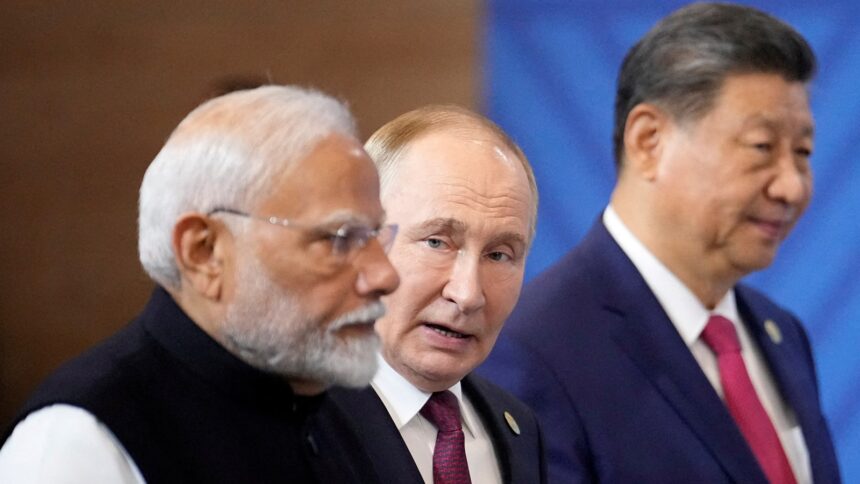
The upcoming Shanghai Cooperation Organization (SCO) Summit in Tianjin, China, is set to witness a high-profile bilateral engagement between Indian Prime Minister Narendra Modi and Russian President Vladimir Putin. Scheduled for Monday, this meeting represents the first face-to-face discussion between the two leaders this year, despite their regular communication over the phone. As both leaders converge in China to attend the SCO Summit from August 31 to September 1, their interaction is anticipated to address a wide spectrum of strategic, economic, and geopolitical issues. The meeting underscores the importance of the India-Russia strategic partnership, which has been nurtured over decades and formally recognized through the 2010 declaration marking the countries’ special bilateral relationship. Observers believe that the discussions will also focus on preparing for President Vladimir Putin’s upcoming visit to India in December, a milestone that is expected to reinforce the long-standing cooperation between the two nations amid a complex international environment marked by global trade tensions, regional conflicts, and evolving geopolitical alliances.
India-Russia Strategic Partnership and Historical Context
The India-Russia relationship is deeply rooted in historical, economic, and military ties, forming one of the most enduring partnerships in global diplomacy. Over the years, the bilateral cooperation has extended across defense, energy, nuclear technology, space exploration, and regional security, creating a framework that both countries rely on to navigate global uncertainties. The formal recognition of this partnership through the strategic declaration in December 2010 emphasized mutual trust, respect, and a commitment to enhancing cooperation across multiple domains. In the context of the upcoming SCO Summit, the bilateral meeting between PM Modi and Vladimir Putin carries added significance as both leaders are expected to assess the evolving global geopolitical landscape, including challenges posed by shifting trade policies, economic sanctions, and regional security developments. Analysts suggest that the meeting will provide an opportunity to reinforce coordination on key strategic fronts, particularly in defense procurement, energy collaboration, and regional diplomacy, while also exploring avenues to address emerging global and regional challenges collectively.
The SCO platform itself has become a vital multilateral forum for India and Russia to advance shared interests in regional security, counterterrorism, and economic development. India’s engagement in the SCO, combined with Russia’s long-standing influence in Central Asia, positions the bilateral discussion at the intersection of regional and global strategic considerations. In this backdrop, PM Modi and Vladimir Putin’s meeting is expected to evaluate ongoing projects and joint initiatives, assess opportunities for future collaboration, and strengthen mechanisms for continuous diplomatic engagement. Additionally, the discussions are likely to touch upon global energy security, given the strategic importance of Russian energy exports to India, including oil, gas, and nuclear fuel, which underpin critical aspects of India’s energy planning and economic stability.
Focus Areas and Strategic Implications of PM Modi-Vladimir Putin Meeting
The bilateral engagement between Prime Minister Modi and President Vladimir Putin is anticipated to cover a broad spectrum of strategic and geopolitical concerns. One of the primary areas of discussion is likely to be the preparation for President Vladimir Putin’s upcoming visit to India in December, which will mark a significant milestone in the India-Russia partnership. During this visit, both leaders are expected to reaffirm commitments to joint projects, explore new avenues for collaboration, and issue declarations highlighting the strength and resilience of their strategic ties. The December visit will also provide a platform to further institutionalize mechanisms for regular dialogue, enhance cooperation in defense and technology, and deepen economic engagement in sectors such as infrastructure, energy, and high technology.
Given the current international environment, PM Modi and Vladimir Putin are also expected to address challenges stemming from global trade tensions, particularly the impact of Western sanctions on Russia and the implications for India-Russia economic collaboration. Analysts highlight that the bilateral discussion will likely focus on identifying innovative solutions to sustain and expand trade relations, including exploring alternatives for payment mechanisms, joint ventures in energy and infrastructure, and potential cooperation in emerging technologies. In addition, regional security considerations, including developments in South Asia, Central Asia, and the broader Indo-Pacific region, are expected to form a significant component of the dialogue. Both leaders have historically emphasized the importance of maintaining stability in the region through diplomatic coordination, intelligence sharing, and defense cooperation, and the Tianjin meeting offers an opportunity to reinforce these strategic imperatives.
The ongoing defense collaboration between India and Russia, which encompasses procurement of advanced military equipment, joint research and development, and training initiatives, is expected to feature prominently in the discussions. With India modernizing its armed forces and Russia seeking to sustain its position as a key defense partner, the meeting provides a platform to review ongoing programs, explore new technological partnerships, and establish frameworks for long-term cooperation. Furthermore, the engagement is anticipated to address the evolving security landscape in the context of rising tensions in neighboring regions, emphasizing the importance of maintaining strategic balance and promoting regional stability through proactive diplomatic and defense measures.
Beyond strategic and defense considerations, the PM Modi-Vladimir Putin discussion is likely to encompass energy and economic collaboration. Russia’s vast energy resources, combined with India’s growing energy needs, have created a foundation for mutually beneficial engagement in oil, gas, and nuclear power sectors. Analysts expect the leaders to explore initiatives to enhance energy security, including long-term supply contracts, investment in infrastructure projects, and collaboration on clean energy and renewable initiatives. Additionally, the discussion is likely to highlight the importance of trade diversification, encouraging joint ventures, and enhancing industrial and technological partnerships to bolster bilateral economic resilience.
The SCO Summit provides a crucial backdrop for this bilateral engagement, offering both leaders a multilateral context to discuss broader regional dynamics and global challenges. By aligning their positions on key issues, India and Russia can collectively influence policy directions within the SCO framework, strengthen cooperation on counterterrorism, and address emerging threats that transcend national borders. The summit also enables both countries to showcase their commitment to multilateral diplomacy, reaffirming their roles as responsible stakeholders in maintaining regional stability, promoting economic growth, and advancing sustainable development objectives.
In addition to strategic, defense, and economic considerations, PM Modi and Vladimir Putin’s meeting is expected to cover aspects of cultural and scientific cooperation. India and Russia share a long history of collaboration in education, scientific research, and cultural exchanges, which have contributed to mutual understanding and goodwill between their peoples. Strengthening these dimensions of bilateral engagement is viewed as critical for sustaining long-term partnership, fostering people-to-people connections, and enhancing the overall framework of India-Russia relations. By integrating cultural, scientific, and technological collaboration into the broader strategic dialogue, both leaders can ensure a more holistic approach to bilateral engagement that addresses multiple facets of cooperation.
The upcoming discussions are also expected to reaffirm India and Russia’s commitment to strategic autonomy and independent foreign policy decision-making. Both nations have historically emphasized the importance of pursuing national interests while maintaining flexibility in international diplomacy. Through dialogue in Tianjin, PM Modi and Vladimir Putin can articulate common positions on key geopolitical issues, coordinate approaches to global governance challenges, and explore collaborative measures to mitigate risks arising from external pressures or shifting alliances. This bilateral meeting, therefore, serves as a cornerstone for reinforcing strategic trust, enhancing coordination, and providing clarity on shared objectives in an increasingly complex international environment.
By engaging in detailed discussions on bilateral, regional, and global issues, Prime Minister Modi and President Vladimir Putin aim to project a message of stability, resilience, and strategic foresight. Their interaction at the SCO Summit is expected to consolidate decades of partnership, create frameworks for future collaboration, and enhance the capacity of both nations to address emerging challenges effectively. Analysts believe that the outcomes of the meeting will influence not only India-Russia relations but also broader regional dynamics, shaping economic, security, and diplomatic trajectories in the Asia-Pacific and Eurasian regions.
Furthermore, the engagement between PM Modi and Vladimir Putin at the SCO Summit highlights the importance of maintaining strong bilateral ties in the context of shifting global power dynamics. As countries navigate challenges related to trade, regional security, and geopolitical competition, India and Russia’s sustained collaboration serves as a stabilizing force, promoting dialogue, cooperation, and multilateral engagement. By reinforcing their partnership, both nations signal a commitment to constructive diplomacy, strategic coordination, and proactive problem-solving, demonstrating the relevance of long-standing alliances in addressing contemporary challenges.
The PM Modi-Putin meeting also offers an opportunity to explore future frameworks for joint initiatives in emerging sectors, including space, artificial intelligence, and high technology. With both countries investing in scientific research, innovation, and technological development, collaboration in these domains can enhance mutual capabilities, support economic growth, and foster competitiveness on the global stage. By incorporating forward-looking initiatives into their discussions, PM Modi and Vladimir Putin can ensure that the India-Russia partnership remains adaptive, resilient, and future-ready, capable of addressing evolving challenges and leveraging emerging opportunities effectively.
Overall, the bilateral engagement between Prime Minister Modi and President Vladimir Putin at the SCO Summit in Tianjin represents a significant milestone in India-Russia relations. By focusing on strategic, economic, defense, and technological cooperation, the leaders aim to strengthen an already robust partnership, provide guidance on ongoing projects, and create new avenues for collaboration. The discussions are expected to send a strong signal to the international community about the enduring strength, stability, and relevance of India-Russia relations, highlighting the importance of sustained engagement, mutual respect, and shared strategic vision.