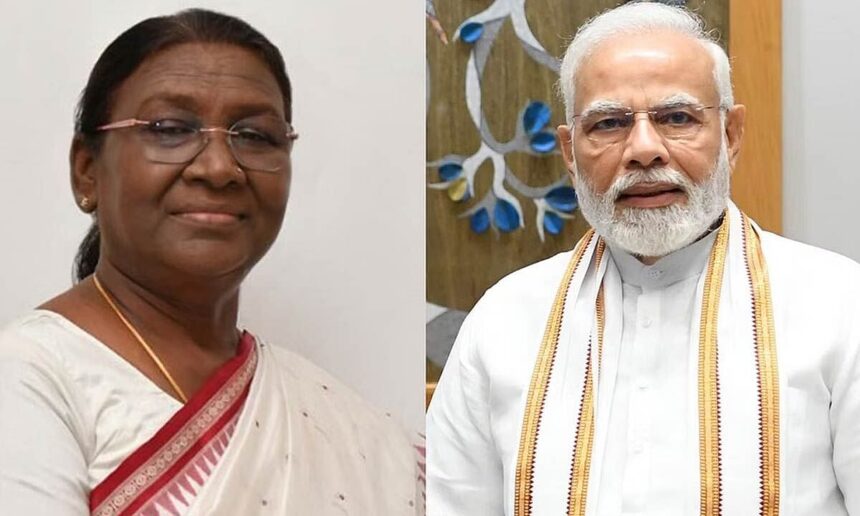
Jharkhand marked another year of its statehood with warm tributes, heartfelt wishes, and renewed national attention as Prime Minister Narendra Modi and President Droupadi Murmu extended greetings on the occasion of Jharkhand Foundation Day. Their messages celebrated the state’s rich tribal culture, its legacy of struggle and resilience, and the immense contribution of its people to India’s identity and development. With the day also coinciding with the birth anniversary of tribal icon Birsa Munda, the state’s foundation day assumed an added emotional and historical significance, reinforcing its unique place in India’s cultural and socio-political landscape.
PM Modi Highlights Jharkhand’s Tribal Heritage and Legacy of Courage
Prime Minister Narendra Modi extended warm wishes to the people of Jharkhand, describing the state as a “glorious land enriched with tribal culture” and acknowledging its long history of courage and self-respect. In a heartfelt message posted on X, the Prime Minister paid tribute to Bhagwan Birsa Munda, the legendary tribal freedom fighter whose name is inseparable from Jharkhand’s identity and whose sacrifices continue to inspire millions across the country.
Modi emphasized that Jharkhand’s historical journey is deeply intertwined with the tribal community’s commitment to preserving their cultural lineage and resisting oppression. He noted that the spirit of bravery demonstrated by Birsa Munda and the tribal communities has shaped the cultural fabric of the region and strengthened the foundation of modern Jharkhand. His message highlighted the state’s unique heritage and the profound influence its indigenous traditions have had on national consciousness.
The Prime Minister also conveyed his hopes for the state’s continued progress, development, and prosperity. He wrote that he, along with his “family members in the state,” prayed for Jharkhand’s advancement and the well-being of its people. These wishes underscored the central government’s consistent emphasis on inclusive development, especially in regions with rich tribal demographics and socio-economic diversity.
Modi’s message reflected the broader significance of Jharkhand in India’s socio-cultural structure. Formed in 2000 after a lengthy movement centered around tribal identity, self-governance, and regional autonomy, Jharkhand has spent 25 years carving out a distinct identity while contributing to India’s economic and cultural growth. The Prime Minister’s tribute acknowledged this journey and celebrated the state’s role in strengthening India’s social diversity.
The timing of the state’s foundation day—coinciding with the birth anniversary of Birsa Munda—added symbolic depth to the Prime Minister’s remarks. Birsa Munda’s resistance against British rule, his leadership in tribal uprisings, and his lifelong struggle for the dignity of indigenous communities have made him an enduring icon not only in Jharkhand but across India. Modi has frequently invoked the legacy of Birsa Munda in his speeches, especially while speaking about tribal welfare, forest conservation, and cultural preservation.
Jharkhand, with its vast forests, mineral wealth, and diverse tribal communities, has always occupied a crucial position in India’s development blueprint. The Prime Minister reiterated the importance of sustaining the cultural richness of the region while accelerating developmental initiatives. His message signaled the continued focus on improving infrastructure, generating employment, enhancing educational opportunities, and strengthening tribal welfare programs in the state.
Modi’s wishes on Jharkhand Foundation Day were seen as a reaffirmation of the Center’s commitment to empower tribal communities and honor their contribution to the nation. By praising their culture, struggles, and achievements, he positioned Jharkhand not merely as a state carved out for administrative convenience but as a cultural powerhouse whose history and heritage enrich India’s collective identity.
The Prime Minister’s greeting resonated widely across social media platforms, with leaders, citizens, and members of the tribal community acknowledging the importance of recognizing indigenous history and honoring the contributions of tribal leaders. His emphasis on Jharkhand’s progress also drew attention to the evolving political, social, and developmental narrative of the state, which continues to balance cultural preservation with modern aspirations.
President Murmu Celebrates Jharkhand’s Cultural Heritage and Silver Jubilee of Statehood
President Droupadi Murmu, India’s first tribal President and one of the most prominent national voices from the tribal community, also extended heartfelt greetings to the people of Jharkhand on the state’s Foundation Day. Her message carried a special emotional resonance, given her own roots in the tribal belt and her longstanding advocacy for indigenous rights, cultural preservation, and grassroots development.
In her message posted on X, President Murmu congratulated the people on the Silver Jubilee of Jharkhand’s formation, marking 25 years of its existence as a separate state carved out of Bihar in 2000. She praised the people of Jharkhand as “talented and hardworking,” noting that they have continuously strengthened not only the pride of the state but also the pride of the entire nation. Her remarks underscored the pivotal role that the tribal population of Jharkhand has played in shaping India’s cultural, historical, and developmental pathways.
President Murmu highlighted Jharkhand’s abundant natural wealth, including its forests, minerals, and biodiversity, and emphasized that these resources have allowed the state to play a significant role in India’s economic development. She acknowledged the importance of preserving these natural assets while ensuring that the benefits of development reach every household, particularly within the tribal communities that have historically depended on forest resources for their livelihood and cultural identity.
Her tribute to the state’s tribal folk arts—recognized internationally for their vibrancy and cultural depth—served as a reminder of Jharkhand’s global cultural footprint. Art forms such as Sohrai painting, Jadopatia painting, tribal musical traditions, and folk dances have gained increasing attention in recent years, with cultural institutions and international platforms acknowledging their artistic value. President Murmu described these art forms as “vibrant symbols of India’s cultural richness,” highlighting their capacity to communicate powerful stories of tradition, resistance, and identity.
She also praised the contributions of Jharkhand’s brave tribal warriors, who have played critical roles in defending India and upholding national values. From freedom fighters to contemporary soldiers serving in the armed forces, the President acknowledged the community’s history of courage and service. This recognition echoed her long-standing commitment to elevating tribal narratives within mainstream national discourse and ensuring that their contributions receive the visibility and respect they deserve.
President Murmu expressed her hope for Jharkhand’s steady progress and a bright future for all its residents. Her message underscored the importance of sustainable development that aligns with the cultural and ecological characteristics of the region. She reiterated that the state’s future must prioritize education, health care, empowerment of women and youth, and preservation of indigenous knowledge systems that have historically sustained tribal communities.
Her greetings on the Silver Jubilee of Jharkhand State added a historical layer to the celebrations. Twenty-five years ago, the creation of Jharkhand marked the culmination of decades of struggle by tribal leaders who demanded administrative autonomy, recognition of their cultural identity, and control over local resources. The movement, rooted in the broader discourse on tribal rights, eventually led to the establishment of a state that reflected the aspirations and identity of its indigenous population.
Today, as Jharkhand completes a quarter century of statehood, the President’s message highlighted how far the state has come in terms of cultural recognition, economic development, and political empowerment. Her words also emphasized the ongoing challenges, including improving social indicators, strengthening governance, protecting indigenous lands, and ensuring equitable development across all regions.
President Murmu’s tribute served as a reminder of the deep emotional connection that tribal communities across the country share with Jharkhand, often considered a heartland of indigenous culture. Her message drew widespread appreciation, especially from tribal organizations, cultural institutions, and citizens of the state who view her role as a symbol of empowerment and representation.