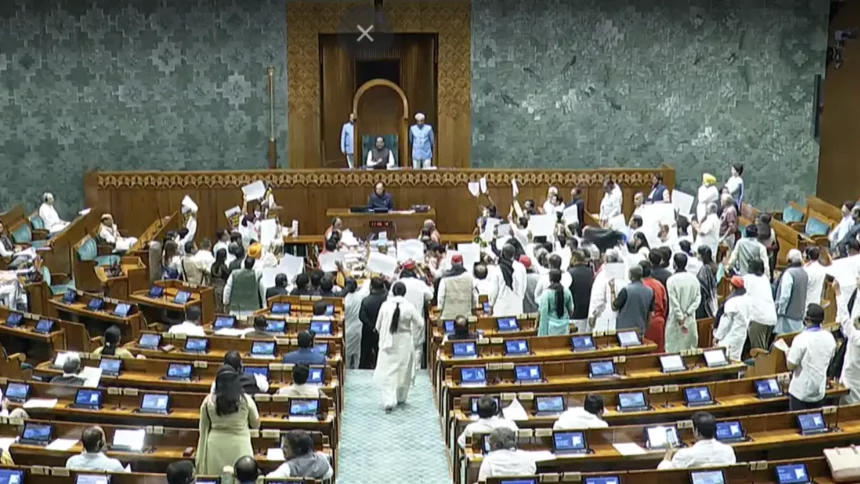
The ongoing Monsoon Session of Parliament has witnessed significant disruptions, resulting in a drastic loss of valuable time during Question Hour and Zero Hour. These two segments are vital avenues for Members of Parliament (MPs) to raise important constituency-related issues, seek government accountability, and address urgent matters of public interest. However, continued interruptions have not only curtailed these opportunities but also left many MPs — from both the ruling and opposition benches — frustrated over missed chances to voice their concerns.
Lost Opportunities in Question Hour and Zero Hour
For both experienced legislators and first-time MPs, Question Hour (11 am to 12 noon) is a rare opportunity to directly question ministers and compel on-record government responses. Immediately afterward, Zero Hour offers another platform to raise “Issues of Urgent Public Importance” that demand immediate attention, often without the lengthy procedural delays associated with other parliamentary tools.
In the Rajya Sabha alone, MPs had made 210 Zero Hour submissions this Monsoon Session. However, due to repeated adjournments and disruptions, only five of these could actually be taken up. Similarly, of the 210 starred questions scheduled for Question Hour in the Upper House, only 14 were discussed. These numbers underscore the severe impact of the current stalemate.
MPs across party lines, expressed disappointment at losing such opportunities. They emphasized that it can take months — sometimes over a year — to secure a slot in Zero Hour. For many, missing that turn is more than a personal setback; it represents a lost chance to highlight issues of pressing importance to the people they represent.
The problem extends beyond Question Hour and Zero Hour. The Rajya Sabha also schedules “special mentions” — statements by MPs on matters of public concern — and of the 210 allotted slots this session, only 17 have been utilized. This means that of the potential 630 speaking opportunities across these three instruments (210 each), only 36 were actually taken up.
Disruptions and Time Loss: The Extent of the Damage
The magnitude of the disruptions is reflected in the time lost. On Monday, the Rajya Sabha Chair revealed that the Upper House had already lost 62 hours and 25 minutes to disruptions this session. These interruptions, often sparked by heated protests and political standoffs, have been a recurring feature of parliamentary proceedings in recent years, but this session has been particularly affected.
The stalemate has persisted despite appeals from the presiding officers. On August 8, as Question Hour began in the Lok Sabha, opposition members staged protests over the Special Intensive Revision (SIR) issue, prompting Speaker Om Birla to intervene. He urged members to let the session proceed:
“Honourable members, I am requesting you again that Question Hour is an important time. Please let the House sit. Your sloganeering is not in accordance with parliamentary traditions. The people of the country are watching this. This Question Hour is important.”
Three days later, on August 11, Rajya Sabha Deputy Chairman Harivansh Narayan Singh made a similar plea during Zero Hour. He stressed the significance of both instruments for members to perform their legislative duties effectively:
“I would request you to let Zero Hour run… allow honourable members to avail Zero Hour and Question Hour. You know that both of these are very important instruments for honourable members. These are very important instruments. You don’t want these to be discussed?”
His appeal went unanswered, and the House was adjourned soon after.
Beyond the statistics, the repeated disruptions undermine the core purpose of Parliament: to deliberate on legislation, scrutinize the executive, and give voice to public concerns. For MPs, particularly those representing smaller states or constituencies far from the national spotlight, Question Hour and Zero Hour are often their best chance to secure national attention for local problems.
The issue has also highlighted the procedural bottlenecks inherent in Parliament’s functioning. While members can submit multiple questions or requests, the selection process is governed by a lottery system, meaning the opportunity to speak is already limited. Any disruption that leads to adjournment further narrows these chances.
In recent years, calls for reform have grown louder, with some advocating for “automatic time protection” for Question Hour and Zero Hour — ensuring that these sessions are held regardless of disruptions elsewhere in the day. However, such proposals would require consensus among political parties, which has proven elusive.
As the Monsoon Session inches toward its end, MPs and parliamentary observers alike fear that the valuable legislative and oversight functions of Parliament are being steadily eroded. The 32-hour discussion on Operation Sindoor has been one of the few substantive debates to take place, underscoring the imbalance between the available working time and its actual utilization.