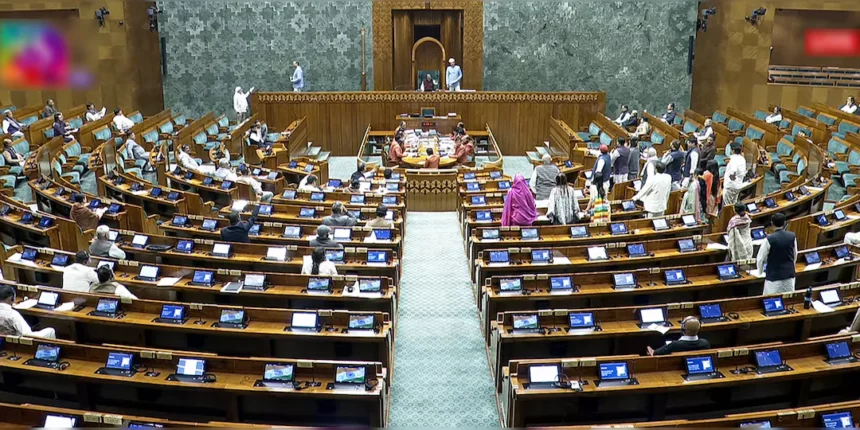
The Winter Session of Parliament enters a deeply symbolic and culturally significant phase as both Houses prepare for a special discussion on Vande Mataram, which marks 150 years since its composition. This milestone offers lawmakers an opportunity not only to revisit the historical evolution of the national song but also to reflect on its emotional, political, and cultural imprint on India’s freedom struggle and national identity. The Lok Sabha will take up the discussion first, followed by the Rajya Sabha on the next day, turning Parliament into a forum where the origins, legacy, and continued relevance of Vande Mataram will be examined in depth.
Lok Sabha prepares for a detailed discussion, with Prime Minister Modi set to open the session
The Lok Sabha will begin the special discussion on Vande Mataram at noon, marking the first session of a two-day commemoration. Officials and parliamentary observers expect that the debate will highlight not just the familiar narrative of Vande Mataram as a rallying call during the freedom movement, but also several lesser-known historical dimensions, contextual influences, and cultural layers associated with Bankim Chandra Chattopadhyay’s composition. Lawmakers are anticipated to shed light on the artistic inspiration, political symbolism, linguistic richness, and historical circumstances that turned Vande Mataram into a national anthem of resistance and unity long before independence.
Prime Minister Narendra Modi is expected to initiate the debate, underscoring the national importance of the moment. His opening remarks are likely to set the tone for a reflection that goes beyond ceremonial appreciation and into the broader philosophical and civilizational values expressed in the song. The Prime Minister has, on several past occasions, emphasised Vande Mataram as an emblem of India’s collective resolve and cultural continuity. In this context, his role in starting the discussion adds weight to the significance of the event.
Throughout the afternoon, members from across political parties are expected to participate, offering varied interpretations and historical references. The Lok Sabha debate is also likely to bring to light distinctive regional perspectives on Vande Mataram, illustrating how the song echoed differently across provinces during the freedom struggle while still embodying a shared sense of national belonging.
The Defence Minister, Rajnath Singh, is scheduled to speak at the end of the Lok Sabha discussion. His concluding remarks are expected to tie the significance of the national song to contemporary ideas of duty, nationhood, and collective responsibility. Given his portfolio, Singh may also highlight how the phrase “Motherland” in Vande Mataram has been invoked in modern India to inspire discipline, sacrifice, and unity among the armed forces as well as civilians.
The atmosphere within the Lok Sabha is expected to be one of solemnity mixed with pride, as Parliament revisits the transformative power of cultural and literary expression in shaping national identity. Members are likely to emphasise how Vande Mataram helped awaken political consciousness during the colonial period and continues to resonate in modern India as a reminder of the values of freedom, harmony, and cultural dignity.
Rajya Sabha to continue the commemoration, with Amit Shah and JP Nadda leading the debate
Following the Lok Sabha proceedings, the Rajya Sabha will hold its own session on Vande Mataram the next day. The discussion will be initiated by Union Home Minister Amit Shah, whose perspective is expected to focus on the national, constitutional, and civilizational dimensions of the song. Shah may highlight the unifying spirit embedded in the composition and reflect on its influence on political mobilisation during crucial phases of India’s freedom movement. His address is anticipated to explore how Vande Mataram served as a rallying cry that transcended social, linguistic, and regional boundaries.
Health Minister and Leader of the House JP Nadda is scheduled to speak following the Home Minister. Nadda is likely to place emphasis on the emotional and inspirational appeal of Vande Mataram, connecting its message to the values of collective well-being, social harmony, and the ethos of service that modern governance aspires to uphold. His role in the upper chamber gives him a platform to interpret the song not only through the lens of India’s past, but also through its relevance to the aspirations of a rising nation addressing modern challenges.
The Rajya Sabha’s participation will complete the bicameral commemoration of the national song’s 150-year journey. The discussion is expected to draw references to the original literary context of Vande Mataram within Bankim Chandra Chattopadhyay’s Anandamath, its subsequent adoption by political leaders and revolutionaries, and its enduring ability to evoke respect for the motherland. Members may focus on the transformative emotional power of the song during colonial rule, when countless freedom fighters drew strength from its call to defend and honour the nation.
Discussions in the upper chamber may also delve into how artistic expressions such as poems, songs, and slogans have historically shaped political movements. The Rajya Sabha debate is likely to place Vande Mataram within a larger cultural framework, exploring how literature and patriotism often intersect to mould public consciousness. Senior parliamentarians may bring their own memories or ideological interpretations into the dialogue, giving the debate an added layer of diversity and thoughtfulness.
The historical value of Vande Mataram will be a central theme in both Houses, emphasising how a single composition became an emblem of hope and courage during the resistance against colonial rule. The emphasis on unity expressed through the song’s verses may also be discussed in relation to contemporary societal cohesion, national development, and India’s constitutional vision of harmony and inclusiveness.