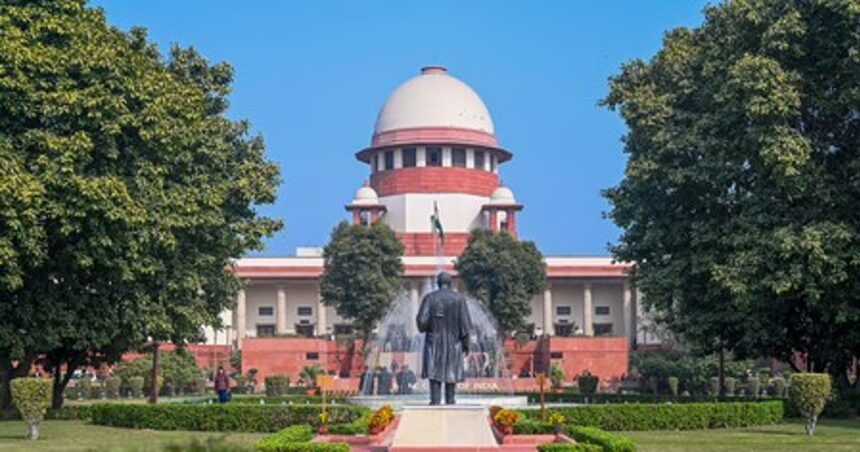
The Supreme Court of India has begun hearing one of the most significant constitutional matters in recent years, as a nine-judge bench takes up a series of cases concerning women’s entry into religious places. At the heart of the proceedings lies the long-pending Sabarimala Temple issue, alongside broader questions involving access of Muslim women to mosques and other faith-based restrictions. The hearings signal a renewed judicial effort to address the complex intersection of religious freedom and gender equality, a debate that has deeply divided public opinion and legal interpretation in India.
constitutional bench reopens debate on faith and gender equality
The nine-judge Constitution Bench, led by Chief Justice Surya Kant, is revisiting the controversial 2018 judgment that allowed women of all ages to enter Sabarimala Temple. The earlier ruling had declared that restricting women based on biological factors violated constitutional guarantees of equality and religious freedom.
However, the matter did not end there. Multiple review petitions and connected cases raised broader constitutional questions, prompting the Supreme Court to refer the issue to a larger bench. The current hearings aim to settle fundamental questions about how Articles 25 and 26 of the Constitution—dealing with freedom of religion—should be interpreted when they come into conflict with principles of equality and non-discrimination.
Importantly, the scope of the case extends far beyond Sabarimala. The bench is also examining whether similar restrictions in other religions—such as the entry of Muslim women into mosques or Parsi women into fire temples—can withstand constitutional scrutiny.
This expansion of the case transforms it from a temple-specific dispute into a landmark constitutional inquiry with nationwide implications. The court is expected to deliberate on several key questions, including what constitutes an “essential religious practice” and whether such practices can override fundamental rights.
The composition of the bench itself reflects the sensitivity of the issue, bringing together judges from diverse backgrounds and including a woman judge to ensure a balanced perspective on matters of faith and gender.
wider implications for religious practices and constitutional rights
The hearings have reignited a long-standing debate in India about the balance between tradition and modern constitutional values. The Sabarimala case, in particular, has been a flashpoint since the 2018 verdict, which overturned decades-old customs that barred women of menstruating age from entering the temple.
Supporters of the verdict argue that it reaffirmed the principle of equality and challenged discriminatory practices rooted in social taboos. Critics, however, maintain that the judgment interfered with deeply held religious beliefs and traditions, raising concerns about judicial overreach.
The current proceedings are expected to provide clarity on these issues by addressing the broader constitutional framework. Questions such as whether courts can intervene in religious practices, and to what extent “constitutional morality” should guide such decisions, are central to the case.
The timing of the hearings has also drawn attention, as they come amid ongoing political and social debates around religious identity and rights. Observers note that the outcome could have far-reaching consequences, influencing not just legal precedent but also public discourse on gender and religion.
Ultimately, the Supreme Court’s decision will shape how India navigates the delicate balance between respecting religious diversity and upholding constitutional principles. As arguments unfold over the coming weeks, the case stands as a defining moment in the ongoing evolution of rights, faith, and law in the country.