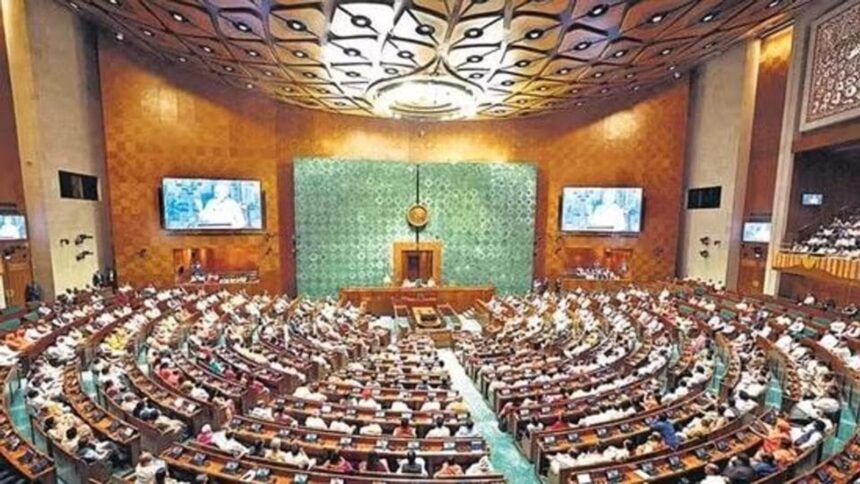
The second part of the Budget Session of Parliament is set to commence on March 10, following a first phase that was marred by legislative stagnation, procedural lapses, and a weakening of institutional norms. As lawmakers reconvene, significant discussions are expected on the ‘Demands for Grants,’ which are formal requests from various government ministries seeking funds from the Consolidated Fund of India. According to the parliamentary bulletin issued by the Rajya Sabha, debates are scheduled on the Ministry of Home Affairs, Education, Railways, and Health and Family Welfare. However, opposition parties have strongly indicated their preference to begin discussions with the Home Ministry, raising concerns over governance and law enforcement issues.
One of the most pressing matters likely to surface in this session is the controversy surrounding the Election Commission of India (EC) and allegations of voter ID duplication. This is not merely a clerical issue but a significant threat to the democratic process. The duplication of Electors Photo Identity Card (EPIC) numbers can result in the denial of voting rights, undermining free and fair elections. According to EC guidelines, EPIC numbers must be unique, with the first three letters specific to an assembly constituency. However, reports indicate that voters from different states have been assigned identical EPIC numbers, raising concerns about electoral integrity. The EC must urgently disclose the extent of these duplicate EPICs and explain how they were assigned while ensuring the implementation of a secure and foolproof system.
The broader concern of legislative efficiency has also come into focus, as the 18th Lok Sabha sets a new low in parliamentary productivity. In its first three sessions, both Houses have passed only four bills, the lowest in independent India’s history. The sole non-budgetary legislation passed was the Bharatiya Vayuyan Vidheyak, 2024, which repealed the outdated Aircraft Act of 1934. This stands in stark contrast to previous parliamentary sessions, where legislative activity was significantly higher. Additionally, the Lok Sabha passed the Supplementary Demand for Grants (SDGs), allocating ₹45,000 crore in additional public spending. However, despite a scheduled five-hour debate, the Rajya Sabha did not hold a discussion, raising questions about financial transparency and accountability.
Several critical budgetary issues are expected to be raised when the session resumes, including the underutilization of funds in key welfare programs. Questions are likely to be asked about why the Ministry of Minority Affairs used only 5% of its allocated budget for 2023-24, why subsidies for LPG connections to economically disadvantaged households were slashed by 30%, and why the PM-Kisan scheme received no additional funding beyond the Revised Estimates, despite parliamentary recommendations to increase annual farmer support from ₹6,000 to ₹12,000. Similarly, concerns over the PM Internship Scheme’s inefficiencies will be highlighted, as only 20% of its funds were utilized, despite a 500% budget increase, with less than 5% of candidates being placed under the program. Additionally, clarity is sought on India’s progress toward achieving a $5 trillion economy, as past deadlines have continuously been pushed forward.
Another alarming instance of procedural disregard emerged when portions of dissent notes from opposition MPs in the Joint Parliamentary Committee on Waqf were deliberately obscured using correction fluid before submission. Such actions undermine the purpose of parliamentary committees, which are meant to foster bipartisan deliberation and present comprehensive reports incorporating diverse perspectives. This incident underscores the growing concerns over the suppression of dissent within Parliament.
The continued absence of a Deputy Speaker in the Lok Sabha is another procedural lapse that has drawn criticism. Article 93 of the Constitution mandates the election of a Deputy Speaker “as soon as may be,” yet this position remained vacant throughout the entire tenure of the 17th Lok Sabha (2019-2024). More than 250 days into the 18th Lok Sabha, the role remains unfilled, highlighting a pattern of disregard for parliamentary conventions.
As the Budget Session resumes, all eyes will be on whether Parliament can overcome these institutional shortcomings or whether the cycle of legislative inertia and procedural neglect will persist.