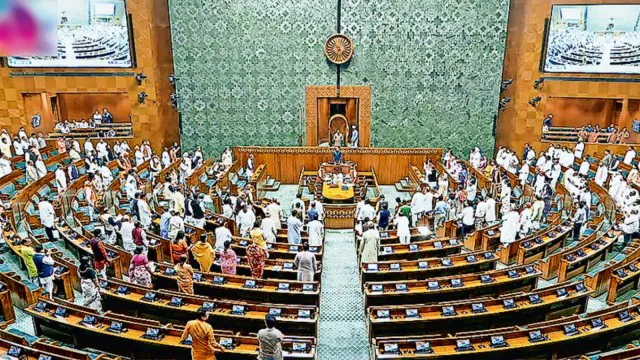
The delay in completing vital rural road projects in areas affected by Left-Wing Extremism (LWE) has raised concerns within a key parliamentary panel, which has now urged the central government to adopt a more aggressive and specialized approach to overcome persistent challenges. In a recently tabled report, the Standing Committee on Rural Development and Panchayati Raj has expressed serious dissatisfaction with the slow pace of construction under the Pradhan Mantri Gram Sadak Yojana (PMGSY) in insurgency-prone districts. The committee, headed by Congress MP Saptagiri Sankar Ulaka, has suggested deploying area-specific professionals such as the Border Roads Organisation (BRO) and called on the Ministry of Rural Development to guide states with sincere, innovative strategies to meet long-overdue targets.
Major Gaps Despite Extended Deadlines
The committee’s report focuses on the Road Connectivity Project for Left Wing Extremism Areas (RCPLWEA), an essential sub-scheme of PMGSY, launched in 2016 to enhance connectivity in the most inaccessible and conflict-prone regions of India. While the original deadline for completion was March 2020, it had to be extended by five years until March 2025 due to ground-level constraints. However, as of 14 May 2025, only 9,523 km of the 12,228 km sanctioned road length has been completed, leaving 2,705 km still unfinished despite the additional time granted.
The report acknowledges that factors such as difficult terrain, active insurgency, and delays in forest clearance contribute to the slow progress. However, the panel emphasizes that these barriers must not become excuses for continued stagnation. Instead, they advocate for proactive planning and improved inter-agency coordination to remove bureaucratic bottlenecks.
According to the committee, the Ministry of Rural Development must not only monitor progress closely but also take the lead in introducing structural innovations and field-level interventions. The report points out that the current approach lacks a focused execution strategy tailored to the unique challenges in LWE areas, thereby undermining the government’s goal of rural integration through road infrastructure.
Combat-Zone Expertise Could Be Key
In one of its more striking recommendations, the committee suggests that specialized agencies like the Border Roads Organisation (BRO), which has long experience working in high-risk, high-altitude, and conflict-sensitive environments, could play a critical role in fast-tracking projects in these areas. Their expertise in deploying trained personnel and equipment in challenging terrain could provide the much-needed momentum to complete the remaining road stretches.
The committee further criticizes the lack of skilled manpower and local administrative support in some states, which has led to prolonged delays and underutilization of funds. It recommends that area-specific contractors with proven credentials in high-risk construction zones be prioritized over generic contractors unfamiliar with the ground situation.
Another concern raised by the panel is the absence of stringent accountability mechanisms. States often report slow progress without facing any significant repercussions. The committee suggests that the Ministry of Rural Development create a special monitoring cell dedicated exclusively to tracking RCPLWEA projects and holding state governments accountable for timeline breaches.
The broader implication of these delays goes beyond infrastructure. In LWE-affected areas, road connectivity is not merely a development issue but a security imperative. Roads enable faster movement of security personnel, facilitate economic growth, and act as a deterrent against insurgent activities. The failure to complete road projects, therefore, directly impacts national security and the socio-economic well-being of some of India’s most vulnerable populations.
Calling for a more nuanced understanding of on-ground realities, the committee has also asked the ministry to include feedback from local communities, field engineers, and law enforcement agencies during the planning and execution phases. By integrating the perspectives of those working on the frontlines, the government can develop more resilient and sustainable road-building models in hostile environments.
To strengthen project implementation, the panel advocates using satellite imagery, GIS mapping, and real-time digital monitoring systems. These tools can significantly improve transparency and help identify project delays before they become critical. It also urges the ministry to explore public-private partnerships and incentivize private contractors willing to take up high-risk projects with adequate safeguards and insurance mechanisms.
Ultimately, the committee has reiterated that the success of PMGSY in LWE-affected regions depends on bold decision-making, combat-ready execution teams, and an unwavering commitment to connecting India’s most remote villages. The remaining 2,705 km must not remain a statistical failure but be converted into roads of change that link hope, progress, and peace in these troubled zones.