The third day of the Parliament’s 2025 Winter Session unfolded amid high political activity, intense debates and significant legislative developments, as both Houses engaged with issues ranging from electoral reforms and water pollution to labour laws, tobacco regulation and privacy concerns. With the government and the Opposition reaching a temporary understanding on holding discussions on the special intensive revision of electoral rolls, the proceedings marked a shift from the logjam of the previous days. The day saw adjournments, spirited exchanges, and the passage of key legislative measures, reflecting a dynamic parliamentary climate shaped by contrasting political priorities.
Debates on Electoral Reforms, Public Health and Governance Dominate Lok Sabha Proceedings
The Lok Sabha commenced its proceedings with the resumption of Question Hour after days of disruptions. Members raised concerns over fake news, AI-driven misinformation and public safety, leading the Information Technology Minister Ashwini Vaishnaw to explain the measures taken to address deepfakes, online gambling and social media manipulation. As the debate transitioned into Zero Hour, MPs addressed issues of tribal enumeration, telecom sector distress and privacy worries surrounding the Sanchaar Saathi app. Arvind Sawant of the Shiv Sena (UBT) described the mandatory installation of the app as an intrusion on privacy and urged the government to reconsider its approach.
Amid these discussions, the House moved toward one of the central themes of the day—the upcoming debate on electoral reforms. The agreement to discuss the Special Intensive Revision (SIR) of electoral rolls on December 9 followed persistent demands by the Opposition, which saw the Speaker convene an all-party meeting to break the logjam. Leaders such as Mallikarjun Kharge and Rahul Gandhi strategised earlier in the day as part of the INDIA bloc’s coordinated effort to push for transparency and electoral accountability. Parliamentary Affairs Minister Kiren Rijiju confirmed that the House would also hold a discussion on the 150th anniversary of Vande Mataram on December 8.
Legislative business advanced with deliberations on the Central Excise (Amendment) Bill, 2025. BJP MP Arun Govil emphasised the importance of addressing the health threats posed by smoking and welcomed the simplified excise structure. However, Congress MP Sasikanth Senthil criticised the Bill for reviving a pre-GST taxation framework and argued that it reflected fiscal pressures rather than public health concerns. Several MPs voiced the impact on tobacco farmers, with DMK’s Kalanidhi Veeraswamy urging the government to prioritise smoking cessation and safeguard state revenues. TDP MP Krishnadeva Rayalu highlighted the predicament of Andhra’s tobacco-growing communities, caught between industry withdrawal and policy shifts.
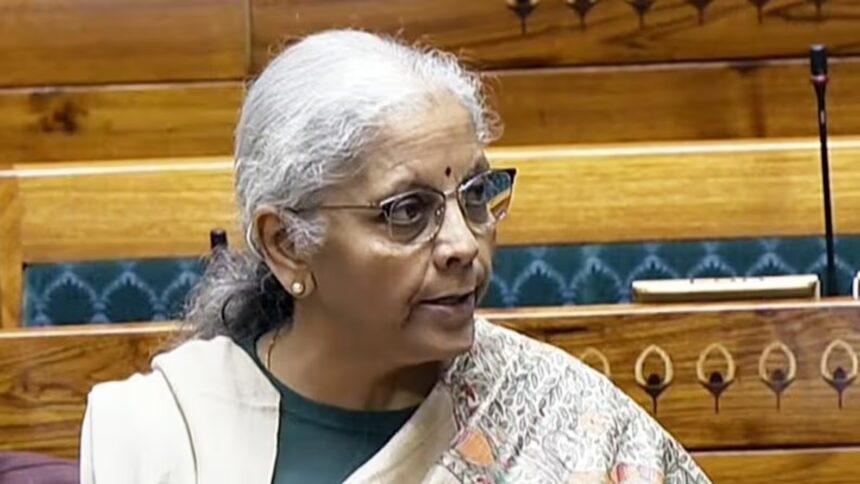
Finance Minister Nirmala Sitharaman addressed these issues directly, reiterating that the measure was not a new tax but a structural correction. She underscored India’s health imperatives and cited WHO findings showing lagging tobacco rate revisions. Sitharaman explained that excise duties would revert to the Centre and later be devolved to states as part of the divisible pool, reaffirming the government’s intent to strengthen public health while assisting states.
Concerns for rural livelihoods surfaced repeatedly. SP MP Neera Maurya raised apprehensions about the impact on tobacco farmers and called for mechanisms to prevent economic distress. CPI(ML-L) member Raja Ram Singh examined addiction among labourers and the need for broader social interventions. Congress MP Prashant Padole called for complete tobacco eradication and stressed the alarming mortality rates associated with tobacco use.
Lok Sabha proceedings concluded with the passage of the Central Excise (Amendment) Bill and an adjournment till the following morning. The session reflected a blend of policy debate, constituency-driven concerns and ideological positioning, shaping the political tone leading into next week’s scheduled discussions.
Rajya Sabha Engages in Heated Exchanges, Water Pollution Bill Adopted, Political Undercurrents Intensify
The Rajya Sabha entered the day with ten notices submitted under Rule 267, all rejected by the Chair for procedural reasons, prompting initial friction among members. The Upper House then moved through Zero Hour, where concerns ranged from disability terminology to data privacy. DMK MP Tiruchi Siva urged the government to use terms aligned with global human rights standards instead of “divyang,” while Congress MP Randeep Surjewala warned that compulsory installation of the Sanchaar Saathi app could violate constitutional privacy protections, allowing potential tracking of citizens’ movements and communications.
Question Hour saw discussions on Indian higher education, with Minister of State Sukanta Majumdar highlighting initiatives such as Spark, Gyan and Study in India to attract foreign students. He underscored reforms like twin and dual degrees and cited the opening of Indian institutions abroad, including IIT Madras’ Zanzibar campus.
The day’s legislative centerpiece in the Rajya Sabha was the discussion and adoption of the Water (Prevention and Control of Pollution) Amendment Act, 2024, specifically applicable to Manipur, which is under President’s Rule. The Bill replaces criminal penalties with monetary fines and aims to update regulatory mechanisms. Environment Minister Bhupender Yadav defended the Bill, highlighting India’s global standing in forest conservation and drawing attention to severe pollution levels in Punjab.
The Bill’s discussion, however, opened a gateway to broader political narratives. DMK MP P. Wilson declared that Manipur remained “on ventilator” without an elected government and urged immediate restoration of democratic processes. Priyanka Chaturvedi of Shiv Sena (UBT) echoed concerns about prolonged central rule in Manipur, arguing that despite the government’s claims, the Opposition had consistently pushed for democratic revival. IUML MP Haris Beeran connected water pollution to democratic decline, asserting that the state required both environmental and constitutional healing.
Several MPs expanded the discourse to include water scarcity, groundwater degradation, industrial contamination and agricultural runoff. YSRCP MP Ayodhya Rami Reddy Alla urged inclusion of groundwater regulation, while Raghav Chadha of the AAP called for greater support for Punjab’s depleting groundwater reserves. AIADMK’s M. Thambidurai supported the Bill but used the platform to raise concerns about river diversion by sand mafias.
Parallel to these debates, political rhetoric escalated. BJP’s Shambu Saran Patel diverted his speech from the pollution Bill to celebrate Bihar’s election results and allege atrocities against Hindus in Bengal, prompting objections and intervention from the Chair. BJP MP Lahar Singh Siroya predicted the party’s rise in West Bengal’s 2026 elections, while Swati Maliwal highlighted the massive expenditure on Ganga and Yamuna clean-up, questioning accountability for continued pollution.
The Rajya Sabha concluded the day by adopting the Water Bill amendment through a voice vote before adjourning. The discussions illuminated not only environmental challenges but also the escalating political tensions surrounding federalism, state governance and democratic processes.
Across both Houses, the day reflected the complex intersection of legislative action, political contestation and governance priorities. With upcoming debates on Vande Mataram and electoral reforms, the Winter Session is poised to enter a more contentious and transformative phase.