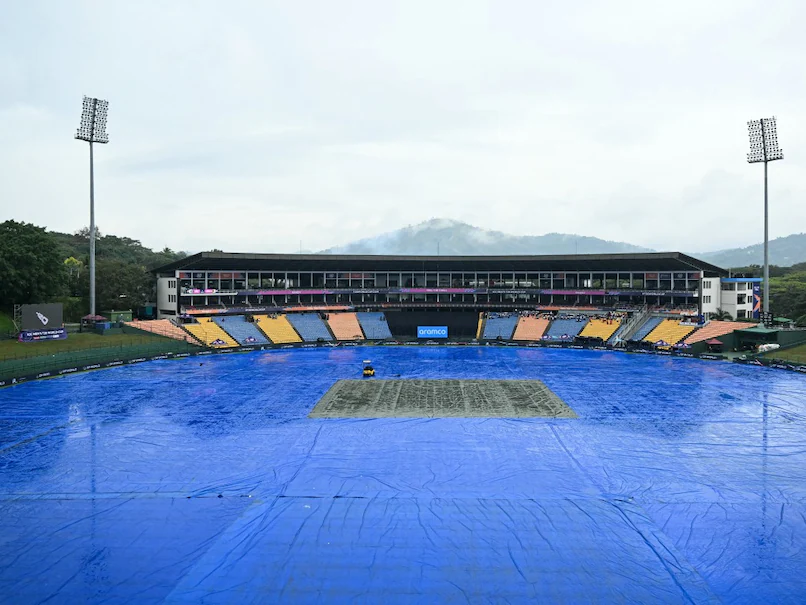
The 2026 T20 World Cup has seen a dramatic turn of events as defending champions Australia were eliminated from the tournament before completing their group stage fixtures, following the rain-abandoned match between Zimbabwe and Ireland in Sri Lanka. With both sides awarded a point due to the washout, Australia, on two points, could no longer catch Zimbabwe, who now sit on five points, even if they win their final match against Oman. This unexpected exit marks the first time Australia has failed to progress past the group stage in either the T20 or ODI World Cups since 2009, leaving fans and cricket analysts stunned by the underwhelming performance of a team that came into the tournament ranked third in the world. While injuries and preparation setbacks played a role, the washout simply crystallized the disappointing trajectory of Australia’s campaign, highlighting the vulnerabilities and inconsistencies that plagued their squad throughout the tournament. Zimbabwe, meanwhile, advances to the Super-8 stage, setting up an intriguing continuation of the World Cup and leaving Australia to contemplate a necessary rebuild for the coming years.
Historic Context and Australia’s Struggles in Group Stage
Australia’s early exit from the T20 World Cup 2026 represents a historic low for the team, who have consistently been among the tournament favorites. The washout against Ireland, coupled with earlier defeats to Zimbabwe and Sri Lanka, underscored a campaign marred by injuries, lack of form, and inconsistent performances across both batting and bowling departments. The African side’s victory over Australia in earlier fixtures, combined with their successful run through sub-regional qualifiers, highlighted a determined Zimbabwean side that capitalized on opportunities while Australia struggled to maintain cohesion. The elimination reflects a combination of bad luck, particularly with weather disruptions, and structural weaknesses in Australia’s squad, including the absence of key players like Josh Hazlewood and Pat Cummins, who missed significant portions of the tournament due to injury. Captain Mitch Marsh’s own fitness issues and Tim David’s delayed return further disrupted Australia’s rhythm, leaving the team with a disjointed and underprepared lineup that failed to justify their high pre-tournament ranking.
Australia’s batting consistently struggled to produce match-winning contributions, with only sporadic performances from players such as Cameron Green and Xavier Bartlett. Decisions to drop Matt Renshaw despite a 65-run performance against Zimbabwe, while not deploying the in-form Steve Smith consistently, raised questions about the management and selection strategies employed by the team. The pre-tournament tour of Pakistan, ending in heavy defeats, exposed gaps in preparation, particularly with players arriving late from BBL commitments or being rested due to injury. These challenges, combined with suboptimal performance under pressure during the group stage, emphasized the necessity of rebuilding and rethinking team composition, fitness management, and tactical approaches in future T20 World Cups.
Zimbabwe’s Rise and Super-8 Qualification
Zimbabwe’s progress to the Super-8 stage marks a remarkable turnaround for a team that missed the last T20 World Cup in 2024 and began its qualification journey in October 2024 through sub-regional Africa B tournaments. Winning ten successive qualifiers and two matches in Sri Lanka prior to their final group stage encounter, Zimbabwe demonstrated remarkable resilience, skill, and preparation. Their points tally of five, secured through key victories and weather-affected matches, ensured that Australia could not advance even with a final game against Oman. This advancement underlines the growing competitiveness of international T20 cricket, where traditional powerhouses like Australia are no longer guaranteed progression, and emerging teams are capable of disrupting the established order through disciplined performance and strategic execution.
The weather-affected match in Kandy, where heavy rain delayed proceedings for hours before the eventual abandonment, created a dramatic finale to the group stage. With Zimbabwe and Sri Lanka securing positions in the Super-8, the tournament moves into its next phase with renewed excitement and unpredictability. The Super-8 stage promises high-intensity cricket, with teams now needing to navigate both competitive pressures and logistical challenges as they vie for semifinal positions. For Australia, the missed opportunity and early elimination serve as a stark reminder of the volatile nature of T20 cricket and the fine margins that separate success from failure at the highest levels.
Australia’s exit also signals an urgent need to evaluate and reconstruct the squad ahead of future tournaments. Only a few younger players, including Cameron Green, Xavier Bartlett, and Connolly Cooper, will be under 30 by the next T20 World Cup. Many senior players such as Mitch Marsh, Josh Hazlewood, Marcus Stoinis, Steve Smith, Glenn Maxwell, Adam Zampa, Sean Abbott, and Ben Dwarhuis are already past 36, while Pat Cummins, Tim David, Nathan Ellis, and David Head will be in their mid-30s. This demographic reality highlights the inevitability of a generational transition for Australia, requiring careful planning in nurturing young talent, enhancing fitness regimes, and restructuring strategies to maintain competitiveness in the T20 format.
Meanwhile, the tournament continues unabated, with Pakistan, New Zealand, England, and other qualifying teams preparing for the Super-8 stage. Pakistan’s final group match against Namibia will determine the last entrant into the Super-8, with logistical arrangements in Colombo for their fixtures if they advance. The T20 World Cup’s intensity and unpredictability underscore both the excitement and risks inherent in the format, while providing opportunities for emerging teams like Zimbabwe to establish themselves as formidable competitors. For Australia, the focus now shifts to rebuilding, reflecting on lessons learned, and preparing strategically for upcoming international T20 events, including co-hosting the next World Cup with New Zealand in 2028 and the Olympic inclusion of T20 cricket at Los Angeles 2028.
This early exit, combined with inconsistent performances and injury disruptions, serves as a case study in how even top-ranked teams can falter under pressure. Australia’s campaign, once heralded as a likely championship run, illustrates the importance of depth, preparation, and adaptability in the high-stakes environment of T20 cricket. The combination of missed opportunities, poor form, and external disruptions like weather created a scenario where traditional strengths could not compensate for weaknesses across multiple dimensions. Analysts have noted that Australia’s squad structure, selection choices, and fitness management will all require significant attention before they can realistically compete for titles again in the near future.
The T20 World Cup 2026’s group stage outcome, highlighted by Zimbabwe’s remarkable rise and Australia’s unprecedented elimination, sets the tone for the Super-8 stage. Cricket enthusiasts globally will now focus on match-ups, team strategies, and player performances, while Australia contemplates the necessary rebuilding steps to regain prominence in international T20 cricket. Zimbabwe’s journey, in contrast, serves as inspiration for emerging teams and underscores the evolving competitive landscape, where tactical acumen, preparation, and consistent execution can yield significant rewards, even against historically dominant opponents.
The Super-8 phase promises high-quality cricket across venues in Sri Lanka and India, with fans eagerly anticipating intense clashes that will determine semifinalists. Teams advancing from the group stage have an opportunity to showcase skill, strategy, and resilience, while underperforming teams must address tactical and structural shortcomings. Australia’s experience highlights the challenges facing established cricketing nations in adapting to the rapidly evolving T20 format, where fitness, talent management, and preparation play pivotal roles in determining outcomes.
As the tournament progresses, analysts and fans alike will examine squad composition, injury impacts, and tactical adaptability. Zimbabwe’s journey offers lessons in perseverance and preparation, while Australia’s campaign serves as a cautionary tale for traditional powerhouses. The coming weeks will see intense scrutiny of performances, strategic planning, and player management as teams aim to navigate the Super-8 stage successfully and secure a place in the semifinals. Australia, meanwhile, faces a period of reflection, rebuilding, and strategic talent development to ensure competitiveness in upcoming international T20 events, including their co-hosted 2028 World Cup and the Olympic T20 in Los Angeles.