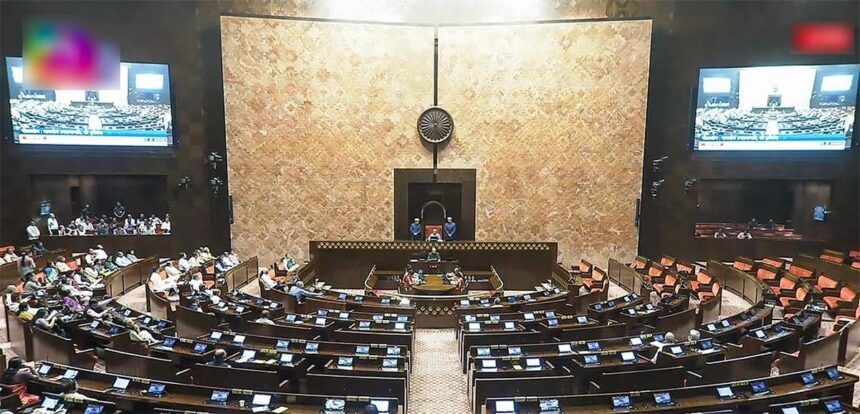
India’s parliamentary calendar has taken a decisive turn as the budget session pauses only to reconvene with a sharper, more politically charged agenda focused on women’s representation and structural reform. The government’s plan to amend the Nari Shakti Vandan Adhiniyam and introduce a new delimitation framework has transformed what would have been routine legislative business into a defining moment for India’s democratic future. At the heart of the debate lies a complex intersection of representation, electoral arithmetic, and political timing, with both the ruling establishment and the opposition positioning themselves strategically ahead of key elections.
women’s reservation reform and expansion of lok sabha seats
The most significant proposal expected during the resumed session is a constitutional amendment to modify the existing women’s reservation law. The legislation, passed in 2023, mandates 33 percent reservation for women in the Lok Sabha and state assemblies, but its implementation has been contingent on a future census and delimitation exercise.
The government is now exploring a pathway to accelerate this process by delinking or modifying those conditions, potentially enabling earlier implementation. Central to this plan is a dramatic expansion of the Lok Sabha from 543 to 816 seats, with approximately 273 seats reserved for women.
This proposed increase is not merely numerical but structural, aiming to rebalance representation in line with population shifts while ensuring that women’s participation is meaningfully embedded in legislative processes. The reservation is also expected to follow a “vertical basis,” ensuring representation for Scheduled Castes and Scheduled Tribes within the women’s quota.
However, the move has triggered political friction. Opposition parties have questioned both the timing and intent of the amendment, alleging that the government is seeking electoral advantage by fast-tracking a popular reform. The government, on the other hand, has defended its approach, arguing that it has the prerogative to determine legislative priorities and timelines.
The debate has also revived long-standing concerns about regional balance. Expanding Lok Sabha seats based on population could potentially shift political influence toward states with higher population growth, raising apprehensions among southern and northeastern states.
delimitation commission bill and political implications
Parallel to the amendment of the women’s reservation law is the proposed introduction of a bill to revise the delimitation framework. The Delimitation Commission of India plays a crucial role in redrawing parliamentary and assembly constituencies based on census data, a process that directly affects electoral representation.
Under current provisions, delimitation has been effectively frozen until after 2026, and the last major exercise was conducted based on the 2001 census. The government’s proposal seeks to expedite this process, potentially using the 2011 census data to redraw constituencies and implement women’s reservation without waiting for the next census cycle.
This shift is significant because delimitation is not merely a technical exercise but a deeply political one. It determines how constituencies are structured, how representation is distributed, and ultimately how electoral outcomes are shaped. The Commission’s decisions are final and cannot be challenged in court, underscoring the weight of its role in India’s democratic system.
Critics argue that accelerating delimitation without broad political consensus could deepen regional disparities and fuel political tensions. The opposition has called for all-party consultations, emphasizing the need for transparency and inclusivity in decisions that will have long-term implications for electoral representation.
Meanwhile, the government views the delimitation reform as essential to operationalizing the women’s reservation law and ensuring that it does not remain a symbolic commitment. By aligning constituency boundaries with updated demographic realities, the proposed changes aim to create a more representative and inclusive legislative framework.
The convergence of these two legislative tracks—the amendment of the women’s reservation law and the restructuring of constituency boundaries—has elevated the upcoming parliamentary session into a pivotal moment for India’s democratic evolution. With elections on the horizon and political stakes high, the decisions taken during this session are likely to shape not only the composition of future legislatures but also the broader trajectory of governance and representation in the country.