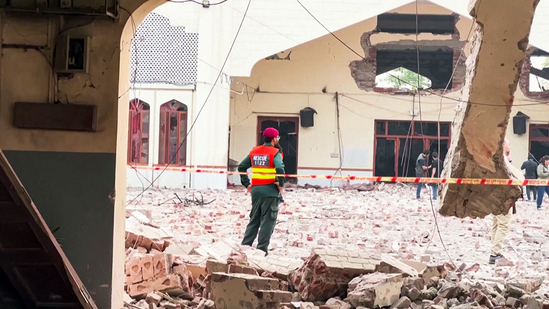
India’s military recently claimed to have downed several high-tech Pakistani fighter jets during Operation Sindoor, a significant escalation in the ongoing tension between the two nations. However, hours after India’s announcement, Pakistan acknowledged that one of its jets had indeed been damaged but downplayed the extent of the damage, offering a different narrative of the incident. This development highlights the ongoing rivalry and contradictory statements that often characterize military confrontations between the two countries.
India’s Assertion of Downing Pakistani Jets
On Sunday, Air Marshal AK Bharti, Director General of Air Operations for the Indian Air Force (IAF), confirmed that during Operation Sindoor, India successfully shot down multiple Pakistani fighter jets. Although India did not provide specific numbers, Bharti stated that the aircraft were “high-tech” and confirmed combat losses on the Indian side as well, although Indian pilots returned safely. Bharti emphasized that the precise details regarding the number of jets downed were still being worked out, but he refrained from sharing exact figures, noting that revealing such information during an active combat situation could benefit the adversary.
Despite these statements, Pakistan’s response was quite different. In a press briefing, Pakistan Army spokesperson Lt. Gen. Ahmed Sharif Chaudhry admitted that one Pakistani jet had suffered damage but downplayed the incident by calling it “minor damage.” He also clarified that no Indian pilots were in Pakistani custody, further minimizing the scale of the damage claimed by India. This stark contrast in narratives between the two countries underlines the complexity of military engagements where both sides often present divergent accounts of the events.
Pakistan’s Counterattacks and India’s Response
Tensions between India and Pakistan surged after the latter launched retaliatory strikes targeting Indian civilian areas and military infrastructure. These attacks followed India’s strikes on terrorist camps in Pakistan and Pakistan-occupied Kashmir (PoK). In response, India’s armed forces thwarted the majority of Pakistan’s attacks and inflicted significant damage on Pakistani airbases.
Following intense exchanges, India and Pakistan reached a brief ceasefire understanding, facilitated by their respective Director Generals of Military Operations (DGMO). However, Pakistan once again escalated the situation by firing drones at Indian cities, prompting India to issue a stern warning of retaliation. The back-and-forth military actions indicate that while both nations have agreed to ceasefire in principle, trust remains fragile, and hostilities continue to simmer.