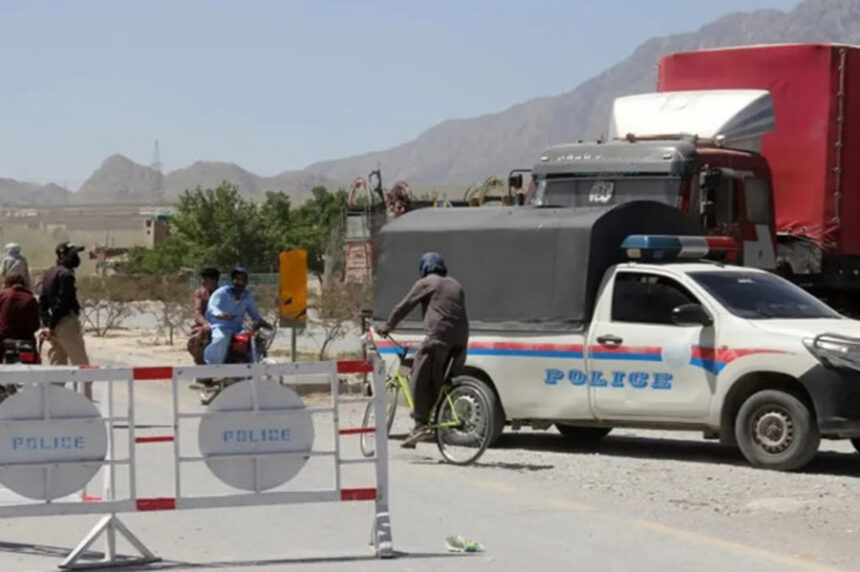
Nine passengers travelling on buses through Pakistan’s restive Balochistan province were kidnapped and executed by armed men, underscoring the persistent violence and fragile security situation in the mineral-rich but conflict-ridden region bordering Afghanistan and Iran. The brutal incident has raised fresh concerns about the safety of civilians in the area, where separatist groups have frequently targeted non-Baloch residents amid longstanding grievances over resource distribution and autonomy.
According to officials, the armed men stopped multiple buses on Thursday evening, forcibly removing passengers before taking them into the nearby mountainous terrain. By Friday morning, the bodies of the victims were discovered, each showing bullet wounds, reflecting the cold precision of the attackers who remain unidentified.
Details of the Attack and Victim Discovery
Shahid Rind, the spokesperson for the Balochistan provincial government, confirmed that the assailants intercepted buses at different points and abducted selected passengers after verifying their identities. Government official Naveed Alam later stated that the victims’ bodies were found overnight in the mountainous region, describing a grim scene that highlighted the challenges faced by local authorities in preventing such targeted violence.
The identity of the victims has not been fully disclosed, but attacks of this nature have previously been attributed to separatist Baloch militant groups that often single out individuals from the Punjab province. The suspicion arises from the pattern seen in earlier incidents where passengers are stopped, questioned about their origin, and then executed if found to be from Punjab, which is viewed by some Baloch separatists as benefiting disproportionately from Balochistan’s resources.
Separatist Violence and Baloch Militancy in the Region
While no group has officially claimed responsibility for the killings, security officials suspect the involvement of the Baloch Liberation Army (BLA) or affiliated separatist factions, which have waged an insurgency against the Pakistani state for years. The BLA, one of the most active insurgent groups in the region, accuses the federal government of exploiting Balochistan’s natural gas, minerals, and other resources while neglecting local development, leading to deep-rooted resentment.
This cycle of violence has been fuelled by decades of political discontent, economic neglect, and a sense of marginalisation among the ethnic Baloch population. Militants have regularly carried out attacks on security forces, infrastructure projects, and civilians perceived as outsiders, as part of a campaign to push back against Islamabad’s control and demand greater autonomy or independence for Balochistan.
The province’s strategic location, bordering Iran and Afghanistan, and its rich deposits of minerals have made it a focal point of development plans, including projects under the China-Pakistan Economic Corridor (CPEC). However, the benefits of these initiatives have not been equitably distributed according to local activists, and the region has seen a persistent insurgency despite heavy security deployment.
Security Concerns and Broader Implications
The latest incident has added to the challenges faced by Pakistan’s security apparatus in Balochistan, which has been grappling with a complex security landscape that includes separatist insurgencies, Islamist militancy, and tribal conflicts. Civilian casualties in such targeted attacks exacerbate tensions and create a climate of fear, often leading to the displacement of families and disrupting livelihoods in affected communities.
Authorities have launched investigations into the killings, with security forces conducting search operations in the mountainous areas to trace the attackers. However, the rugged terrain and local support networks often allow militant groups to evade capture, complicating law enforcement efforts.
Human rights organisations have repeatedly called for dialogue and political solutions to address the grievances of the Baloch people, while urging all parties to protect civilians from violence. The Pakistani government, while continuing its security operations, has also attempted reconciliation processes in the past, but a lasting resolution has remained elusive amid ongoing distrust and sporadic escalations in violence.
The targeted killing of civilians also draws international attention to the volatile security situation in Balochistan, which has implications for regional stability and development projects in the province. With Pakistan aiming to enhance connectivity and economic growth through initiatives like CPEC, maintaining peace and addressing local grievances in Balochistan remain critical.