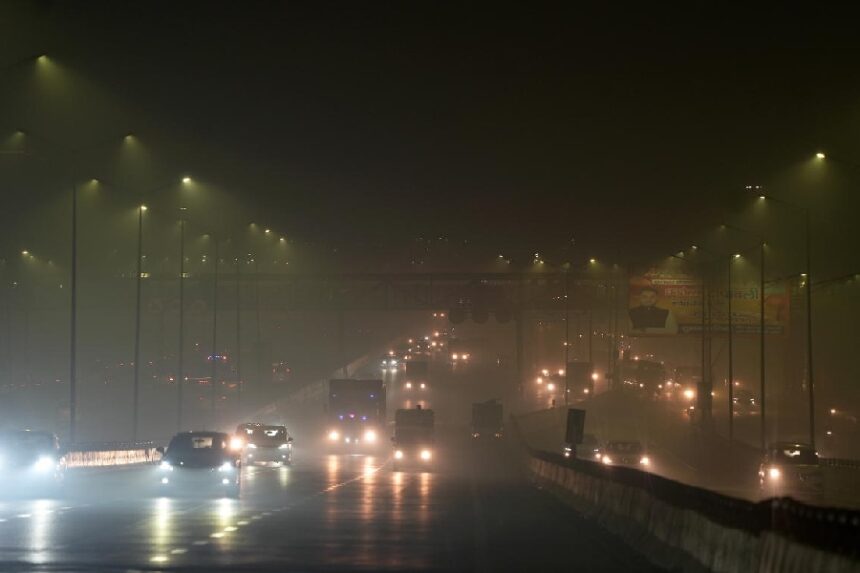
Delhi and its surrounding areas witnessed overnight rainfall, which provided a brief respite from the toxic air pollution that had plagued the region for several days. The rain, though mild, slightly improved the air quality, bringing it down from the hazardous ‘very poor’ category. However, this temporary improvement was accompanied by a rise in temperatures, marking a shift in the weather patterns. Despite the improvement in air quality, there have been no reports of flooding or water logging as a result of the rain.
As of Thursday, the air quality index (AQI) for Delhi was recorded at 356, which is still considered ‘very poor.’ The air quality had taken a severe downturn on Wednesday, prompting immediate intervention from the Commission for Air Quality Management. The AQI in Delhi had dropped to 275 on January 14, but due to dense foggy conditions and low temperatures, the pollutant concentration increased sharply, causing the AQI to spike to 386 on January 15. The situation worsened further in the evening, with the AQI hitting 393 at 5:00 PM and climbing to 396 by 6:00 PM.
Experts have warned that the AQI is expected to cross the 400 mark, with the India Meteorological Department (IMD) and Indian Institute of Tropical Meteorology (IITM) predicting unfavorable conditions for dispersion of pollutants. These conditions, coupled with low mixing heights and a low ventilation coefficient, have contributed to the poor air quality. The continued foggy weather and cold waves have created an atmosphere where pollutants are unable to disperse efficiently, resulting in hazardous air conditions that pose a significant health risk, especially for vulnerable populations like children and the elderly.
In response to the deteriorating air quality, the Commission for Air Quality Management had reintroduced stricter pollution control measures for Delhi and the National Capital Region (NCR), including the enforcement of the Graded Response Action Plan (GRAP) levels 3 and 4. These measures are intended to curb the levels of pollutants, but the persistent fog and cold conditions have made it difficult to achieve significant improvements.
The Directorate of Education in Delhi took immediate steps to address the health risks posed by the polluted air by issuing orders to shift classes for students up to Class IX and XI to a hybrid mode. This precautionary measure aims to reduce students’ exposure to the harmful effects of air pollution while ensuring that their education continues without interruption.
The overall impact of the weather and pollution situation in Delhi highlights the complex interplay between seasonal weather patterns and air quality management. While the rainfall provided some temporary relief, the ongoing cold wave, combined with pollution levels, continues to pose challenges. The city, known for its chronic air quality issues, remains in a constant battle to find effective solutions to combat air pollution, especially during the winter months when weather conditions exacerbate the problem.
As the city grapples with fluctuating air quality and rising temperatures, the government and relevant agencies are under increasing pressure to implement sustainable measures to improve the living conditions for its residents. While short-term measures like hybrid schooling and pollution curbs may offer temporary relief, long-term solutions will require a comprehensive approach that addresses both pollution sources and the region’s changing climate patterns.
With the situation remaining precarious, Delhiites are urged to continue taking precautions to safeguard their health, as experts predict that the conditions may worsen before any significant improvement occurs. As the winter season progresses, the need for more effective air quality management and public health initiatives has never been more urgent.