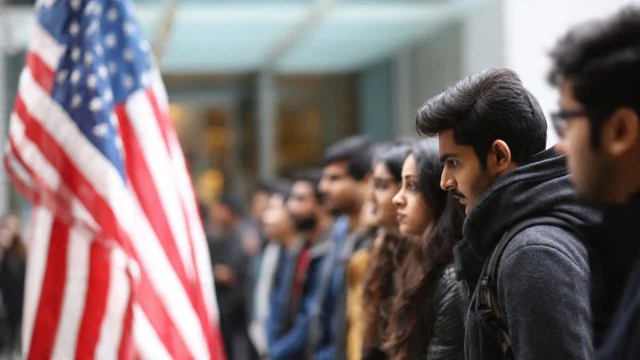
Indian students pursuing higher education and professional opportunities in the United States are facing unprecedented uncertainty following the recent changes in visa policies, including the H-1B lottery and OPT (Optional Practical Training) rules. For years, the US has been a preferred destination for Indian students seeking advanced degrees, international exposure, and competitive career prospects. However, the latest policy changes under the Trump administration have introduced significant hurdles, leaving students and early-career professionals anxious about their futures, while simultaneously sparking cautious optimism for those seeking alternative pathways or exemptions. The evolving rules have forced students to reassess plans, explore backup options, and seek clarity amid a regulatory environment that is increasingly selective and unpredictable.
Impact on Students and Early-Career Professionals
For many Indian students nearing graduation, the abrupt changes to H-1B visa eligibility have been a shock. Students and professionals who had long planned to transition from their F-1 visas or OPT programs into full-time employment now find themselves scrambling to navigate a complex and uncertain process. Chell Roberts, Dean of the University of San Diego, described the policy shift as a “seismic shock” that has disrupted the aspirations of students, their families, and the companies that traditionally rely on H-1B talent from India. Many students, particularly those graduating with STEM degrees, have long considered the H-1B visa a bridge to stable employment in the US, often planning years in advance to align educational choices, internships, and OPT extensions with their immigration goals.
For students like a 26-year-old from Guntur, Andhra Pradesh, the new regulations have directly complicated job prospects. Having completed a master’s degree in computer science in 2024, he expressed concern that the new rule could prevent him from applying for the upcoming H-1B lottery. “We are consulting lawyers to see if students can be exempted, but clarity is still lacking,” he said. Many students like him are exploring whether the changes will allow exceptions for critical sectors or if alternative pathways might emerge to maintain the traditional flow from student status to work authorization.
The broader economic context in the US further complicates matters. According to the US Bureau of Labor Statistics, among 3.52 lakh individuals aged 20 to 29 who completed an associate degree between January and October 2024, 78.1 percent were employed by October, highlighting a competitive environment even for domestic graduates. For Indian students dependent on the H-1B pathway, the new policies introduce additional uncertainty in a market that is already selective and highly competitive. Even immigration attorneys are grappling with interpretation, as debates continue over potential exemptions and whether a wage-based system will ultimately create a more meritocratic approach compared to the previous lottery and steep filing fees.
Many students on F-1 OPT visas are adopting pragmatic approaches to navigate the uncertainty. A third-year MBA graduate from Hyderabad, working as a senior financial analyst under a STEM OPT extension, expressed a flexible approach: while he wishes to remain in the US and gain professional experience, he is also prepared to return to India or explore opportunities in other countries if necessary. This highlights the growing need for adaptability among students who previously relied on predictable pathways for post-graduate employment.
Experts have noted that the policy overhaul is likely to affect students with average academic records or less specialized skills more than those with strong degrees or in-demand expertise. A 26-year-old graduate in economics and international relations from Boston shared his perspective, highlighting that his career trajectory remained largely unaffected due to the combination of high-demand skills and significant professional experience gained during his OPT period. He stressed that students with strong credentials and demonstrable value to employers will continue to find pathways, even amidst regulatory changes, while those with less distinguished academic records might face more significant hurdles.
Strategies and Adaptation in an Uncertain Environment
The sudden policy changes have prompted Indian students and educational consultants to reassess strategies for studying and working in the US. Experts like Aman Singh, co-founder of edtech firm GradRight, emphasize the importance of choosing academic programs with strong industry alignment, clear career outcomes, and opportunities for applied learning. This focus on quality education and skill development becomes especially critical as visa policies evolve to favor candidates with measurable economic or technological impact.
Several graduates advocate approaching US education with clarity of purpose and a pragmatic mindset. They suggest applying only to fields of genuine interest, seeking scholarships to reduce financial burden, and treating education as a strategic stepping stone rather than an automatic pathway to employment. For students aiming to secure positions in technology, finance, or other STEM-related sectors, value addition through practical skills, internships, and demonstrable project experience may offset some of the regulatory uncertainties associated with H-1B visa eligibility.
The new visa framework also highlights broader geopolitical and labor market considerations. The US administration’s shift toward wage-based or skill-based prioritization in the H-1B system underscores a focus on attracting top global talent while limiting entry for candidates deemed less competitive. This makes strategic career planning and self-assessment more important than ever. Students must align their educational investments with global labor demands, emphasizing areas with sustained demand, such as technology, analytics, data science, cybersecurity, and specialized engineering fields.
Despite the anxiety generated by these regulatory changes, students and educators note that the situation is not without opportunities. Roberts, Dean of the University of San Diego, suggested that policy turbulence often precedes new avenues for innovation and career growth. Students who remain adaptable, invest in high-quality education, and acquire skills in emerging fields are likely to remain competitive, even as visa rules become more selective. Moreover, regulatory changes may incentivize students to explore alternative global markets, diversify career pathways, and consider entrepreneurship or remote work as viable strategies to mitigate dependence on US-based H-1B visas.
Several students emphasize resilience and long-term planning. Graduates who have successfully navigated the US education and employment ecosystem note that persistent skill development, networking, and strategic career decisions remain critical. Students pursuing advanced degrees are encouraged to focus on emerging sectors such as artificial intelligence, machine learning, financial analytics, and digital law, where US labor demand remains high and meritocratic pathways may provide more secure alternatives.
A recurring theme among students is the importance of flexibility and proactive contingency planning. While many still hope for legal exemptions or adjustments in H-1B policy, others are actively researching opportunities in India, Europe, or other countries with emerging tech and research ecosystems. This diversification strategy reflects a pragmatic acknowledgment of shifting global immigration policies and demonstrates an adaptive mindset among India’s top talent pursuing international careers.
Indian students also recognize that educational choices now carry higher stakes. Decisions regarding university selection, program specialization, and alignment with global labor market demands must be made with greater strategic foresight. Scholarships, mentorship, internships, and networking play a crucial role in ensuring that students remain competitive within the constraints of the evolving visa landscape. Those who actively engage with these resources are better positioned to mitigate uncertainty and achieve career progression, even as immigration regulations fluctuate.
The US remains an attractive destination for higher education due to its combination of global exposure, industry-aligned curricula, and access to research opportunities. For students committed to studying in STEM, finance, law, or emerging sectors, the revised visa rules necessitate a nuanced understanding of regulatory frameworks and careful planning to maximize post-graduation outcomes. Those with strong skills, demonstrable achievements, and strategic career planning may continue to leverage the US market, while others may explore hybrid strategies that blend domestic and international opportunities.
In summary, Indian students currently in the US are navigating an increasingly complex immigration and labor market environment shaped by H-1B policy changes, OPT regulations, and broader economic considerations. While these developments have generated anxiety and uncertainty, they have also prompted a reassessment of career strategies, encouraging students to invest in high-value skills, maintain flexibility, and adopt long-term planning approaches. For many, the situation is a call to make deliberate choices, enhance employability, and align educational investments with evolving global demands, thereby ensuring sustained competitiveness in an era of selective opportunity.
The experiences of Indian students highlight the importance of resilience, adaptability, and strategic foresight in navigating an evolving global education and employment landscape. As visa rules become more selective and employment markets increasingly competitive, students are encouraged to approach US education with clarity of purpose, prioritize skills and employability, and cultivate adaptability to thrive in a globalized environment shaped by shifting policies and emerging technological trends.