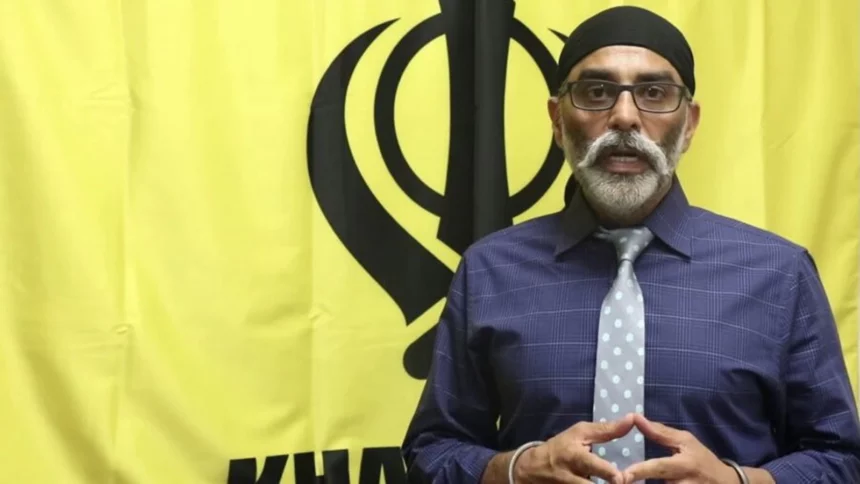
The National Investigation Agency (NIA) has launched a fresh case against US-based Khalistani terrorist Gurpatwant Singh Pannun after his provocative statements and threats aimed at disrupting India’s Independence Day celebrations this year. Pannun, who serves as the general counsel for the banned separatist group Sikhs for Justice (SFJ), allegedly offered a massive reward to prevent Prime Minister Narendra Modi from hoisting the national flag at the Red Fort in New Delhi on August 15. The case, registered under various provisions of the Bharatiya Nyaya Sanhita (BNS) and the Unlawful Activities (Prevention) Act (UAPA), underscores the seriousness with which Indian authorities are treating Pannun’s actions, seen as a direct assault on the sovereignty, territorial integrity, and security of India. The Union Home Ministry, citing the grave implications of the matter, has directed the NIA to investigate the broader conspiracy behind Pannun’s activities, which are believed to have both national and international ramifications.
Pannun’s Independence Day Threats and Khalistan Agenda
According to the FIR filed by the NIA, Pannun made the explosive announcement during a “Meet the Press” event at the Lahore Press Club in Pakistan on August 10, where he addressed the gathering via a video link from Washington. During the address, Pannun declared a reward of ₹11 crore to Sikh soldiers who would stop Prime Minister Narendra Modi from unfurling the tricolour at the Red Fort. The FIR also states that Pannun, in his provocative speech, unveiled a so-called map of Khalistan, which he claimed would include not only Punjab but also Delhi, Himachal Pradesh, and Uttar Pradesh. He further claimed that the SFJ had set up a so-called “Shaheed Jatha” or martyr squad, allegedly dedicated to fighting against India’s sovereignty and security.
The NIA noted that Pannun’s statements were aimed at inciting disaffection among Sikhs against India while promoting separatist sentiments. By offering financial rewards for actions against the Prime Minister and the national flag, Pannun sought to create a sense of division and rebellion among members of the armed forces and the Sikh community. Such acts, according to the FIR, are not only unlawful but are also attempts to destabilize India by provoking unrest and weakening its national unity.
The FIR emphasized that Pannun’s actions constitute a criminal conspiracy under Section 61(2) of the Bharatiya Nyaya Sanhita and fall under multiple sections of the UAPA, particularly those dealing with unlawful activities and promoting anti-India propaganda. The NIA has named Pannun and other unknown individuals in the case, highlighting that the conspiracy may involve accomplices who are yet to be identified. The agency has also based its charges on credible video evidence retrieved from SFJ’s channel on X, where Pannun’s statement about the ₹11 crore reward was broadcast.
Union Home Ministry’s Directive and Wider Implications
The Union Home Ministry, in its directive to the NIA, pointed out the gravity of Pannun’s actions, stressing that they represent not only a national threat but also have international consequences. As Pannun is a designated terrorist under Indian law and continues to operate freely from the United States, his statements at an event in Pakistan add another dimension to the case, raising suspicions of cross-border involvement and support. The ministry underlined that the rejection of India’s sovereignty and the call for Khalistan are at the core of SFJ’s agenda, and Pannun’s repeated actions reflect an ongoing effort to destabilize the nation.
The ministry’s order noted that the August 10 event at the Lahore Press Club, which was attended by journalists, served as a platform for Pannun to amplify his anti-India propaganda. His address, focusing on the so-called rejection of India’s sovereignty over Punjab and the promotion of Khalistan, is being investigated as part of a larger conspiracy with significant national security implications.
The government has highlighted that such activities cannot be viewed in isolation but must be understood as part of a continuing and coordinated effort by banned outfits and their leaders to weaken India internally and internationally. The case has been handed over to the NIA to ensure a thorough investigation, given the agency’s mandate to probe matters with cross-border and terrorism-linked dimensions. The ministry underscored that this probe is essential to unearth the larger conspiracy, identify all collaborators, and hold those involved accountable under Indian law.
The registration of this case marks yet another instance of Indian authorities’ firm approach toward dealing with Khalistani separatists, particularly those like Pannun who continue to incite violence and separatism from foreign soil. The Indian government has consistently maintained that individuals or organizations that challenge the country’s sovereignty and integrity will face stringent legal action. By invoking sections of both the Bharatiya Nyaya Sanhita and the UAPA, the authorities have ensured that the legal framework used against Pannun addresses both his role in criminal conspiracy and his involvement in unlawful activities aimed at promoting terrorism and separatism.
Indian security agencies have long considered Pannun a significant threat because of his role in mobilizing support for Khalistan internationally. His activities, including propaganda campaigns, video messages, and calls for anti-India protests, are often timed to coincide with major national events in India, such as Independence Day or Republic Day, in an attempt to create maximum disruption. This case against him reinforces India’s commitment to countering such threats and ensuring that its sovereignty is not undermined by individuals or organizations operating from abroad.
By launching a comprehensive probe, the NIA will not only examine Pannun’s statements and activities but also investigate the broader network of support that enables his continued propaganda. This includes examining possible cross-border facilitation, financial links, and the role of sympathizers or operatives within and outside India. The move highlights the government’s determination to expose the full extent of such conspiracies and to take all necessary measures to protect national security.