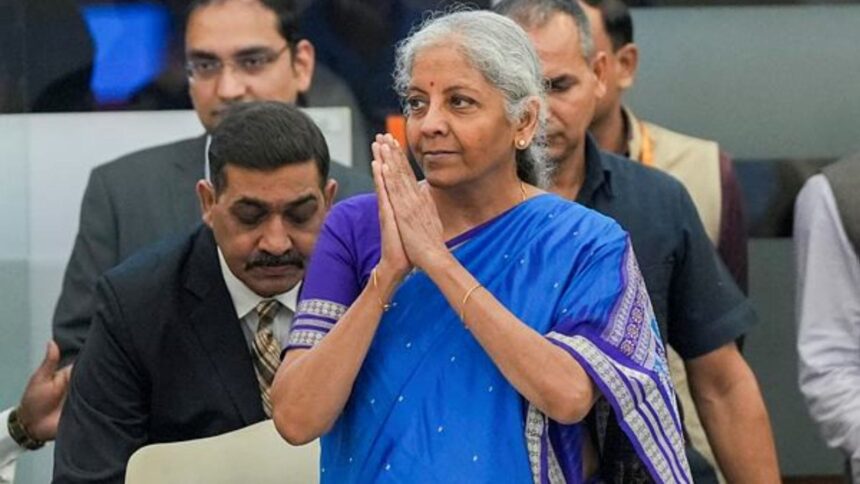
India’s indirect tax landscape is set for a dramatic shift as Finance Minister Nirmala Sitharaman on Wednesday announced the rollout of the long-anticipated “Next-Gen GST Reform” from September 22, 2025. Emerging from the 56th meeting of the GST Council in New Delhi, the new framework seeks to rationalise rates, reduce tax burdens on essential goods and services, and simplify a complex multi-slab system that has often drawn criticism from businesses and consumers alike. By restructuring GST into two principal slabs of 5 percent and 18 percent, the government has paved the way for a leaner, more predictable tax regime that it argues will not only boost compliance but also give citizens tangible relief on everyday items. At the same time, the reforms tighten taxation on luxury goods and so-called “sin goods,” ensuring higher rates for consumption categories deemed non-essential.
Restructuring of GST Slabs and Relief for Citizens
The most significant change within the reform package is the merger of the earlier 12 percent and 28 percent tax slabs into the more streamlined 5 percent and 18 percent categories. This rationalisation has long been debated among policymakers, economists, and industry associations who believed the existing multiplicity of slabs added confusion and compliance burdens. The government’s decision to consolidate them is being described as the boldest move since GST’s introduction in 2017, marking what Nirmala Sitharaman called a “historic Diwali gift” to the nation.
Among the headline benefits is the complete exemption of all individual life and health insurance policies from GST. This move has been hailed as socially progressive and economically prudent, addressing long-standing concerns about affordability of insurance coverage in a country where penetration remains far below global averages. Citizens purchasing term insurance, unit-linked insurance plans, endowment policies, or health coverage for families and senior citizens will no longer pay any GST, a change expected to encourage wider adoption of financial security instruments.
In the realm of healthcare, medicines have been uniformly classified at a concessional rate of 5 percent, except those already listed at nil rate. This is accompanied by a sweeping 5 percent cap on all medical, surgical, dental, and veterinary devices, removing earlier inconsistencies where certain items attracted higher taxes. The uniform structure is expected to make treatments more affordable and reduce costs for hospitals, clinics, and patients alike.
Transport and mobility have also witnessed substantial revisions. GST on small cars — defined as petrol, LPG, or CNG vehicles with engine capacity up to 1200 cc and length not exceeding 4000 mm, and diesel cars up to 1500 cc within the same length — has been reduced from 28 percent to 18 percent. This cut will directly benefit middle-class buyers, potentially spurring demand in the struggling automobile sector. In contrast, mid-size and large cars, along with SUVs, MUVs, MPVs, and XUVs exceeding 1500 cc or 4000 mm, or with ground clearance above 170 mm, will attract a new uniform 40 percent GST. By removing the earlier compensation cess, the government has aimed for clarity while signalling a disincentive for high-end vehicle purchases.
Two-wheeler buyers will also see differentiated impacts. Motorcycles with engine capacity up to 350 cc will attract 18 percent GST, while larger motorcycles exceeding 350 cc move into the 40 percent bracket. For household appliances, GST on air conditioners and dishwashers has been reduced from 28 percent to 18 percent, aligning them with televisions and monitors that now face a flat 18 percent rate regardless of screen size. Batteries, regardless of type, will be taxed at 18 percent, harmonising rates that earlier discriminated between lithium-ion and other battery technologies.
The reforms extend beyond goods into services, with beauty and wellness industries receiving a major cut. Salons, gyms, yoga centres, and health clubs, which previously attracted 18 percent GST, will now be taxed at just 5 percent without input tax credit. The government’s justification rests on making personal well-being services more accessible, reflecting rising awareness of health and lifestyle management in post-pandemic India.
Passenger transport services have also been recalibrated. Road transport will attract 5 percent without input credit or 18 percent with credit, depending on operator preference, while air travel in economy class is fixed at 5 percent, with all other classes continuing at 18 percent. Goods transport by GTA remains at the familiar 5 percent without input credit or 18 percent with, while multimodal transport is capped at 5 percent except when air services are included, in which case the rate is 18 percent.
In the food sector, longstanding anomalies in GST treatment have been addressed. All Indian breads, including rotis, parathas, and pizza breads, are now exempt regardless of packaging, correcting earlier discrepancies. Paneer too has received uniform exemption, whether sold loose or in packaged and labelled form, a measure the government says supports small dairy producers. UHT milk continues to be exempt, while plant-based milk drinks, including soya, are taxed at just 5 percent, down from higher rates previously applied.
On the flip side, certain beverages and carbonated fruit drinks now attract a steep 40 percent GST. This stems from the withdrawal of the compensation cess, with the Council deciding to maintain the earlier effective tax incidence by elevating GST directly. The intent, as officials clarified, is to prevent misclassification and ensure uniform treatment of similar products. Other non-alcoholic beverages have also been brought into the 40 percent bracket to maintain consistency.
The Broader Impact of the Reform and the Road Ahead
The government’s sweeping rationalisation has triggered significant optimism in financial markets. Shortly after the announcements, stock indices surged, with the Sensex gaining 888 points and the Nifty rising 265 points. Analysts attributed the rally to investor confidence that a simplified and citizen-friendly GST regime would stimulate consumption, particularly in sectors such as automobiles, consumer durables, and health insurance.
The reform also addresses one of the most contentious issues in GST administration — the compliance burden related to e-way bills. With the new changes, goods already in transit at the time of rate revisions will not require cancellation or regeneration of e-way bills. This assurance reduces logistical headaches for businesses and ensures smooth continuity in supply chains.
Equally important is the government’s balancing act in phasing out compensation cess. While most sectors see rationalised GST structures from September 22, tobacco products such as cigarettes, zarda, beedis, and unmanufactured tobacco remain under the existing framework until all cess-related loan obligations are fully repaid. Officials confirmed that revised rates for these items will be notified later, highlighting the complex fiscal interdependencies involved in managing GST revenues and state compensation commitments.
Beyond the direct consumer impact, the reform is being framed as part of a larger economic vision. By simplifying slabs and creating predictability, the government hopes to expand the tax base, improve voluntary compliance, and curb disputes arising from classification ambiguities. Small businesses, which often struggled with navigating multiple rates for similar goods, are expected to benefit from reduced administrative burdens. For citizens, the reforms promise lower costs on essentials ranging from medicines to insurance, while continuing to impose higher taxes on luxury and lifestyle consumption deemed discretionary.
The reform also carries political significance. By timing the announcement just ahead of the festive season, the government has created a narrative of delivering economic relief to households. Nirmala Sitharaman’s framing of the insurance exemption as a “Diwali gift” underscores this strategy, blending fiscal rationalisation with a populist message. It is also an attempt to rebuild trust in GST, which has at times been criticised as cumbersome and inconsistent since its rollout.
Experts caution, however, that the true test of the reform will lie in implementation. Harmonising tax administration across states, updating digital infrastructure, and ensuring clarity in classification will be essential to reap the intended benefits. Moreover, sectors such as the automobile industry will have to carefully balance price reductions for small vehicles with the elevated burden on larger cars and SUVs. Consumer responses to reduced rates on appliances and wellness services will similarly shape the reform’s effectiveness in stimulating demand.
Nevertheless, the structural shift to two main slabs and the emphasis on fairness in categorisation signal a maturing of India’s indirect tax system. From a consumer’s perspective, the reform brings clarity, relief on essentials, and a message of economic inclusivity. For businesses, it promises a simpler compliance landscape, albeit with continued vigilance required in areas like transport services and beverages. And for the government, it marks another step in aligning India’s tax framework with its long-term developmental and fiscal goals, even as debates continue on whether further reforms, such as a single GST rate, may eventually be required.