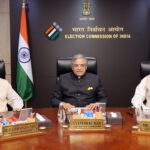
The Election Commission of India has launched Phase III of the Special Intensive Revision (SIR) of electoral rolls, marking one of the most extensive voter verification exercises undertaken in the country in recent years. The latest phase will cover 16 states and 3 Union Territories, bringing tens of crores of voters under a structured review aimed at improving accuracy, removing outdated entries, and ensuring that every eligible citizen is correctly reflected in the electoral database.
Election Commission of India has positioned this exercise as a critical step in strengthening the credibility of the electoral system. With India’s voter base continuously expanding due to demographic shifts, urban migration, and new registrations, the need for periodic large-scale revision has become increasingly important. Officials say the current phase will significantly enhance the integrity of voter rolls ahead of upcoming elections across multiple states.
The SIR Phase III rollout follows earlier phases that already covered a substantial portion of the country. This latest expansion ensures that the revision exercise now reaches almost the entire national electoral landscape, except for a few regions that have been temporarily excluded due to administrative and seasonal factors.
Massive Nationwide Verification Exercise Gains Momentum
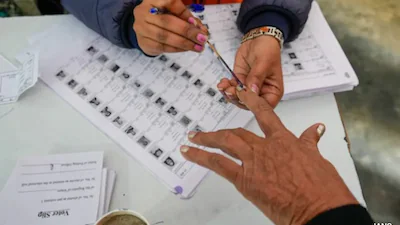
The Special Intensive Revision process involves door-to-door verification conducted by Booth Level Officers, supported by Booth Level Agents nominated by political parties. In this phase alone, more than 3.9 lakh Booth Level Officers and over 3.4 lakh Booth Level Agents are expected to participate in the field-level verification exercise.
The process is designed to ensure that every voter record is physically verified and digitally updated where required. Officials have emphasized that the scale of the operation makes it one of the most detailed administrative exercises in India’s electoral history, covering an estimated 36 crore electors during the enumeration phase.
The Commission has highlighted that the objective of the exercise is not only to update records but also to ensure transparency and inclusiveness in the electoral process. With rapid urbanization and frequent internal migration, voter records often become outdated, leading to duplication or incorrect constituency mapping. The SIR exercise is intended to correct such inconsistencies systematically.
The exercise will be carried out in phases across different states, with final electoral roll publication scheduled at different dates depending on regional completion timelines. The process is expected to continue into late 2026.
Why the Electoral Roll Revision Has Become Critical
India’s electoral system depends heavily on accurate voter lists to ensure free and fair elections. However, maintaining updated records across a population exceeding a billion people presents logistical challenges. Migration from rural to urban areas, changes in residence, deaths, and new voter registrations continuously alter the composition of electoral rolls.
The Election Commission has therefore adopted periodic intensive revisions to address these challenges. The SIR process is designed to eliminate duplicate entries, remove deceased voters from records, and ensure that eligible citizens are not excluded due to outdated data.
Officials say that the increasing use of technology has improved the accuracy of voter databases, but field verification remains essential. Digital systems alone cannot fully capture ground realities, especially in remote or rapidly changing urban areas. The combination of physical verification and digital updating is therefore considered the most reliable approach.
The current phase is also significant because it comes ahead of several important state electoral cycles. Ensuring accurate voter rolls is expected to improve public trust and reduce disputes related to voter eligibility and constituency mapping.
State-Wise Rollout and Administrative Planning
The Phase III rollout covers a wide range of states and Union Territories, including Odisha, Mizoram, Sikkim, Manipur, Uttarakhand, Andhra Pradesh, Telangana, Punjab, Karnataka, Maharashtra, Jharkhand, and others, along with Union Territories such as Delhi and Chandigarh.
Each region will follow a structured timeline for enumeration, verification, and final publication of updated electoral rolls. The schedule has been designed to accommodate regional administrative capacities and seasonal conditions. For instance, some northern regions have been temporarily excluded due to weather and logistical constraints, with separate schedules to be announced later.
Election officials have stated that the staggered timeline allows for better monitoring and quality control. Instead of rushing the process nationwide, the Commission aims to ensure accuracy at every stage of verification. This includes multiple rounds of cross-checking and public feedback mechanisms to correct errors before final publication.
The involvement of Booth Level Officers is central to the process. These officers are responsible for visiting households, verifying voter details, and ensuring that all eligible citizens are properly registered. Political party representatives, through Booth Level Agents, also play a role in monitoring the process, adding an additional layer of transparency.
Technology and Field Work Working Together
One of the defining features of the SIR exercise is the integration of technology with traditional field verification methods. Digital voter databases are being updated in real time as officers collect and verify information on the ground.
Mobile-based applications and centralized databases allow for faster processing of voter data, reducing delays and minimizing errors. However, officials emphasize that technology alone cannot replace physical verification, especially in areas where address changes or migration patterns are frequent.
The Election Commission has also introduced improved data validation systems to detect duplicate entries and inconsistencies. These systems help ensure that voter rolls remain clean and accurate while reducing manual workload for election staff.
Despite technological advancements, the success of the exercise depends heavily on human participation at the grassroots level. Booth Level Officers remain the backbone of the revision process, ensuring that even the most remote households are covered.
Impact on Democratic Participation and Electoral Integrity
Accurate voter lists are essential for ensuring fair democratic participation. When voter rolls contain errors or outdated information, it can lead to exclusion of eligible voters or inclusion of ineligible entries, both of which undermine electoral integrity.
The current revision drive is expected to significantly improve voter confidence in the electoral process. By ensuring that every eligible citizen is properly registered and assigned to the correct polling station, the Election Commission aims to reduce discrepancies and strengthen public trust.
The process also plays a key role in improving voter turnout. When citizens find their names correctly listed and easily accessible in electoral databases, participation in elections tends to increase. Conversely, errors in voter lists often discourage participation and lead to administrative disputes on polling day.
By conducting a large-scale revision across most of the country, the Commission is aiming to address these issues in a systematic and transparent manner.
The launch of Phase III of the Special Intensive Revision marks a major milestone in India’s ongoing effort to modernize and strengthen its electoral system. With millions of voters under review and extensive field-level verification underway, the exercise reflects the scale and complexity of managing the world’s largest democracy.
As the process moves forward across states and Union Territories, its impact is expected to be far-reaching, improving the accuracy of electoral rolls and reinforcing the foundation of democratic participation in the country.