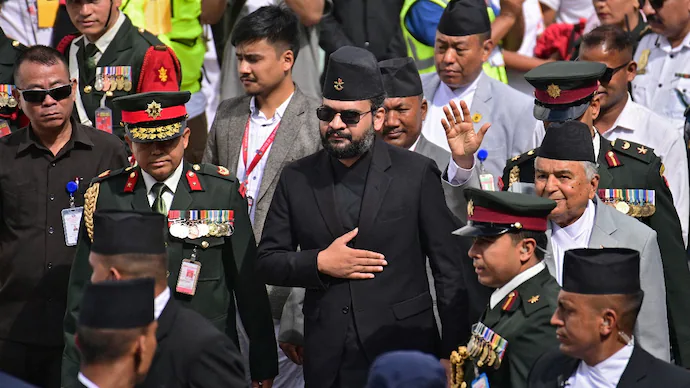
Nepal election results show Balen Shah’s Rastriya Swatantra Party winning 124 seats and heading toward two-thirds majority while Nepali Congress and UML trail
Nepal’s parliamentary elections have produced a dramatic political shift, with Balendra Shah’s Rastriya Swatantra Party emerging as the dominant force in the country’s political landscape. According to the latest results from the ongoing vote counting, the Rastriya Swatantra Party has won 124 seats and is leading in one more constituency. With these results, the party is heading toward a two-thirds majority in parliament, marking one of the most significant electoral victories in Nepal’s recent democratic history. The outcome represents a major setback for traditional political parties that have dominated Nepal’s politics for decades.
Balendra Shah, popularly known as Balen Shah, has become the central figure in this political transformation. The 35-year-old leader, who first gained recognition as a rapper and composer before entering politics, is now expected to become Nepal’s next prime minister. His rise from the music industry to national politics has captured public attention across Nepal and internationally. Shah first gained national prominence when he won the Kathmandu mayoral election as an independent candidate, presenting himself as a reform-oriented leader focused on governance, transparency and anti-corruption initiatives.
The impressive performance of the Rastriya Swatantra Party in the parliamentary elections reflects growing public dissatisfaction with traditional political parties and their leadership. For years, Nepal’s political landscape has been dominated by parties such as the Nepali Congress and the Communist Party of Nepal-Unified Marxist Leninist. However, many voters have increasingly expressed frustration with political instability, frequent changes of government and allegations of corruption within established parties.
In this election, the Nepali Congress and the CPN-UML have fallen far behind the Rastriya Swatantra Party. Early results indicate that neither party has come close to matching the sweeping victory secured by Balen Shah’s party. Political analysts say that the results highlight a generational shift in Nepalese politics, with voters increasingly supporting new leadership and alternative political movements that promise institutional reforms and efficient governance.
The Rastriya Swatantra Party’s electoral strategy focused on presenting itself as a clean and reformist alternative to Nepal’s traditional political system. The party campaigned heavily on issues such as transparency in governance, economic development, improved public services and stronger anti-corruption measures. These promises resonated strongly with younger voters and urban populations who have grown frustrated with the slow pace of political and economic reforms.
Balen Shah’s leadership style and personal background have also played a major role in the party’s popularity. Unlike many traditional politicians, Shah built his reputation outside the conventional political establishment. His early career in music, particularly in rap and socially conscious compositions, allowed him to connect with younger audiences and highlight social issues through cultural expression. This unconventional background helped him cultivate an image as a relatable and modern leader.
When Shah entered politics, he quickly positioned himself as a candidate representing change and accountability. His victory in the Kathmandu mayoral election demonstrated the growing appeal of independent and reform-oriented leadership in Nepal. As mayor, he focused on administrative reforms, infrastructure improvements and greater transparency in municipal governance, which helped strengthen his public image ahead of the parliamentary elections.
The scale of the Rastriya Swatantra Party’s victory in the parliamentary elections has surprised many political observers. Winning 124 seats in the national parliament places the party well ahead of its competitors and puts it within reach of a two-thirds majority. Such a majority would provide the party with significant legislative power, allowing it to introduce major reforms and policy changes without depending heavily on coalition partners.
Political analysts say that the results also reflect broader changes in Nepalese society. The country’s young population has become increasingly politically active and has shown a willingness to challenge long-standing political structures. Social media and digital communication platforms have also played a major role in shaping political discourse and mobilising voters, particularly among younger demographics.
The emergence of the Rastriya Swatantra Party as the leading political force could reshape Nepal’s political trajectory in the coming years. If Balen Shah becomes prime minister as expected, he would represent a new generation of leadership in the country’s governance. His administration is likely to face both high expectations and significant challenges as it attempts to implement reforms and address long-standing economic and administrative issues.
Nepal’s political history over the past two decades has been marked by frequent changes of government, coalition instability and debates over constitutional reforms. Many voters hope that the current election results could bring greater stability to the political system. A strong parliamentary majority could enable the new government to pursue long-term development strategies and policy reforms more effectively.
However, analysts caution that governing with a large parliamentary majority also brings responsibilities and expectations. The Rastriya Swatantra Party will need to demonstrate its ability to translate campaign promises into practical governance outcomes. Issues such as economic growth, employment generation, infrastructure development and public service delivery remain key priorities for the Nepalese public.
The final results of the parliamentary elections are expected to be confirmed soon as vote counting nears completion. If the current trends continue, the Rastriya Swatantra Party’s sweeping victory will mark a historic turning point in Nepal’s democratic journey. The rise of Balen Shah from a cultural figure to a potential prime minister underscores the changing nature of political leadership in South Asia and reflects the growing demand for new political voices in the region.