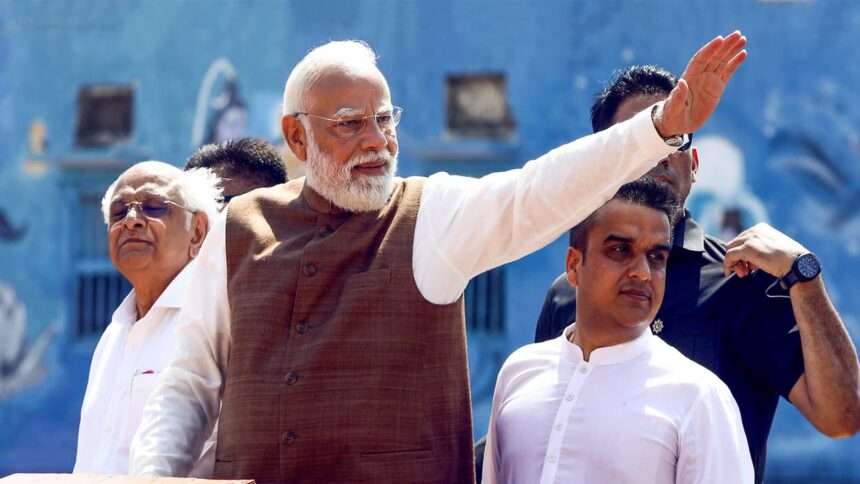
Prime Minister Narendra Modi on Friday began a high-profile five-nation diplomatic tour that is expected to shape India’s future partnerships in energy security, advanced technology, trade expansion and strategic manufacturing. The visit comes at a sensitive geopolitical moment as the ongoing Iran conflict continues to disrupt global energy markets and shipping routes, raising concerns across major economies dependent on imported oil and gas.
The six-day tour includes visits to the United Arab Emirates, the Netherlands, Sweden, Norway and Italy. While the official agenda focuses on trade, innovation and bilateral cooperation, the timing of the visit has added deeper strategic significance. Rising tensions around the Strait of Hormuz, one of the world’s most important maritime energy corridors, have pushed energy security to the forefront of India’s foreign policy calculations.
The Prime Minister’s trip also comes months after India and the European Union finalized a landmark free trade agreement framework, opening the door for stronger industrial cooperation, supply-chain integration and investment flows between India and Europe.
India’s outreach during this period reflects a broader strategy to diversify economic partnerships, reduce dependence on vulnerable supply chains and strengthen its position as a global manufacturing and technology hub.
UAE Visit Anchors India’s Energy Diplomacy
The first stop of the tour is the United Arab Emirates, a country that has emerged as one of India’s closest strategic and economic partners over the last decade. Prime Minister Modi is scheduled to hold detailed discussions with UAE President Sheikh Mohamed bin Zayed Al Nahyan, with energy cooperation expected to dominate the agenda.
The UAE remains one of India’s most reliable energy suppliers during a period of uncertainty in West Asia. As tensions continue around Iranian waters and the Strait of Hormuz, India has accelerated efforts to secure long-term energy supplies through stable partners in the Gulf region.
Officials familiar with the visit indicated that two major agreements related to liquefied petroleum gas and strategic petroleum reserves are likely to be finalized during the meetings. These agreements are expected to strengthen India’s emergency energy storage capacity while ensuring uninterrupted fuel supplies even during geopolitical crises.
India’s economic relationship with the UAE has expanded rapidly in recent years. Bilateral trade crossed the historic 100-billion-dollar mark in the last financial year, highlighting the growing importance of the partnership. The two countries are also aiming to double trade volumes by 2032 through deeper investment cooperation and reduced trade barriers.
The introduction of a Local Currency Settlement mechanism between India and the UAE has further reduced dependence on the US dollar in bilateral trade. Transactions can now be settled directly in Indian rupees and UAE dirhams, helping lower transaction costs and shield businesses from currency volatility.
The Indian diaspora in the UAE continues to play a crucial role in strengthening ties between the two nations. Millions of Indians contribute to the UAE’s economy across sectors ranging from construction and retail to technology and finance. Their remittances remain a major source of foreign exchange inflow for India.
Europe Tour Focuses On Technology And Supply Chains
After concluding the UAE leg of the trip, Prime Minister Modi will travel to Europe, where economic and technological partnerships are expected to dominate discussions.
The visit to the Netherlands carries particular importance because of the country’s leadership in semiconductor technology, clean energy and water management. India is looking to collaborate with Dutch firms to strengthen its own semiconductor manufacturing ecosystem, which has become a national priority amid growing global competition in advanced technology.
One of the biggest announcements expected during the visit is a partnership between Tata Electronics and Dutch semiconductor giant ASML. The agreement is expected to support the development of a semiconductor fabrication facility in Dholera, Gujarat, a project considered critical to India’s ambitions of becoming a major chip manufacturing destination.
The Netherlands has also become one of India’s largest European trading partners and investors. Indian companies have expanded aggressively into the Dutch market while Dutch firms continue to invest in logistics, agriculture, renewable energy and infrastructure projects across India.
Water management and climate-resilient infrastructure are also likely to feature prominently during the meetings. Prime Minister Modi is expected to visit the Afsluitdijk Dam alongside Dutch leaders as part of ongoing cooperation in flood control, sustainable fisheries and clean energy innovation.
For India, partnerships with countries like the Netherlands are increasingly tied to long-term resilience planning. The lessons from Europe’s advanced water management systems could help Indian states facing recurring floods, droughts and climate-related challenges.
Sweden And Norway Offer Strategic Technology Partnerships
The next phase of the tour takes the Prime Minister to Sweden and Norway, two Nordic countries that have emerged as important innovation-driven economies.
Sweden has built a strong reputation in research, artificial intelligence, telecommunications and clean technology. The country’s decision to reduce strategic dependence on China has created new opportunities for cooperation with India, particularly in digital infrastructure and supply-chain diversification.
Several Swedish companies already maintain a strong presence in India across sectors such as telecommunications, automotive manufacturing and renewable energy. Officials expect new agreements in areas including artificial intelligence, quantum computing, 6G communication systems and life sciences.
The Sweden-India Technology and AI Corridor initiative is expected to receive a major push during the visit. The program aims to connect startups, universities and industrial players from both countries in emerging technology sectors.
Defence cooperation is also becoming an important part of India-Sweden relations. Swedish defence company Saab has already established a manufacturing facility in Haryana, marking one of the first major foreign defence production investments under India’s Make in India initiative.
Prime Minister Modi’s Norway visit carries additional diplomatic weight because it represents the first standalone bilateral visit by an Indian Prime Minister to the country in more than four decades.
Norway’s massive sovereign wealth fund has emerged as a significant investor in Indian markets, particularly in renewable energy and infrastructure projects. Maritime cooperation between the two countries is also expanding rapidly, with Indian shipyards increasingly participating in Norwegian shipping contracts.
The Arctic region and polar research collaboration are expected to feature in discussions as well. India’s scientific engagement in the Arctic has grown steadily over the years, and cooperation with Norway could strengthen research capabilities in climate science and environmental monitoring.
Norway’s expertise in green shipping, offshore energy and sustainable maritime technologies aligns closely with India’s long-term plans to modernize its transport infrastructure while reducing carbon emissions.
Italy Partnership Expands Beyond Trade
The final leg of the tour will take Prime Minister Modi to Italy, where the focus will shift toward industrial partnerships, infrastructure connectivity and strategic investment.
Italy has increasingly viewed India as a key geopolitical and economic partner within the Indo-Pacific region. The relationship has gained momentum through initiatives such as the India-Middle East-Europe Economic Corridor, which aims to connect Asia and Europe through integrated transport, energy and digital networks.
One of the most significant developments in India-Italy economic relations has been Tata Motors’ acquisition of the Iveco Group. The deal is considered one of the largest Indian investments in Italy and highlights the growing confidence of Indian companies in European manufacturing markets.
Italian financial institutions have also expanded their presence in India through dedicated investment programs aimed at supporting small and medium enterprises. These initiatives are expected to encourage deeper industrial collaboration between the two countries.
Defence, aerospace, green hydrogen and digital infrastructure are emerging as new pillars of the India-Italy partnership. Italian companies are increasingly exploring opportunities in India’s rapidly expanding manufacturing sector, especially after the India-European Union trade framework gained momentum earlier this year.
Iran Conflict Shapes Global Diplomatic Calculations
Although the official focus of the tour remains economic cooperation and strategic partnerships, the ongoing Iran crisis continues to influence global diplomatic conversations.
The conflict has intensified concerns about disruptions in global oil and gas supplies, particularly around the Strait of Hormuz. India, which imports a large share of its energy requirements, faces significant risks if instability in the region escalates further.
Indian authorities have already increased monitoring of energy shipments and coordinated closely with the Indian Navy to ensure the safe movement of commercial vessels linked to India. The government’s recent emphasis on fuel conservation and energy diversification also reflects concerns about long-term supply disruptions.
Prime Minister Modi’s diplomatic outreach during this period signals India’s effort to balance immediate energy security concerns with broader economic transformation goals.
The tour also highlights India’s attempt to position itself as a reliable global partner amid rising geopolitical fragmentation. By strengthening ties simultaneously with Gulf nations and European economies, New Delhi is seeking to build resilient economic networks that can withstand future disruptions.
India’s Global Position Continues To Expand
The significance of the tour extends beyond bilateral agreements. It reflects India’s growing confidence in shaping global economic and strategic conversations.
European countries are increasingly viewing India not merely as a consumer market but as a major geopolitical power capable of influencing global supply chains, technology ecosystems and energy transitions.
For India, the timing of these engagements is equally important. As international businesses search for alternatives to concentrated manufacturing dependence in East Asia, India is positioning itself as a stable and scalable destination for industrial investment.
The focus on semiconductors, artificial intelligence, clean energy and advanced manufacturing during the tour demonstrates how India’s diplomatic strategy is now closely tied to economic modernization goals.
With geopolitical uncertainty continuing to reshape global alliances, Prime Minister Modi’s multi-nation visit could mark another significant step in India’s broader push to emerge as one of the world’s leading economic and strategic powers.